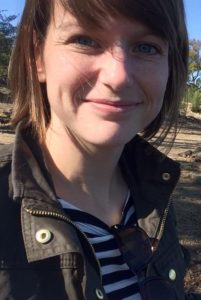
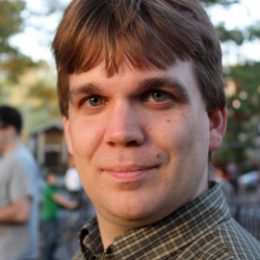
Collaboration, Openness, and Preservation: An NDSA Interview with Dave Rice

We are very excited to talk with Dave Rice. He was awarded an Innovation Award from the National Digital Stewardship Alliance (NDSA) in 2016 for his creative work in bringing together people and organizations from different communities to result in useful standards and practices. Follow Dave’s work at dericed.com, and you can find all of our interviews with the NDSA Innovation Award winners here

We learned more about Dave and his work in the following interview:

You were selected for your work in advocating for a new working group and for the FFV1 and Matroska standards with the Internet Engineering Task Force (IETF). The IETF is sometimes ascribed nearly magical abilities for its success in working on the standards that hold the internet infrastructure together. It is not common for members of the digital preservation community to work directly with the IETF and its related groups. How did you go down that path, and did you find anything surprising about it?

Firstly, thank you for selecting me for the Innovation Award. I feel honored to be associated with the NDSA community in this way.

I should explain a bit of background to the work on FFV1 and Matroska. The Library of Congress’s Sustainability of Digital Formats defines several sustainability factors for digital formats and lists “disclosure” as the first consideration, which includes the “degree to which complete specifications and tools for validating technical integrity exist and are accessible.” In 2014 the PREFORMA project began to develop conformance checkers for a select list of open formats and included FFV1 and Matroska as their audiovisual selections. I worked within the PREFORMA audiovisual team on a conformance checker for audiovisual files, called MediaConch, and as part of the planning we saw that the quality of the specification work for FFV1 and Matroska would hinder development of a conformance checker for those formats. Thus at that point it made sense to coordinate users and developers of FFV1 and Matroska to approach an open standards organization about addressing further development of specifications building off the existing progress made by communities working on these formats.

The IETF (Internet Engineering Task Force) appeared to be the most suitable standards organization to work with. Developers from both Matroska and FFmpeg (where FFV1 was initially developed) were well familiar with the IETF from their work on other open video formats such as Ogg, VP8, Opus, and Daala. Furthermore, the values of the IETF align particularly well with Free Software principles, the LOC’s Sustainability Factors, and other digital preservation guidelines in that the IETF’s work and procedure is open, transparent, and participatory. In addition to the resulting specification documents being open, credible, and clear, the entire process is open to view including listserv discussions, chatroom transcripts, and recordings of meetings. Thus not only are the specifications of the IETF open but we can study the process, discussions, and debate that formed them.

For us, the path involved a lot of collaboration and learning along the way. We discussed the idea within the FFmpeg and Matroska communities to determine willingness, interest, and method to proceed with standardization. Initially we collaborated with the IETF Dispatch working group to determine the best way to proceed. We also met with IETF members at conferences, such as FOSDEM and VDD, to seek advice and refine our methodology. With this assistance, we drafted a charter for a working group and Tessa Fallon presented a proposal at an IETF conference. The charter was debated and adjusted, put to a vote, and ultimately approved. At this point, the CELLAR working group became active.

Can you explain how the IETF working group functions? Can you explain what you think will happen in this area in the next few years?

This is a link to the data tracker of the IETF’s CELLAR working group. There you will find links to our mailing list, historical information about the group, its charter, and its active documents. Although active documents are listed in the working group’s website, the efforts to revise the specifications happen in GitHub with related conversation on the listserv. Presently there’s a GitHub repository for Matroska, for EBML (a binary XML format on which Matroska is based), and FFV1.

The working group charter includes a timeline; though the working group is currently behind schedule, we are making active progress. The objective of the working group is to achieve the the goals outlined in the charter, namely to submit specifications for FFV1, Matroska, and FLAC to the IESG (Internet Engineering Steering Group) for approval. Anyone is welcome to join the working group’s listserv and participate.

What do you think the digital preservation community can learn from what you did with the IETF?

Although it is not common for members of the digital preservation community to work directly with the IETF, it is in the interest of the digital preservation field to foster more involvement in related standardization work. Rather than waiting for the creation of standards to adopt in preservation, it is in the interest of the preservation community to represent and advocate within standardization efforts to ensure that adequate attention is given to sustainability qualities required in long term format preservation. Often this is the case with the development of metadata standards (such as PBCore and PREMIS), but there is opportunity for more involvement from the community in the standardization of the formats that we will eventually steward. I consider the work produced by the Library of Congress on AS-07 and by the DPF Manager on TIFF as good examples of the digital preservation community’s active involvement in standardization efforts for file formats.

The world of libraries, archives and museums has many standards groups and standards of their own. Do you have any thoughts about how standards are most effectively developed within and across communities? How do you think innovation relates to standards?

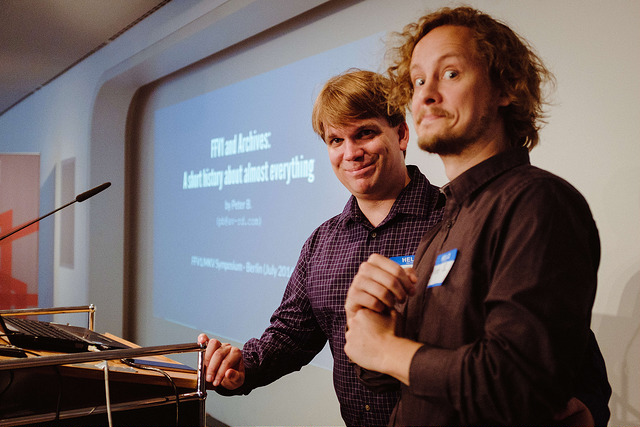
Engaging with numerous stakeholder communities is critical to the sustainability of standards. As an example, last year I helped organize the No Time to Wait symposium in Berlin, which focused on the standardization efforts for FFV1 and Matroska. During the symposium, Reto Kromer and Kieran O’Leary presented on using those formats in film scanning and provided proposals and research on storing color data from the film scanning process in those formats. Additionally, Michael Bradshaw from Google presented on YouTube’s ongoing efforts to support the vast technical variety of incoming media in order to document and render color data effectively. It was very revealing to see that those managing the newest audiovisual media (YouTube uploads) and those managing the oldest audiovisual media (film formats) shared a common interest in standardizing management of comprehensive colorspace data within these formats and could collaborate on proposals.

Additionally, since the IETF working groups operate in open online spaces where those interested may join to watch or participate, the environment is welcoming to collaboration between communities with shared interests. Frequently in the working group I’ve seen contribution of expertise in areas where I wasn’t aware such expertise existed. Some standards organizations are closed or require subscription membership, limiting participation to a targeted community. These closed systems might stymie the potential for more diverse and innovative contributions.

In the preservation community, the existence or presumption of a ‘standard’ may sometimes discourage innovation in that potential participants view the work as already complete or are concerned that additional development might compete with an established standard in a way that compromises its adoption. For example, the recommended practices for the storage of analog media moved from one format to another as technological advancement offered new opportunities; however, in the migration from analog to digital formats there is sometimes less acceptance in the adoption and integration of these new formats. Best practices based upon technology should be considered to have expiration dates and be approached more skeptically as they age. A best practice should not be considered as the edge to our innovation, but a reference point from which improvements can be made. Working within the context of a standards organization ensures that the work to improve a standard develops in a controlled environment thus protecting standards from tumultuous changes while simultaneously maintaining an environment of transparency and consensus.

On your website you say your work has been focused on “independent media”. Can you talk about that term?

I learned this term at my first full time job as an archivist at Democracy Now, a daily, independent news program. Over the last few decades media consolidation has led to fewer and fewer companies controlling significant parts of the media and those companies often have financial stakes in sectors beyond media. For instance a company may own a news network to cover climate change but that company also profits from environmental deregulation or a company may own a news network to cover threats of war but also profits from the sale of military hardware. Independent media is more independent from the influence to maximize profits or distort reality. For independent media organizations the focus is more wholly on providing media as an offering to the public as opposed to providing the public as an offering to its advertisers.

On your website (dericed.com), you label yourself as an “archivist” and “technologist”. How do you use the term “technologist”? Is “technologist” a term we should be expanding in the digital preservation community?

I think my consideration of this term comes from my education at the Selznick School of Film Preservation. The education here gave a strong impression that the meeting preservation challenges depends not only on following practices but also understanding and controlling the technology involved. This becomes particularly important when the technology we require for preservation is obsolete and debugging becomes a central part of the process. There are many areas where the technology available to us is not sufficient and that those in preservation need to discover and create their own technologies. So I think I use the term to mean someone that both knows how to use certain technologies as a tool but also knows how or when to create such tools.

In your first blog post on your website, you say (in bold) “Unplayable and broken digital media may be fixed just as an unplayable film print may be fixed.” Why did you put this in bold? Can you talk about the parallels between analog and digital in your work? Can you talk about the challenges of perceptions in this area?

This is one area where I wish my education was different as it focused on the differences between analog and digital formats when I now think there are more parallels than realized. At the time I was in school I was more in tune with film preservation communities rather than digital preservation communities and there was a lot of skepticism towards digital formats and feelings of security in analog formats. I think perspectives like this slowed the progress of the community as so much time was spent trying to avoid or stall digital workflows rather than innovating in digital environments.

I had gotten a side job doing audiovisual restoration for a producer who recorded video on a camera that wrote digital files onto solid state card. He had accidentally deleted the card and when trying to use data recovery services on the files could only recover portions of QuickTime files but none of the file headers that are needed to decode the file. I worked to discover the encoded contents (mpeg2 and pcm audio in this case) and developed a process to chisel the audio and video out of these broken files so that I could recover the recording. It was thrilling to take a pile of malformed data and recover a presentation from it. This seemed very similar to my work at school prying through decomposing nitrate film and repairing edge damage and splices. Although the tools are different, there are more analogous opportunities in audiovisual preservation, whether analog or digital, than I think many realize.

Can you explain what you see as the relationship between computing hacking and archiving, and how this has benefited organizations such as AMIA (Association of Moving Image Archivists)?

Audiovisual archiving is so dependent on obsolete unsupported hardware (video machines, etc) that we must hack to support them ourselves. I think the need is clearer with analog formats and our field is accustomed to us opening video decks and tinkering in order to improve preservation possibilities. I worked with an engineer who modified a U-matic video player to have an option to disable the sensor that detects the end of the tape so that tapes with extreme shedding could cautiously be played back without triggering the machine to rewind. I’ve seen projects to convert video decks into cleaners or to sand down sprocket wheels in film transfers to accommodate shrunken film. Analog audiovisual hardware was not created with the expectation of handling media in a highly deteriorated state and I think we should celebrate the analog tinkering and hacking done to better preserve media. On the other hand, sometimes the digital equivalent can be regarded as problematic or not credible, but I consider it essential that the community support its own hackers, working with analog and digital forms, so that we aren’t unnecessarily hindered by our own technology.

Do you think the challenges and problems you are working on will be different in 5 years or 10 years? In the next generation?

Yes, our challenges and problems change as technology progresses. Perhaps 15 years ago an archivist may have felt that copying audio onto Gold CD-R discs was in the interest of long-term preservation, but nowadays an archivist may examine a collection of Gold CD-Rs and determine that it’s a priority to migrate them to more suitable storage. I remember trying to make long term plans in my early days as an archivist and in retrospect much of the intent of those plans goes in the right direction, but the details and priorities obviously change. Furthermore, many of the challenges felt in archiving 10 years ago are different because we’ve improved solutions for them. Online collaborative technology spaces such as GitHub have really helped archivists collaborate and support each other to address challenges.

I find that acknowledging that our systems are temporary helps in long term planning. The collections and the metadata about the collections should be the core of what we work to sustain, describe, and make accessible. The systems that we use to manage those collections and metadata should be replaced or improved upon as needed. Although the collections may need to be permanent, the systems do not need to be.

Based on your work and areas of interest, what kinds of work would you like to see the digital preservation and stewardship community take on?

I would like to see more adoption of and support for open source tools within preservation workflows, particularly digitization. I know that the digital preservation community has worked to contribute to, sponsor, or integrate open source tools to facilitate access to digital collections; however, in many areas we still use proprietary or closed systems for digitization that we have limited control or understanding over. I’d like to see more advocacy from the community for open software development kits for digitization hardware (such as scanners and audiovisual digitization cards) and support for open source digitization software that accounts for preservation principles.

For audiovisual digitization in particular, the community had often adopted production tools for videotape digitization such as Final Cut 7 and Live Capture Plus. Since videotape digitization is no longer part of most production workflows, the communities that support such software have dropped support and moved on, all while the preservation community is more urgently in need for such tools.

On another note, I’m glad to see more and more digital archives implementing microservice approaches to design and implement workflows for processing digital collections, rather than wholly creating workflows from the options provided by a monolithic system. I’d like to encourage more discussion on describing how archival packages are organized and how we may better create microservices that are interoperable rather than system-specific. Dinah Handel wrote an excellent blog on this topic at http://ndsr.nycdigital.org/check-your-aip-before-you-wreck-your-aip/.

Can you suggest other people who are doing interesting or innovative work that you think might be of interest to the digital preservation community?

Overall I think interesting and innovative work is becoming much more accessible to the digital preservation community in that more people are working in environments that encourage collaboration or working in open, online spaces. There’s several active projects in the AMIA Open Source github account that reflect innovative work of the audiovisual archiving community, such as ffmprovisr, vrecord, and open-workflows.

I’d also recommend following the NDSR program. The project’s mission is to “build a dedicated community of professionals who will advance our nation’s capabilities in managing, preserving, and making accessible the digital record of human achievement.” I think the focus on developing “capabilities” is an urgent need and the program is doing well to support and empower residents to focus on preservation challenges and to research and innovate accordingly.
NDSA Call for Volunteers: Digital Preservation 2017

The National Digital Stewardship Alliance calls for volunteers from NDSA member organizations to join the Planning Committee for Digital Preservation 2017.

Digital Preservation is the NDSA’s major meeting and conference—open to members and non-members alike—focusing on digital stewardship and preservation, data curation, and related issues. This year, it will be held in Pittsburgh, Pennsylvania, October 25-26, 2017 after the DLF Forum.

Logistical arrangements will be handled by the Digital Library Federation, so that this committee can focus more fully on the program for #digipres17. Duties involve defining the vision for the event, drafting and circulating a CFP, coordinating the review and selection of proposals, crafting and publicizing the schedule, and collaborating with the DLF Forum planning committee to make this conference partnership a success. We anticipate monthly group calls and regular email exchanges April-October.

This is an opportunity to help shape a crucial venue for intellectual exchange, community-building, development of best practices, and national-level agenda-setting in the field of digital preservation—as well as to set the tone and direction for future NDSA events. Join us!

Volunteers from NDSA member organizations are asked to complete this form by Monday, March 6th.

“Archives have never been neutral:” An NDSA Interview with Jarrett Drake

Jarrett M. DrakeWe are very excited to talk with Jarrett Drake, digital archivist at Princeton University’s Mudd Manuscript Library. He was awarded an Innovation Award from the National Digital Stewardship Alliance (NDSA) in 2016 for his work in challenging and re-examining the practices of archiving and documenting history, particularly relating to preserving the under-represented voices in history. Follow his writings here, and you can find all of our interviews with the NDSA Innovation Award winners here.
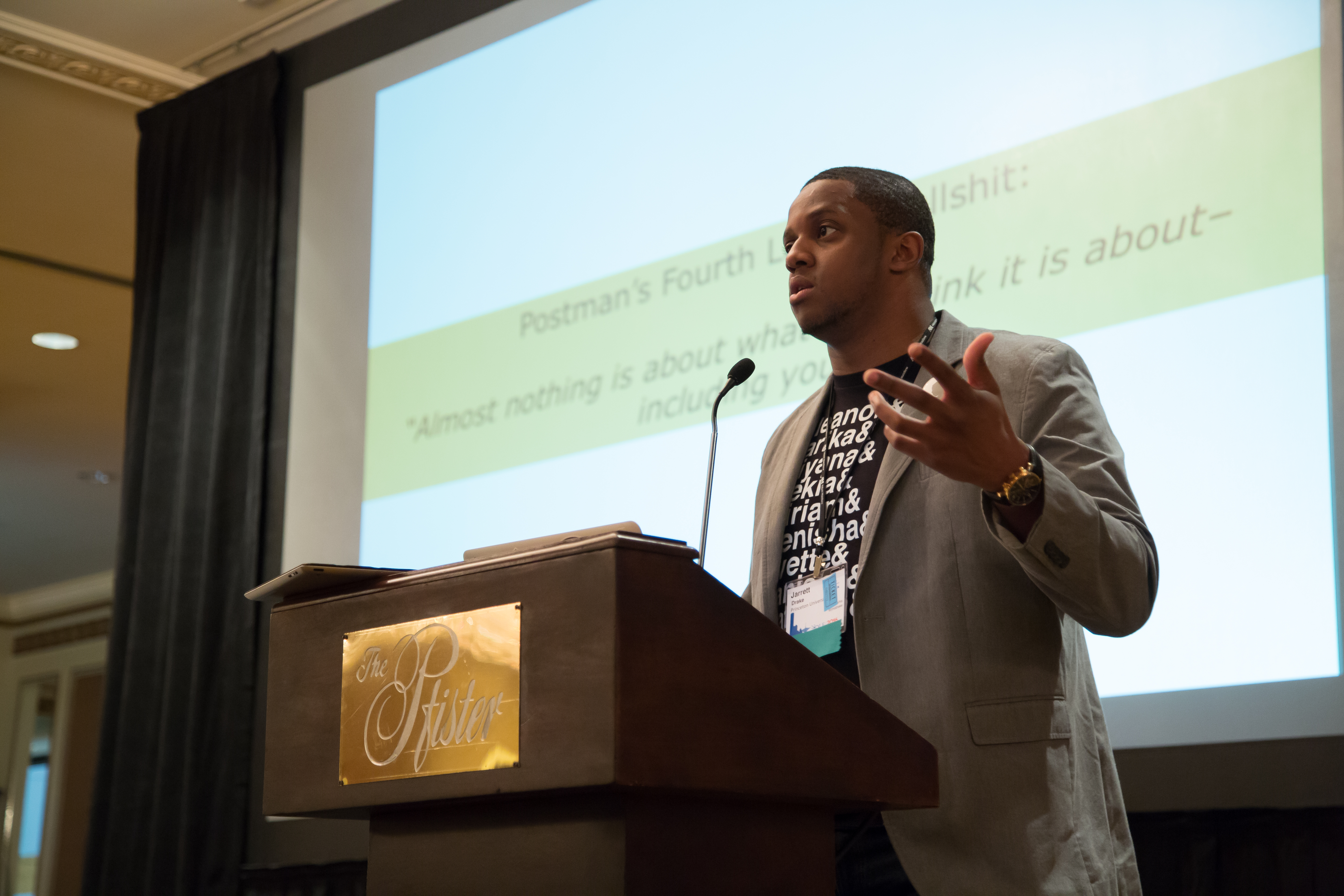
We learned more about Jarrett and his work in the following interview:

You gave the keynote at the DLF Liberal Arts pre-conference in November with the title, “Documenting Dissent in the Contemporary College Archive.” In your talk, you cited Neil Postman’s Fourth Law from his essay on “Bullshit and the Art of Crap-Detection:” “Almost nothing is about what you think it is about–including you.” Can you talk about why you cited this, and how it relates to archiving and documenting history?

I read the article during a class I was teaching in prison, English 101. It was on the syllabus, and I read it as an instructor. Ever since I read it, I see those types of categories not only within archives, but elsewhere. The University of Washington Information School is doing something interesting: they are proposing a new course called “Calling Bullshit in the Age of Big Data.”

We need to develop stronger information literacy skills in the public. Postman’s essay is a great place to start.

In that keynote, you end by saying that “we need archives to be liberational and have liberational value.” Can you talk about how you think this can happen in the archival community? 

We have to involve new types of communities in the entirety of the archival process. That’s a new type of declaration. Bringing stakeholders of all variety (like community members as selectors) will be really important, and connecting that process to the larger process for liberation. The more work I do, the more apparent it is that there’s no way to talk about liberational value if you don’t address the needs communities are facing. LGBT and black and indigenous communities – we need to have them as central. We need to center on justice and not be afraid of politics. Archives have never been neutral – they are the creation of human beings, who have politics in their nature. Centering the goals of liberation is at the heart of the issue.

What specifically can community members do to be leaders and teachers in expanding the scope of archives?

We can all be listeners and learn from these communities. We need to think of it as an information exchange. There are communities who have been fighting to hang on to their history, and institutions that have money would do well to listen to the communities and partner together to ensure a more robust record of human activity. Technology may be different for digital archives, but foundation is the same as other archives – building trust, and protecting user privacy. Archives are much more a social endeavor – they must also encourage use and promote value. Community members are more successful at that than archival institutions.

Can you talk about the parallels between the community of liberal arts colleges and the broader digital preservation community, in terms of archiving past and future?

The differences have to do with immediate environments. There is an archival tradition in state and Federal governments – a much longer tradition than for other communities. For example, they sometimes face the threat of significant budget cuts or even complete de-funding. Archivists in academia don’t face this. As the line becomes blurred between higher education and governments, some politicization issues might creep into academic archives. For example, the US Department of Education is a funder of academia; if that department is increasingly politicized, those impacts may be felt at college campuses, and may affect archives.

Your work supporting “A People’s Archive of Police Violence in Cleveland” has quickly become an example for a variety of projects in the field. You also recently initiated a project at Princeton: Archiving Student Activism at Princeton (ASAP). Can you talk about what was challenging in this work? What you found surprising? 

First, both of these are very collaborative efforts and draw on labor from dozens of other archivists and lay citizens. Second, while the work on the Police Violence archive was unfolding, there were things that I hadn’t experienced – metadata issues, file format issues, content type issues. Then we faced same challenges at Princeton with the Student Activism project. I thought that I could anticipate digital problems that would arise; I realized that wasn’t the case. You need to know when to abandon existing ways of thinking of things and realize that knowledge is always relative and contextual.

Can you talk about challenges in identifying and preserving provenance in digital archives and your ideas for how to imagine a new principle in this area?

After doing work with the collaborative Police Violence and Princeton Student Activism projects, it became evident that the traditional way of thinking of provenance was increasingly outdated. We need to have a new way of thinking about this. Angela Davis has made an argument when writing about the history of prisons–are prisons obsolete? Have they run their course and do we need new ways to think about justice? I think we can make same arguments about provenance. Why have we adhered so uniformly to a principle of provenance that was defined almost two centuries ago? Maybe it’s time to assert different types of principles. Maybe we need a multiplicity of ways of engaging the past, and bring people in.

Can you talk about challenges of describing archives and archival items, and what you think is most important to the researcher? And how should we make changes in what we are doing in this area?

New principles – higher level abstract principles – will necessarily inform metadata, and maybe remove emphasis on metadata. Before Edward Snowden, only librarians and archivists used that word, “metadata.” It’s not the only useful way to get access to the past. New principles might incorporate metadata but maybe it’s less and less relevant. Traditional metadata serves the need of users who come to the archive as individuals (such as researchers), mining multiple sources to product a monograph, for example. Maybe community usage requires different principles — less emphasis on citation and disambiguation and more emphasis of integration into people’s every day lives. We should think about options for less emphasis on research needs and more on community-driven and public-facing needs.

How does the community-driven work relate to crowd-sourcing?

Crowd-sourcing may be an element of it, but it goes beyond that. I was reading an article about archives in Egypt, which talks about tapping into an archive by having a big community gathering, and projecting old films with significance to the community on to a big screen. We should be encouraging other kinds of usages – we need to get a large number of people to interpret and to enjoy the process. My office at Princeton is right next to the reading room – I literally get to see everyone who comes into the reading room, and they are always so serious. Would it be so bad to encourage people to smile or enjoy for the sake of enjoyment?

What do you think the innovations have been in the area of archiving in the past few years? And where do you think innovation plays a role?

I associate that word “innovation” with Silicon Valley, tech start-ups. We are leveraging technology that didn’t exist previously; for example the Cleveland Police Violence archive gets a lot of its inspiration from examples of communities of people doing ad hoc organizing on Twitter. We now see how people do organizing through Twitter. That inspired how we communicated. We have tools that didn’t exist 10 years before. These are not just social media; but also crowd-funding; and campaign websites. This leads to new tools – such as “Documenting the Now” application. Hopefully there will be a large-scale project that someone will build using that kind of tool. I see innovators as those who can create new types of tools that people can take advantage of.

Can you talk about the parallels between analog and digital in your work? Can you talk about the challenges of perceptions in this area?

Both processes involve people at all steps in the way. In both cases, we need to develop and formulate trust with communities; we need to demonstrate responsibility in terms of keeping materials. People have to believe that you will treat their materials respectfully and responsibly. There is also the issue of raising awareness of the existence of your materials. Both digital and traditional archives have been struggling with this.

Differences stem from technological differences in paper vs. digital technologies. There is a greater variety in digital records and there are more complex relationships among creators. It is increasingly difficult to identify who is the creator or the owner of a digital object. I referenced this in my talk at the Radcliffe Institute, available at here. Maybe we can use technology tools in the future to discover and describe multiple ownerships of materials.

The site for the Archiving Student Activism at Princeton (ASAP) has a statement that the university archive will assure the confidentiality of the records for up to 20 years. How do you think the researcher 20 years from now may be served differently than we serve researchers today?

We had recently updated the access policies for Princeton University archives. For university records (e.g., administrative office or academic office), we close access for 40 years from the date of creation. Records from student organizations typically were open from the moment of transfer. We knew this would be an area that could introduce risk to creators of records, so for ASAP, we came up with a solution that let the groups pick. 80% of the groups picked no access restriction at all, and some picked 10 years; and some picked 20 years. We worked to make the policy a little clearer. We want to be honest and make it clear to the groups that records will be open probably during their lifetime. We try to coach the student organizations in these issues.

We try to include as much contextual information as possible at the time we receive records; we still create finding aids and other access tools for collections with 20 year embargoes and we hope a researcher in 20 years will have the same knowledge at that point as we had we created the finding aid. We also hope more sophisticated tools will exist in 20 years. We hope that we will be leveraging some of the textual analysis software applications by then – and making those more suitable for graphical access. But I wouldn’t be completely surprised if usage and tools aren’t that different. I am surprised that we’re not further along than we are. People talk about the Information Revolution and the Information Economy; however, we seem to be getting worse at making sense of a lot of information.

What ideas in your area of interest do you think are the most challenging for people in your field? Or for people outside of it?

I will say that there are challenges in archives focused in certain areas. For example, there has been a lot of discussion about the goals and the work resulting from #ArchivesforBlackLives. Some ardent archivists in Philadelphia, where I currently live, picked up the hashtag and are starting to organize around it, which is great. But it’s unfortunate that some people in the field have been critical of their efforts, so we have to ask ourselves a hard question, which is: why does an emphasis on black lives disturb people in this field, and in this country, so much? Why does an affirmation of black humanity offend you, if black people are indeed people to you? Of all the ideas or arguments I’ve circulated in the last few years, #ArchivesForBlackLives is the only one to my knowledge that’s received open pushback and criticism. This reality makes the work that much more crucial.

Based on your work and areas of interest, what kinds of work would you like to see the digital preservation and stewardship community take on?

We should be attuned to issues of surveillance, privacy and digital rights (including rights to be forgotten). There are sectors of community engaging in these topics – like “Documenting the Now.” A huge surveillance apparatus has grown since 9/11. There’s the possibility of using those tools in new ways. There will be archivists inside and outside the government that will be asked to do things in the course of their jobs that potentially pose human rights violations, and the community needs to support colleagues in efforts to use knowledge and skills sets responsibly and judiciously.

Can you suggest other people who are doing interesting or innovative work that you think might be of interest to the digital preservation community?

I’m always interested in finding and talking to bright minds in the field of archives, and I try to emphasize on uplifting newer names in the field as opposed to older ones.

Here are some of work and people who I am aware of:

The people, such as Bergis Jules and Ed Summers, working on “Documenting the Now”;

The people, like Eira Tansey, working on Project ARCC (climate change archives);

Everything that Stacie Williams, most recently of the University of Kentucky, writes or does should have the attention of everyone in the field;

The ASAP project wouldn’t have happened like it did without the inspiration from Kent State University’s Lae’l Hughes-Watkins and the project she organized there.

Those folks are not new to this, they’re true to this. Any library would be lucky to have them as a director.

Newer on the scene but also with great ideas, energy, and direction (key ingredients for innovation) are folks like Elvia Arroyo-Ramirez, Micha Broadnax, Elena Colon-Marrero, Carmel Curtis, Harvey Long, Dominique Luster, and Itza Carbajal, just to name a few. Each of them possesses a deep knowledge of archival praxis, including born-digital challenges, and will be—already are—change agents in the world around us.


Innovation Sharing and Knowledge Exchange in Mid-Michigan: An NDSA Interview with MMDP

Nicole Garrett Smeltekop
Matt Schultz

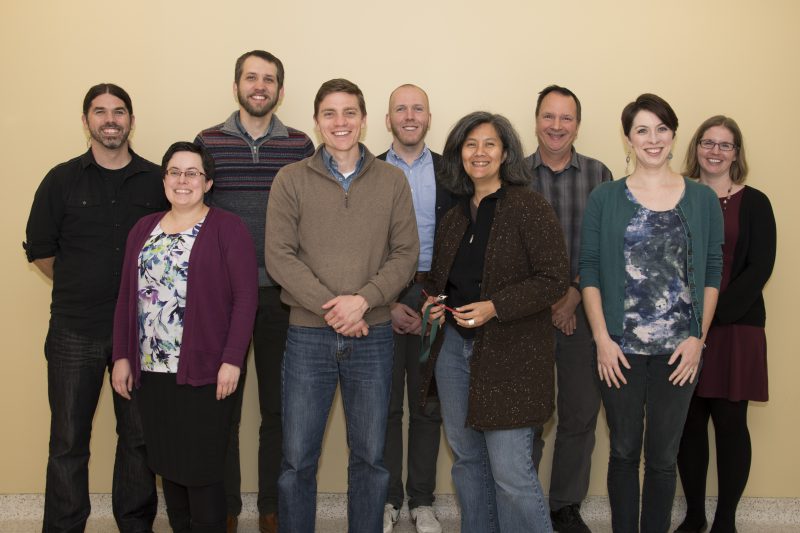
Every year, the National Digital Stewardship Alliance recognizes and encourages innovation in the field of digital preservation stewardship through its Innovation Awards. We’re thrilled to continue our interview series with two planning committee members of the Mid-Michigan Digital Practitioners group (MMDP), Nicole Garrett Smeltekop and Matt Schultz. The MMDP received NDSA’s Innovation Award for organizations due to its taking an innovative approach to providing support and guidance to the digital preservation community. You can find all of our interviews with the NDSA Innovation Award winners here.

Recognized for its highly original and successful organizational model in fostering innovation sharing and knowledge exchange, the MMDP will convene for its next meeting in March 23-24 2017.

Please tell us a little bit about yourselves and how you both became involved with the MMDP!

Nicole: I first became involved with MMDP at the the very beginning in 2013, but I didn’t join the planning group until the following year. In 2013, I was a lone arranger archivist, and very excited to be part of a low-key group that talked about the realities of digital preservation. My budget was near $0, but standards were important to me. I remember some great talks and consensus that best practice is really beyond the resources of anyone right now, so finding a good enough solution for your institution is totally fine. It was such a relief to hear that at a professional meeting! In 2014, I switched jobs to become a special materials cataloger and metadata librarian at a much larger library. My job deals with the metadata aspects of things, so going to meetings and hearing about other facets of digital curation/scholarship/etc. is really helpful as I think about decisions beyond my metadata based perspective for our digital repository.

Matt: My first intersections with MMDP started with a visit to the community’s Fall 2015 meeting at Albion College. I had just come on board as Grand Valley State University’s new Metadata & Digital Curation Librarian. I was blown away by the format and quality of the meeting, and even more so by the camaraderie of the group. There was an immediate sense of welcome and invitation to dive in and connect. Not surprisingly I was eager and happy to help host the next Spring 2016 meeting at GVSU. Working with the planning committee to prepare for that meeting was also incredibly enlightening. Very open, but also very on-task and focused.

The MMDP was awarded the NDSA Innovation Award for Organizations for its highly original and successful organizational model in fostering innovation sharing and knowledge exchange. Could you talk a bit about MMDP’s organizational model and the planning group?

Nicole: The planning group is a self selected group of people who help plan the meetings. Most of us are from Michigan State University, but we have a few others from other Michigan institutions. For the format of the meetings, I think we looked around at what wasn’t being done and filled a hole. Lightning talks, discussions, and time for general networking time rather than standard panels makes us unique. We also keep our meetings free and pretty low-key, so I think it encourages new people and fosters more real discussion. From what I can tell, no one is in “expert” mode – we’re all dedicated to learning more from each other and respect the knowledge each of us brings.

Matt: I just would echo all of what Nicole said. As we concluded the Spring 2016 meeting at GVSU, I was pretty humbled to be immediately approached by the planning team to come on board with an open-ended invitation to contribute some of my own guidance and leadership to planning for future meetings. There were no hoops to jump through with the existing planners. As we fired up discussions for the Fall 2016 meeting at MSU, I was also really struck by the willingness of the planning team to open up our calls to the entire MMDP community. Anybody could drop in and be a fly on the wall or throw in their two cents. I think that is so important to keeping in step as a community and carving out space for new ideas. The DLF Assessment Interest Group takes a similar open, low barrier to entry approach and I think it really just expands the landscape of mutual interests, concerns, and approaches.

MMDP meetings bring together a wide range of professionals, including librarians, archivists, museum curators, historians, and more. The meetings also attract student groups, practicing professionals, vendors, and the general public. How has membership grown and are there particular groups you’d like to increase in participation or continue to tap into?

Nicole: I’d like to see more lone arranger and small shop participation. When I was a lone arranger, I found just talking to people at larger institutions so incredibly helpful in figuring out what was feasible for me and what wasn’t. Also, those jobs require a lot of creativity with resources, time, and skills, so the people filling them are usually excited, driven and creative!

Matt: I haven’t been with the group since the very beginning, but my sense is that it has grown steadily year upon year. One interesting bit of culture within this group seems to be less of a focus on tracking numbers, but more on creating new spaces and opportunities with each meeting to add to the diversity of both institution types and professional backgrounds. With each meeting we’re looking to hit a region and demographic we haven’t yet or that we haven’t hit very recently. We put a Code of Conduct in place that enshrines our inclusivity and enlists the community in upholding that standard. Within that Code of Conduct we also carved out a respectful space for vendors, and I think they feel welcome, and the attending institutions don’t feel pitched at, if you know what I mean.

The MMDP held its first meeting at MSU in August 2013 and the group will convene for its next workshop and meeting on March 23-24 2017. Could you share a few insights that you’ve learned over previous meetings?

Nicole: Perhaps unsurprisingly, people didn’t like the hour long talks and preferred time for networking. We also readjusted our lightning talks and birds of feather discussions to mimic each other, as some feedback was that the lightning talks were exciting, but participants felt like they wanted time talk further about the topics and avoid the whiplash feeling that can sometimes come after a round of lightning talks.

Matt: Like I said, I haven’t attended all of the meetings over the years, but even looking back across the few meetings I’ve had the privilege of participating in, I have seen some interesting progressions. At the Fall 2016 meeting at Michigan State University we made a point of offering both a technical and a not-so-technical set of half-day workshops. One was on XML/XSLT and the other was on digital preservation policy development. So, there was a little something for everyone. The workshops spanned a whole day back-to-back, and we were curious to see how that might affect attendance, and were just so impressed with the turnout for each workshop. I think the community appreciates the willingness to try new things with the program for each meeting. It keeps it fresh.

The agendas of past meetings signal the compelling and varied work of the professionals engaged in creating and curating digital collections in Mid-Michigan and the surrounding area. Could you discuss a particularly interesting topic or issue trend you’ve seen develop?

Nicole: Matt can speak more on this, but I’m excited to see his idea of a hackfest develop! I also like seeing that although we have a core of devoted attendees, the makeup of each meeting is quite a bit different. I like seeing new faces and am happy to see our outreach efforts are reaching people perhaps not on the typical professional listservs (local historians, corporate archivists, etc.)

Matt: As Nicole is alluding, the idea of incorporating some hackfests into the meetings seems to be taking off. We are using “hackfest” in a very loose sense to span everything from focus grouping a technical workflow, to spitballing wireframes, to breaking up into small action groups and building some new tools and resources for the community. I recently suggested that we “hackfest” a set of lightweight online tools to facilitate knowledge and resource exchange within the MMDP community. Megan Kudzia and Robin Dean from Michigan State University are going to take that ball and run with it for a half-day hackfest workshop at the next Meeting in March at Wayne State University.

MMDP meetings are designed democratically via pre- and post- conference surveys. Based on feedback from previous events, are there new developments you’re excited to try out for the next meeting?

Nicole: We always ask for presentations based on the survey results of what the community wants to hear about. At the last meeting, we expanded the workshops to be half day rather than 2 hours, and based on the feedback on this meeting’s survey, we will continue doing half day workshops. Attendees really liked that more time allowed them to delve deeper into the topics.

Matt: In the run-up to this next meeting there has also been a concerted push to reach out to student groups and get them attending and involved with this community. That and some targeted outreach to professionals, faculty, and students who are interested in digital humanities.

Could you offer advice for folks interested in beginning and sustaining their own regional practitioners group?

Nicole: Having some supportive big institutions and networking with other professional organizations for support is really helpful! We’re able to offer these meetings at no cost (including lunch!) based on the generosity of the larger universities in our area as well as a partnership with the Michigan Archival Association, who sponsors a portion of the meeting cost.

Matt: My advice would be…don’t be afraid to start small and build from there. Avoid thinking too broadly when it comes to your geography. Draw some reasonable lines around the area of community such that it is not too onerous for folks to physically travel to meetings. Make a point to move your events around to different hosts every year or throughout the year. Don’t get too wedded to one format for your meetings or events, but also don’t change things up radically between each meeting. I see the MMDP community at the moment thinking and working through some processes for putting a bit of stable planning infrastructure in place, which is really cool because it feels like an indicator of maturity. But at the same time, watch out that you don’t over-formalize things. Keep the infrastructure lightweight and nimble. Rotate the administrative roles and duties. Pass the batons frequently. Keep a spirit of openness to fresh ideas front and center and on the table always. And just plain have fun! Heavy on the humor and camaraderie!

NDSA Future Steward on Community Web Archiving: An Interview with Samantha Abrams

Every year, the National Digital Stewardship Alliance (NDSA) recognizes and encourages innovation in the field of digital preservation stewardship through its Innovation Awards. We’re delighted to talk with Samantha Abrams, recipient of the 2016 NDSA Future Steward Award, which recognizes emerging leaders taking a creative approach to advancing knowledge of digital preservation issues and practices. You can find all of our interviews with the NDSA Innovation Award winners here.

Samantha recently moved from Madison, Wisconsin, to Brooklyn, New York, where she works as the Community Archivist at StoryCorps. She is recognized for her work with the Madison Public Library and its Personal Archiving Lab as well as her initiative to create innovative projects and classes.

Can you share your thoughts and reflections on the state of community web archiving?

I’d argue — honestly and sincerely — that community web archiving has never been better. More and more smaller organizations — like public libraries, not-for-profit organizations, and small repositories — have started to realize that web archiving is well is within their reach, and they’ve started to do it. It helps, too, that the web archiving community is filled with so many conscious, smart people, who are looking to share what they’ve learned — and what they still have questions about — through doing their own work. One project — among so many — that I’m particularly excited about is Documenting the Now, which is being spearheaded by people genuinely interested in doing this web archiving (and social media archiving) work ethically, and for the greater good.

Can you offer a few suggestions for people interested in establishing a web archiving program for their own communities?

Yes! Two things: start small, and understand that you’ll never create the perfect web archive. Other things to think about: the archive’s target audience; the archive’s access points; how you’ll promote the archive; duplicate work; cost; sustainability; and inclusivity. Thinking critically — often — about the web archiving program you’re attempting to create gives it focus: often the desire to collect it all — quickly — becomes the plan, but what good is an over-saturated, unsearchable, unusable web archive? Define your collection: set parameters, and outline exactly what you will — and will not — collect. Don’t build something that your organization cannot commit to long term. Web archives cost money, and require labor — real, hands-on, consistent labor. And if your web collection is meant to mirror the community you serve, ask your community what they’d like to see in the collection. What websites represent the community? Where do your patrons turn for news? Where do your patrons post their creative work? Don’t be afraid to revise and rethink, either — web collections, like the web itself, aren’t meant to be stagnant.

What advice would you offer to people interested in entering this field?

I have some by-the-book advice, like: take one, or two — or, like, five — technologically-focused courses while you’re in school, and practice those skills — at whatever level possible — as your career unfolds. And if you’re in school, and you have the time and schedule flexibility, take a class or two that has nothing — nothing at all! — to do with your field of study: do it to challenge the way you think and behave, and do it to remember that your way of thinking — and your field’s way of thinking — isn’t the only way of thinking. Other advice? Read — academic journals, fiction, the newspaper, poetry! — as often as you can: on the train, for ten minutes before bed, over lunch. Ask questions, and look towards people who are — right now — where you’d like to be in five years. Understand your community, both as an information professional and as a member of that community. What do the people you serve need? With what do the people you serve struggle? Center your community, and center those who have been excluded, and marginalized, and oppressed. As a student, and as a professional: be considerate, and support your peers and colleagues. And keep learning.

Could you tell us about your role at StoryCorps?

I’m the Community Archivist at StoryCorps — which means several things. Much of my job, and day-to-day work, is quite technical in nature: I process, spot-check, and transfer digital interview files; I receive and review paperwork associated with StoryCorps interviews; and I work with interview metadata (like participant information, keywords, and interview descriptions). The StoryCorps collection is — by any standard — quite large: in thirteen years, StoryCorps employees have collected over sixty-five thousand interviews on the road and in our Booths, and our listeners and participants have used the StoryCorps App — StoryCorps.me — to record over one-hundred and fifteen thousand interviews. And each and every one of these files requires technical, archival care from all of the StoryCorps archivists and our partners at the Library of Congress. I do extensive work, too, with our community partners: I help interested organizations build and receive archival collections using StoryCorps audio, and assure that each partner understands how to care for their collection, which is entirely digital in nature. I also work closely with and train StoryCorps Facilitators, who are integral to the success of the organization: facilitators are the ones who sit in on our interviews, set up and monitor the interview equipment, take notes, and enter interview metadata. There’s always work to be done at StoryCorps, and so much of it involves listening to — and sharing the stories of, and learning from — people.

Are there any projects that you’re currently working on and excited about that you can share with us?

Yes! All of StoryCorps is hard at work on the development of the StoryCorps Public Archive — a project funded by the National Endowment for the Humanities, that will make many full-length interviews from the StoryCorps collection available online, for free, to researchers, educators, and members of the public. It’s sure to be a wonderful collection, and we’re eager to share what we’ve been working on. Personally: I’m working with the fabulous folks over at Programming Historian to draw up a lesson on personal archiving in public libraries, complete with equipment lists and instruction guides and more! And, theoretically, amidst the rest, I’m graduating in May with my Master’s from the University of Wisconsin-Madison’s iSchool! One semester to go!

Skip to content