DigiPres 2021 Keynote Speaker: Dr. Tonia Sutherland!

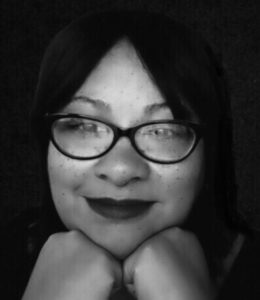
We are pleased to announce Dr. Tonia Sutherland Dr. Tonia Sutherland headshotas the keynote speaker for Digital Preservation 2021: Embracing Digitality (#DigiPres21). Dr. Sutherland is an Assistant Professor in the Library and Information Sciences Program at the University of Hawaiʻi at Mānoa where her work focuses on memory, community, and technology. Dr. Sutherland’s book Digital Remains is forthcoming from the University of California Press. Since she will be joining us for the virtual event from Hawaiʻi, her keynote address, titled “After the Archives: On Living and Dying in Digital Culture,” will take place halfway through the program as a plenary session.

For more information on Dr. Sutherland’s keynote talk – or to explore the rest of the DigiPres program and affiliated events – be sure to review the program schedule.

Conference Details and Registration Information

NDSA Welcomes Eight New Members

As of 17 September 2021, the NDSA Leadership unanimously voted to welcome its eight most recent applicants into the membership. Each new member brings a host of skills and experience to our group. Keep an eye out for them on your calls and be sure to give them a shout out. Please join me in welcoming our new members.

Botanical Research Institute of Texas

The Botanical Research Institute of Texas (BIRT) was founded with an institutional commitment to the preservation and dissemination of botanical knowledge. BRIT’s core collection is the Herbarium which holds almost 1.5 million preserved plant specimens. Approximately 70% of this collection has been digitally imaged and is continually growing through ongoing digitization efforts. These specimen images and data are disseminated through data portals such as TORCH and SERNEC and preserved through partnerships with the Texas Advanced Computing Center at the University of Texas and CyVerse.

Oklahoma State University Library

The Oklahoma State University Library has been dedicated to digital preservation for over two decades, beginning with efforts to preserve and make accessible online Charles Kappler’s Indian Affairs: Laws and Treaties. Digital preservation efforts were first enacted by the Library’s Electronic Publishing Center (EPC, 2000-2008), but larger initiatives were soon in place throughout the Library. Another major contributor in the digital preservation area has been the Oklahoma Oral History Research Program, which was founded in 2007 and has been fully digital since its inception.

NYC Department of Records and Information Services (DORIS)

The New York City Department of Records and Information Services (DORIS) manages formats dating 1640-2020 and 500 TB of both digitized and born digital material. A team of 8 permanent staff are dedicated to digitizing collections at a growth rate of 150TB per year. DORIS is preparing to ingest ~200 TB of born digital government material with the mayoral changeover in January 2022. Since 2017, DORIS has used BitCurator for reviewing and ingesting born-digital content from city agencies. 

Amistad Research Center

The Amistad Research Center (ARC) has been digitizing archives and manuscripts, photographs and text for online access and digital exhibitions for a number of years. In partnership with Adam Matthews Digital and other library vendors, one record collection has been digitized with interest in digitizing other collections housed here. Additionally, ARC established over the last decade a robust audiovisual reformatting program with the ability to digitize most audio and some video formats in house, while outsourcing film collections or U-matic videotapes as funding is acquired. ARC is now exploring long-term cloud storage solutions for our high quality access and digital master files, as well as the funding required to maintain such storage.

University of Dubuque Charles C. Myers Library 

The Charles C. Myers Library manages its preservation environment using open-source, on-site, and off-site, and cloud technologies. The library curates digital exhibitions featuring  minority populations in the aviation field and underrepresented groups on campus over the last 100 years at the university.

University of Arkansas at Fayetteville Libraries

At the University of Arkansas Fayetteville Libraries there are two units that participate in various levels of digital preservation. The Digital Services Department provides various stage levels of digital preservation depending on the collection scope and grant agreements for digitization.  Special Collections, which also houses the University Archives, performs a detailed digital preservation process.

The African American Research Library and Cultural Center 

The Broward County African American Research Library and Cultural Center (AARLCC) is a public research library. Their digitization and digital preservation efforts hope to create access and awareness of content in their collection which focuses on Black history and life. AARLCC is also using 3D scanning for artifacts. As a Black collecting library and archive, another area of interest is the work of web archiving for Black collecting institutions. AARLCC has co-created the Archiving the Black Web initiative to support efforts of similar Black collecting organizations and to begin to document and preserve content on the web related to Black history and life.

Congregation of the Sisters of St. Joseph in Canada 

The Congregation of the Sisters of St. Joseph is a consolidated archive committed to following best practices in ensuring both born-digital records received through transfer or donation and analogue records which have been digitized for preservation or outreach purposes, are preserved long-term. The Congregation has built an in-house digital preservation system using free and open source software, following the OAIS model and strives to achieve the highest NDSA levels of preservation over time.

~Nathan Tallman, NDSA Vice Chair

Catching up with past NDSA Innovation Awards Winners: Dorothea Salo

In 2017, Dorothea Salo received the NDSA Innovation Award in the Educators category for her development projects, RADD (Recovering Analog and Digital Data), PROUD (Portable Recovery of Unique Data), and PRAVDA (Portably Reformat Audio and Video to Digital from Analog). These projects were designed to extend the reach of digitization and preservation tools to those without the resources of large-scale memory institutions. Today, she is a Distinguished Faculty Associate in The Information School at University of Wisconsin-Madison and took some time to offer us an update on these projects, her work, and her plans.

What have you been doing since receiving an NDSA Innovation Award?

A little bit of everything, as always! The iSchool is in a time of significant change, from joining the brand-new Computer, Data, and Information Sciences division to hiring several new faculty to launching an entire new MS Information degree. I’ve been building and teaching a bunch of new courses, working with a peerless team of co-investigators on the Data Doubles research project, doing solo work on library privacy, teaching for the Digital POWRR workshop series… and, of course, surviving (knock on wood) the COVID pandemic. Right now I’m teaching an undergraduate computer-science course, the first time I ever have.

What did receiving the NDSA award mean to you?

Paraphrasing my favorite actress from my favorite movie: “it makes me feel as though my hard work ain’t been in vain for nothin’.” Quixotic solo projects like RADD can absolutely feel frustratingly pointless at times. I can’t say enough about how much I appreciated recognition from a group of people as wise, experienced, and pragmatic as NDSA. Bless you all!

What efforts/advances/ideas of the last few years have you been impressed with or admired in the field of data stewardship and/or digital preservation?

Oooh, let me check my Pinboard… I definitely think the Oxford Common File Layout and the Portland Common Data Model are valiant and worthwhile attempts to solve real issues in an efficient and effective way. I’m always grateful for NARA’s work, like their Digital Preservation Framework on GitHub. The revised NDSA Levels of Digital Preservation are terrific. On a lighter note, I also really appreciate the Australasia Preserves and Digital Preservation Coalition YouTube channels for their karaoke takes on preservation. They’re so fun and great!

How have the RADD, PROUD, and PRAVDA projects evolved since you won the Innovation Award? 

Less than I wish they had – I just haven’t had the time or the strength. I have managed to get several pieces of equipment properly overhauled and repaired, which given that I have no dedicated or reliable budget and repairs are expensive is a feat. (Of course as soon as I say this – I have three Digital8 cameras that are all aggravatingly broken in different ways…) I’ve gotten some projects done for folks, though the pandemic made that extra-difficult. The PROUD and PRAVDA kits did a fair bit of traveling (including by air) and demos pre-pandemic, and they have held up like troupers. I couldn’t know in advance how well that would work, so I’m pleased to say that it’s been fine, no equipment casualties whatever. 

What I’m really rethinking now is the project model. I’ve demonstrated to my own dissatisfaction that I can’t manage RADD well as an all-comers rescue service: there isn’t enough of me, digitizing A/V takes too long, equipment breaks unpredictably, when the rig is in use I can’t take it out of service to improve it, and random-project work is too unpredictable to schedule. I’m tentatively thinking about an approach with a few more guardrails that provides more and better opportunities for iSchool students to get to know RADD and work with it.

What do you currently see as some of the biggest challenges in digitization and preservation for smaller memory institutions? 

You know, there was a time I would reflexively have yelled “funding!” in response to this question. Don’t get me wrong, funding is absolutely still a big obstacle! But the obstacle behind the funding obstacle, I think, is ignorance about what this work actually requires – everybody’s ignorance, from the general public to journalists to funders to legislators… all the way to actual information professionals. 

I went completely ballistic a couple of years back over a painfully ignorant, wrongheaded, and condescending article in Wired that came out shortly after the devastating Brazil national-museum fire, an article calling blithely for a “digital backup of cultural memory” with absolutely zero understanding of the magnitude and cost of such an undertaking. We can’t possibly get the funding to do the work we desperately have to do until there is a general understanding of very basic phenomena such as “audio and video digitize in real time.” 

Info pros don’t always make this better. I was told by a Digital POWRR participant that in some formal continuing education they’d done, the instructor, a respected archivist, had told them it was impossible to rescue data off digital media without a multi-thousand-dollar FRED device. If that’s what that archivist actually said (and it may not be, human memory being fragile)… it’s nonsense! PROUD rescues data from several common types of digital media at a small fraction of the cost of a FRED, and far more portably! This just breaks my heart, because when learners go home thinking they’ll never have the equipment budget, data will die of neglect. I built RADD, PROUD, and PRAVDA because I didn’t think it has to be this way. I still don’t!

 

NDSA Announces 2021 Slate of Candidates for Coordinating Committee

NDSA is happy to announce the 2021 slate of Coordinating Committee (CC) candidates. Elections will soon be held for three (3) CC members.  The CC is dedicated to ensuring a strategic direction for NDSA, to the advancement of NDSA activities to achieve community goals, and to further communication among digital preservation professionals and NDSA member organizations. The CC is responsible for reviewing and approving NDSA membership applications and publications; updating eligibility standards for membership in the alliance, and other strategic documents; engaging with stakeholders in the community; and working to enroll new members committed to our core mission. The successful candidates will each serve a three year term. Ballots will be sent to membership organization contacts in the coming weeks.

Stacey Erdman

Stacey Erdman is the Digital Preservation & Curation Officer at Arizona State University. In this position, she has responsibility for designing and leading the digital preservation and curation program for ASU Library. She is also currently serving as the Acting Digital Repository Manager at ASU, where she has been working with the repository team on migrating repository platforms to Islandora. She is the former Digital Archivist at Beloit College; and Digital Collections Curator at Northern Illinois University. She has been a part of the Digital POWRR Project since its inception in 2012, and is serving as Principal Investigator for the recently funded IMLS initiative, the Digital POWRR Peer Assessment Program. Stacey currently serves on the 2021 NDSA Program Committee, and is also a member of the Membership Task Force. She has been excited to see the steps that the NDSA has taken recently to diversify the member base, and would work as a part of the CC to help make this work mission-critical. Stacey feels passionately about making the digital preservation field more equitable and inclusive, and would be a strong advocate for expanding NDSA’s outreach, advocacy, and education efforts.

Daniel Johnson

Daniel Johnson is the Digital Preservation Librarian at The University of Iowa and Consulting Archivist for The HistoryMakers. Previously Johnson worked as a digital archivist at The HistoryMakers and as a project archivist for the Gordon Hall and Grace Hoag Collection of Extremist and Dissenting Printed Propaganda at Brown University. Johnson has experience working in digital preservation, digital archives, reformatting/digitization, digital file management, web archiving, metadata standards, database management and project management. Johnson has presented on digital preservation related topics at many conferences including the American Library Association, the Society of American Archivist, the Digital Library Federation and the Upper Midwest Digital Collections Conference. Johnson earned his B.A. degree in English from the University of Illinois at Urbana-Champaign in 2007 and his MLIS from the University of Illinois at Urbana-Champaign in 2009.

Jen Mitcham

Jen Mitcham has been working in the field of digital preservation for 17 years after an early career as an archaeologist. Her data preservation work began at the Archaeology Data Service where she worked on the preservation of a range of different types of datasets, including databases, laser scan data and Geographic Information Systems, also developing front ends for online access. At the Archaeology Data Service, she led a successful application for the Data Seal of Approval (now CoreTrustSeal) and was involved in the ‘Big Data Project’. From here she moved to the Borthwick Institute for Archives at the University of York where she focused on establishing policy and procedures for both digital preservation and digitisation. Here she was heavily involved in research data management, both as a facilitator in training sessions for researchers and in working on a preservation infrastructure. She led the Jisc funded project ‘Filling the Digital Preservation Gap’ which was a finalist in the Research and Innovation category of the 2016 Digital Preservation Awards. She currently holds the post of Head of Good Practice and Standards at the Digital Preservation Coalition and has been working closely with the UK Nuclear Decommissioning Authority over the last two years on a digital preservation project. As part of this work, she has been involved in the development of a new maturity model for digital preservation called the Rapid Assessment Model and chairs a task force with a focus on the preservation of records from Electronic Document and Records Management Systems. She works with Coalition Members internationally to help facilitate collaboration and communication in the field of digital preservation. Jen has been involved in several NDSA efforts, including the NDSA Levels Revision working group., NDSA Level Steering group, the Standards and Practices interest group, and the Fixity Survey working group.

Hannah Wang

Hannah Wang works at Educopia Institute, where she is the Community Facilitator for the MetaArchive Cooperative and the Project Manager for the BitCuratorEdu project. Her work and research focuses on digital archives pedagogy and amplifying and coordinating the work of digital preservation practitioners through communities of practice. She currently serves on the NDSA Staffing Survey Working Group. Hannah was previously the Electronic Records & Digital Preservation Archivist at the Wisconsin Historical Society, and has taught graduate-level archives classes at the University of Wisconsin-Madison. She is interested in joining the Coordinating Committee because she wants to advance the NDSA as an educational and advocacy resource for practitioners, particularly students and early-career professionals. She is also interested in exploring how the NDSA can align itself with the activities of other communities working toward the common goal of advancing digital stewardship practice through collaboration and knowledge exchange.

Skip to content