
NDSA’s Digital Preservation 2016 keynoter is Bergis Jules!

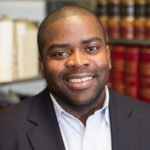
We are very pleased to announce that Bergis Jules is our keynote speaker for Digital Preservation 2016 in Milwaukee! The theme for the NDSA conference is “Building Communities of Practice,” and Jules’ keynote on the afternoon of November 9 will help kick off the major meeting and conference of the NDSA—open to NDSA members and non-members alike—focusing on tools, techniques, theories and methodologies for digital stewardship and preservation, data curation, the content lifecycle, and related issues.

Jules’ keynote will focus on the power and promise of diversity and inclusivity in digital preservation work, and we will share a title and abstract in the coming months. Jules’ work on Documenting the Now and other projects related to archiving social media and social justice movements, in combination with his personal record of involvement in NDSA’s working groups, will no doubt help inform and inspire the intellectual exchange, community-building, development of best practices, and national-level agenda-setting in the field, expected at #digipres16. The deadline to submit a proposal for the rest of the program is May 15th!

Digital Preservation 2016 Keynote Speaker: Bergis Jules

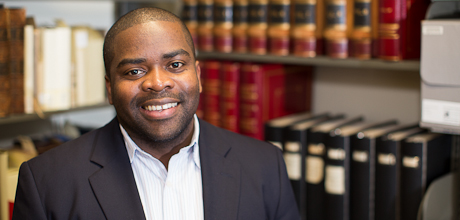
Bergis Jules
Bergis Jules is the University and Political Papers Archivist at the University of California, Riverside library, where he manages university archives, political papers, African American collections, and community archives projects. His previous work with community archives and African American collections include leading projects at the Black Metropolis Research Consortium at the University of Chicago, and designing and securing grant funding for the D.C. Africana Archives Project at George Washington University. Bergis helps lead the Inland Empire Memories consortium at the University of California, Riverside library, which is a community owned consortium of cultural heritage organizations, with the goal of uncovering and sharing the extremely diverse history of inland Southern California. He is a co-director on a 2016 IMLS funded National Forum grant to host a series of meetings across the country that will explore strategies and tools for integrating community archives in the National Digital Platform. In addition to his community archives work, Bergis is interested in the rich potential that social media and web archives hold for contributing to more diverse library research collections by helping to counter existing silences in our historical records, through inclusion of more voices from traditionally marginalized communities. He is one of the principal investigators on a 2015 funded project for social media archiving from the Andrew Mellon Foundation titled, Documenting the Now: Supporting Scholarly Use and Preservation of Social Media Content. The goal of the project is to build an open source and cloud ready tool, that will capture tweets and their associated metadata and digital content for long term preservation by archivists and analysis by researchers and others. Bergis received an M.L.S. with a Specialization in Archives and Records Management and an M.A. in African American and African Diaspora Studies from Indiana University in 2009. Beginning in September 2016, he will be doctoral student in the History Department at the University of California, Riverside. Find him on Twitter @BergisJules.


Digital Preservation 2016 will be the first held in partnership with our new host organization, the Digital Library Federation (DLF). Separate calls are being issued for the DLF Liberal Arts Colleges Pre-Conference (6 November) and 2016 DLF Forum(7-9 November)—all happening in the same location. Proposals are due by May 15th at 11:59pm Pacific Time!

National Digital Stewardship Alliance

Call for Proposals: Digital Preservation 2016: “Building Communities of Practice”

The National Digital Stewardship Alliance (NDSA) invites proposals for Digital Preservation 2016, to be held in Milwaukee, Wisconsin, 9-10 November 2016.

Digital Preservation is the major meeting and conference of the NDSA—open to members and non-members alike—focusing on tools, techniques, theories and methodologies for digital stewardship and preservation, data curation, the content lifecycle, and related issues. Our 2016 meeting will be the first held in partnership with our new host organization, the Digital Library Federation (DLF). Separate calls are being issued for the DLF Liberal Arts Colleges Pre-Conference (6 November) and 2016 DLF Forum (7-9 November)—all happening in the same location: https://www.diglib.org/DLFforum2016/

Proposals are due by May 15th at 11:59pm Pacific Time.  

About the NDSA and Digital Preservation 2016:

The National Digital Stewardship Alliance is a consortium of more than 160 organizations committed to the long-term preservation and stewardship of digital information and cultural heritage, for the benefit of present and future generations. Digital Preservation 2016 (#digipres16) will help to chart future directions for both the NDSA and digital stewardship, and is expected to be a crucial venue for intellectual exchange, community-building, development of best practices, and national-level agenda-setting in the field.

The conference will be held at the historic Pfister Hotel, just blocks from Lake Michigan, the Milwaukee Art Museum, restaurants, and nightlife. The hotel has an incredible Victorian art collection, an artist-in-residence program, and a spa. The NDSA strives to create a safe, accessible, welcoming, and inclusive event, and will operate under the DLF Forum’s Code of Conduct. Childcare subsidies for DLF Forum attendees also participating in Digital Preservation 2016 may be extended upon request. Contact ndsa@diglib.org for more information.

Submissions:

250-word proposals describing the presentation/demo/poster are invited (500 words for full panel sessions). Please also include a 50-word short abstract for the program if your submission is selected. Submit proposals online: https://conftool.pro/dlf2016/. Deadline: May 15th, 2016 at 11:59pm PT.

We especially encourage proposals that speak to our conference theme, “Building Communities of Practice.” Submissions are invited in the following lengths and formats:

Talks/Demos: Presentations and demonstrations are allocated 20 minutes each. Speakers should reserve time for interactive exchanges on next steps, possible NDSA community action, and discussion or debate.

Panels: Panel discussions with 4 or more speakers will be given a dedicated session. Organizers are especially encouraged to include as diverse an array of perspectives and voices as possible, and to reserve time for audience Q&A.  

Posters: Poster presenters will have the opportunity to interact with attendees one-on-one or in small groups, to exchange ideas and engage in conversation. (Guidelines for poster sizes will be provided on acceptance.)

Lunchtime Working Group Meetings: NDSA working and interest group chairs are invited to propose group meetings or targeted collaboration sessions. (Lunch provided.)

All submissions will be peer-reviewed by NDSA’s volunteer Program Committee. Presenters will be notified in July and guaranteed a registration slot at the conference.

US Presidential Election Notice:

Attendees arriving early for the DLF Forum (November 7-9) will want to plan ahead for early/absentee voting in the 2016 US Presidential Election. Full, state-by-state nonpartisan ballot information and important voter deadlines are available here: https://www.diglib.org/absentee/.

Program Committee, Digital Preservation 2016

We had a terrific response to our call for volunteers to help plan the NDSA‘s revived conference, Digital Preservation, and are pleased to announce the 2016 Program Committee!

  • Helen Tibbo, UNC-Chapel Hill (chair)
  • Nicky Agate, Modern Language Association
  • Mitch Brodsky, New York Philharmonic
  • Aaron Collie, Michigan State University
  • George Coulbourne, Library of Congress
  • Heidi Dowding, Indiana University
  • Bonnie Gordon, Rockefeller Archive Center
  • Carol Kussmann, University of Minnesota
  • Margaret Maes, Legal Information Preservation Alliance
  • Jenny Mullins, Dartmouth College
  • Miranda Nixon, University of Pittsburgh
  • Bethany Nowviskie, Digital Library Federation
  • Sibyl Schaefer, UC-San Diego
  • Frederick Zarndt, Global Connexions

Digital Preservation 2016 is the major meeting and conference of the National Digital Stewardship Alliance—open to NDSA members and non-members alike—focusing on digital stewardship and preservation, data curation, and related issues. This year, it will be held at the historic Pfister Hotel in Milwaukee, Wisconsin, 9-10 November 2016, in conjunction with the 2016 Digital Library Federation Forum (7-9 November).

Digital Preservation 2016 (#digipres16) will help to chart future directions for the NDSA, and is expected to be a crucial venue for intellectual exchange, community-building, development of best practices, and national-level agenda-setting in the field.

A CFP will be issued by mid April. Look here and at the NDSA’s website for more details soon!

NDSA calls for volunteers: Digital Preservation 2016

National Digital Stewardship AllianceThe National Digital Stewardship Alliance calls for volunteers from NDSA member organizations to join the Program Committee for Digital Preservation 2016.

Digital Preservation is the NDSA’s major meeting and conference—open to members and non-members alike—focusing on digital stewardship and preservation, data curation, and related issues. This year, it will be held at the historic Pfister Hotel in Milwaukee, Wisconsin, 9-10 November 2016, in conjunction with the 2016 DLF Forum (7-9 November).

Logistical arrangements will be handled by the Digital Library Federation, so that this committee can focus more fully on the program for #digipres16. Duties involve defining the vision for the event, drafting and circulating a CFP, coordinating the review and selection of proposals, crafting and publicizing the schedule, and collaborating with the DLF Forum planning committee to make this first conference partnership a success. We anticipate monthly group calls and regular email exchanges April-October. The Digital Preservation 2016 Program Committee will be chaired by NDSA Coordinating Committee member Dr. Helen Tibbo.

This is an opportunity to help shape a crucial venue for intellectual exchange, community-building, development of best practices, and national-level agenda-setting in the field of digital preservation—as well as to set the tone and direction for future NDSA events. Join us!

Volunteers from NDSA member organizations are asked to respond by Monday, March 28th. Please send an expression of interest to ndsa@diglib.org.

Digital Library Federation to Host National Digital Stewardship Alliance


NDSA DLFrev1BL_notag_200

Washington, DC, October 19, 2015—The National Digital Stewardship Alliance (NDSA) today announced that it has selected the Digital Library Federation (DLF), a program of the Council on Library and Information Resources (CLIR), to serve as NDSA’s institutional home starting in January 2016. The selection and announcement follows a nationwide search and evaluation of cultural heritage, membership, and technical service organizations, in consultation with NDSA working groups, their members, and external advisors.

Launched in 2010 by the Library of Congress as a part of the National Digital Information Infrastructure and Preservation Program with over 50 founding members, the NDSA works to establish, maintain, and advance the capacity to preserve our nation’s digital resources for the benefit of present and future generations. For an inaugural four-year term, the Library of Congress provided secretariat and membership management support to the NDSA, contributing working group leadership, expertise, and administrative support. Today, the NDSA has 165 members, including universities, government and nonprofit organizations, commercial businesses, and professional associations.

CLIR and DLF have, respectively, a 60- and 20-year track record of dedication to preservation and digital stewardship, with access to diverse communities of researchers, administrators, developers, funders, and practitioners in higher education, government, science, commerce, and the cultural heritage sector.

“We are delighted at this opportunity to support the important work of the NDSA and collaborate more closely with its leadership and vibrant community,” said DLF Director Bethany Nowviskie. “DLF shares in NDSA’s core values of stewardship, collaboration, inclusiveness, and open exchange. We’re grateful for the strong foundation laid for the organization by the Library of Congress, and look forward to helping NDSA enter a new period of imagination, engagement, and growth.”  

CLIR President Chuck Henry added, “The partnership between NDSA and DLF should prove of significant mutual benefit and national import: both organizations provide exemplary leadership by promoting the highest standards of preservation of and access to our digital cultural heritage. Together they will guide us wisely and astutely further into the 21st century.”

The mission and structure of the NDSA will remain largely unchanged and it will be a distinct organization within CLIR and DLF, with all organizations benefiting from the pursuit of common goals while leveraging shared resources. “The Library of Congress fully supports the selection of DLF as the next NDSA host and looks forward to working with NDSA in the future,” said Acting Librarian of Congress David Mao. “The talent and commitment from NDSA members coupled with DLF’s deep experience in supporting collaborative work and piloting innovative digital programs will ensure that NDSA continues its excellent leadership in the digital stewardship community.”

“The Library of Congress showed great vision and public spirit in launching the NDSA. And with the Library’s support and guidance, NDSA has grown to embrace a broad community of information stewards,” said Micah Altman, chair of the NDSA Coordinating Committee.  “And with the support and leadership of CLIR and DLF we aspire to broaden and catalyze the information stewardship community to safeguard permanent access to the world’s scientific evidence base, cultural heritage, and public record.”

CLIR is an independent, nonprofit organization that forges strategies to enhance research, teaching, and learning environments in collaboration with libraries, cultural institutions, and communities of higher learning. It aims to promote forward-looking collaborative solutions that transcend disciplinary, institutional, professional, and geographic boundaries in support of the public good. CLIR’s 186 sponsoring institutions include colleges, universities, public libraries, and businesses.

The Digital Library Federation, founded in 1995, is a robust and diverse community of practice, advancing research, learning, and the public good through digital library technologies. DLF connects its parent organization, CLIR, to an active practitioner network, consisting of 139 member institutions, including colleges, universities, public libraries, museums, labs, agencies, and consortia. Among DLF’s NDSA-related initiatives are the eResearch Network, focused on data stewardship across disciplines, and the CLIR/DLF Postdoctoral Fellows program, with postdocs in data curation for medieval, early modern, visual studies, scientific, and social science data, and in software curation.

Skip to content