NDSA Announces Winners of 2020 Innovation Awards

The NDSA established its Innovation Awards in 2012 to recognize and encourage innovation in the field of digital stewardship.  Since then, it has honored 39 exemplary educators, future stewards, individuals, institutions, and projects for their efforts in ensuring the ongoing viability and accessibility of our valuable digital heritage. The 2020 NDSA Innovation Awards are generously sponsored by Digital Bedrock.

Today, NDSA adds 8 new awardees to that honor roll during the opening plenary ceremony of the 2020 NDSA Digital Preservation Conference.   These winners were selected from the largest pool of nominees so far in the Awards’ history: 32 nominations of 30 nominees.  While the pool size made the judging more difficult, the greater breadth, depth, and quality of the nominations is a positive sign for the preservation community, as it is indicative of the growing maturity and robustness of the field.  This year’s awardees continue to reflect a recent trend towards an increasingly international perspective and recognition of the innovative contributions by and for historically underrepresented and marginalized communities. 

Please help us congratulate these awardees!  We encourage you to follow-up in learning more about their activities and the ways in which they have had a profound beneficial impact on our collective ability to protect and make accessible our valuable digital heritage.

Educators are recognized for innovative approaches and access to digital preservation through academic programs, partnerships, professional development opportunities, and curriculum development. 

This year’s awardees in the Educators category are:

Library Juice Academy Certificate in Digital Curation.  This program, launched in 2019, encompasses a six-course sequence for library, archives and museum practitioners wanting to learn more about and expand their skill sets for curating and maintaining unique digital assets. The curriculum offers comprehensive coverage of collection development and appraisal, description, rights and access, digital preservation, and professional ethics and responsible stewardship.  The program’s affordability, flexible scheduling, and online pedagogy encouraging engaged collaborative learning provides a unique opportunity for professional development and continuing education.  In particular, the emphasis placed on ethics and sustainability provides an appropriate counterpoint to other more technically-focused topics, drawing needed attention to critical issues of policy, finance, equity, and diversity.
Library Juice Academy Logo

International Council on Archive (ICA) Africa Programme Digital Records Curation Programme.  The Programme supports the professional development of new generations of digital archivists and records managers in Africa, a geographic and cultural region historically marginalized and underrepresented in international digital stewardship discourse, practice, and education. The Programme’s volunteer-taught study school uses open access readings and open source tools to minimize technical resource and financial impediments to participation, and to encourage creative repurposing of pedagogic materials in the participants’ local contexts.  The Programme also provides financial support for early-career practitioners and educators across the African continent to attend and learn, share their own teaching techniques and insights, and to build a professional research and teaching network.  Parallel instructional opportunities are offered for Anglophone and Francophone participants.  With a focus on “training the trainers”, the Digital Records Curation Programme promotes the development of maturing cohorts of stewardship practitioners and the growing professionalism of digital preservation activities focused on long-term stewardship of Africa’s vital digital heritage.
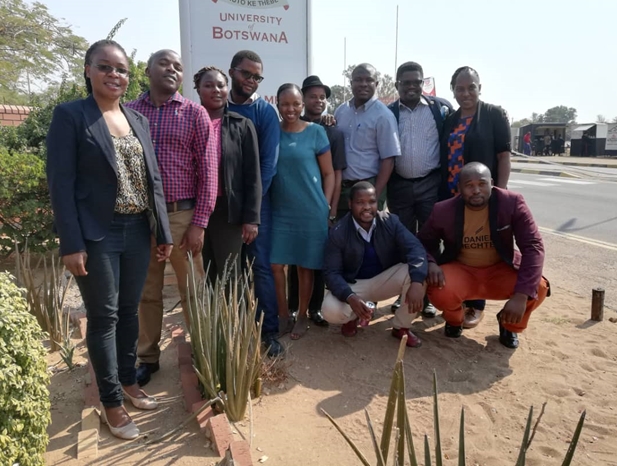
Photo of DRCP participants at the Botswana Study School
DRCP participants at the Botswana Study School. From left to right: Forget Chaterera-Zambuko (Zimbabwe), Vusi Tsabedze (Eswatini), Alina Karlos (Namibia), Abel M’kulama (Zambia), Tshepho Mosweu (Botswana), Umaru Bangura (Sierra Leone), Said Hassan (Tanzania), Ayodele John Alonge (Nigeria), Juliet Erima (Kenya). Seated: Thatayaone Segaetsho (Botswana), Makulta Mojapelo (South Africa)


Future Stewards are recognized as students and early-career professionals or academics taking a creative approach to advancing knowledge of digital preservation issues and practices. 

These year’s awardees in the Future Stewards category are:
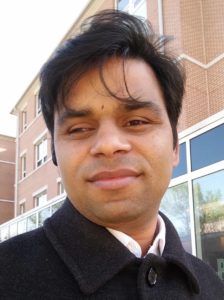
Photo of Sawood Alam
Sawood Alam

Sawood Alam.   A PhD candidate at Old Dominion University, Sawood has been an active participant in the digital preservation community via the International Internet Preservation Consortium, the ACM/IEEE Joint Conference on Digital Libraries, and other communities for years, presenting and reporting on the complex topics, like holdings of web archives, decentralized systems, archival fixity, web packaging, and more. As a developer and systems architect, Sawood is a strong advocate for open-source and open-access tools, and has offered courses and lectures on various programming languages like Linux, Python, Ruby on Rails, and more. A mentor to new graduate students and researchers, Sawood will join the Internet Archive after graduation, leveraging his engineering experience and his academic experience to perform outreach to research groups interested in making use of the Wayback Machine’s holdings.
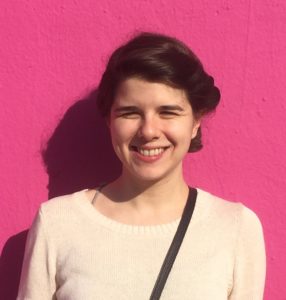


Carolina Quezada Meneses

Carolina Quezada Meneses.  As an intern, Carolina worked on a variety of projects that ranged from exploring new tools and software that help preserve, manage, and provide access to born-digital material, and helped develop a remote processing workflow that enabled University of California, Irvine (UCI) staff to work on the organization’s digital backlog while working from home during the Coronavirus pandemic. 

However, it is Meneses’s work with the Christine Tamblyn papers — which included numerous Macintosh-formatted floppy disks and CD-ROMs — that deserves additional praise: faced with ample technical challenges to providing access, Quezada created disk images of the floppy disks and CD-ROMs with specialized hardware, found a compatible emulator, and created screencast videos of the artwork, making the content accessible to a broader audience than traditional on-site access would typically allow.  Thanks to Meneses’s innovative thinking, a collection that had no prior level of access for 22 years is now accessible to researchers, and remains an example of her lasting dedication to providing access to born-digital formats.


Organizations are recognized for innovative approaches to providing support and guidance to the digital preservation community.  This year’s awardee in the Organizations category is:

National Archives and Records Administration (NARA).  NARA has a notable history of providing records management guidance focusing on digital preservation and addressing key factors to the successful permanent preservation of digital content. This year, the panel is pleased to distinguish NARA’s Digital Preservation Framework. Created after an extensive environmental scan of community digital preservation risk assessment and planning resources, this project recognizes that successful digital preservation requires both understanding the risks posed by file formats and identifying or developing processes for mitigating these risks. In response to this, the Framework provides extensive risk and planning analysis for over 500 formats in 16 type categories. The Framework can be applied across the lifecycle of digital content and is designed to enable a low-barrier to use, regardless of an organization’s current digital preservation practices or infrastructure. This information – officially released on GitHub in June of 2020 – is a vital tool of great, if not critical, utility to international stewardship programs and practitioners.
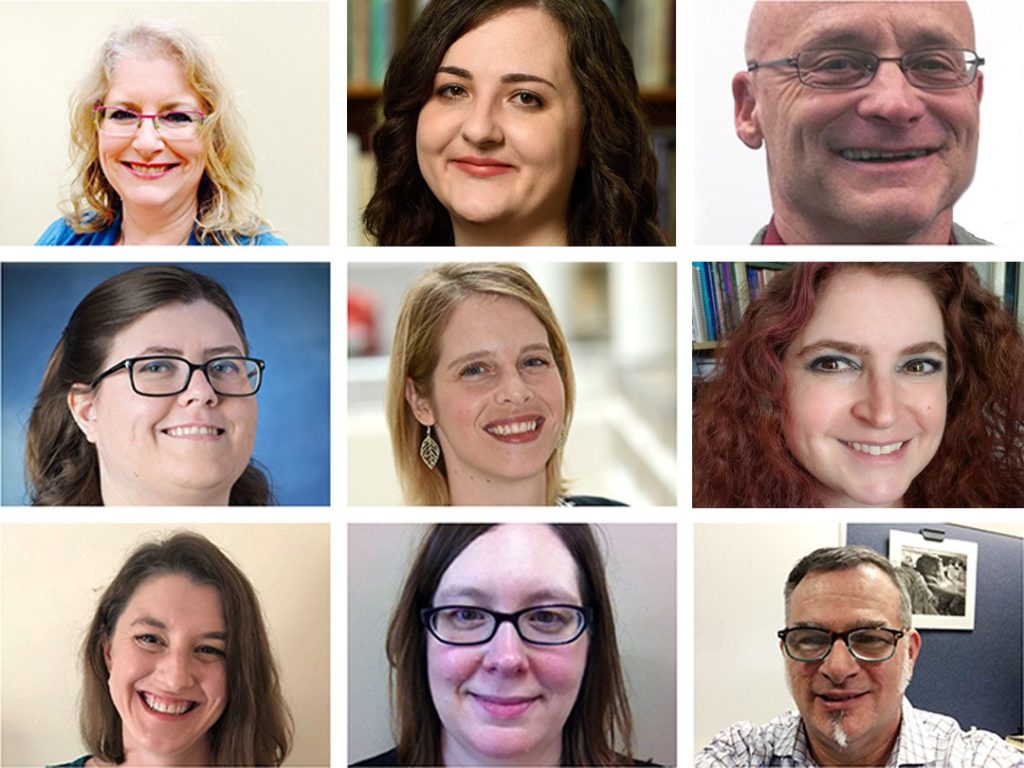
NARA Preservation Framework project team group photo
NARA Preservation Framework project team: (top, left to right) Leslie Johnston, Elizabeth England, Brett Abrams; (middle) Jana Leighton, Criss Austin, Dara Baker; (bottom) Meg Guthorn, Andrea Riley, Michael Horsley


Projects are recognized for activities whose goals or outcomes represent an inventive, meaningful addition to the understanding or processes required for successful, sustainable digital preservation stewardship. 

This year’s awardees in the Projects category are:

  • DLF Levels of Born-Digital Access (LDBA).  Preservation and access are often viewed as two disparate concerns and activities, when in fact they are necessary complements.  Despite the central role that access plays in digital preservation, little agreement exists about what access to digital material should look like or how it might be implemented from institution to institution.  Levels of Born-Digital Access created by the DLF Born-Digital Archives Working Group (BDAWG) sought to address and fill the gap.  This instrument was developed through an iterative and inter-institutional collaborative effort. It delineates a tiered set of format-agnostic recommendations applicable f or internal or external assessment and planning of enhancements to capabilities and capacities. This document is responsive to both practitioners’ and researchers’ needs, while also serving as a potential model for future standards development.  The work of the LDBA is important in highlighting the critical role access plays in any effective long-term stewardship program.
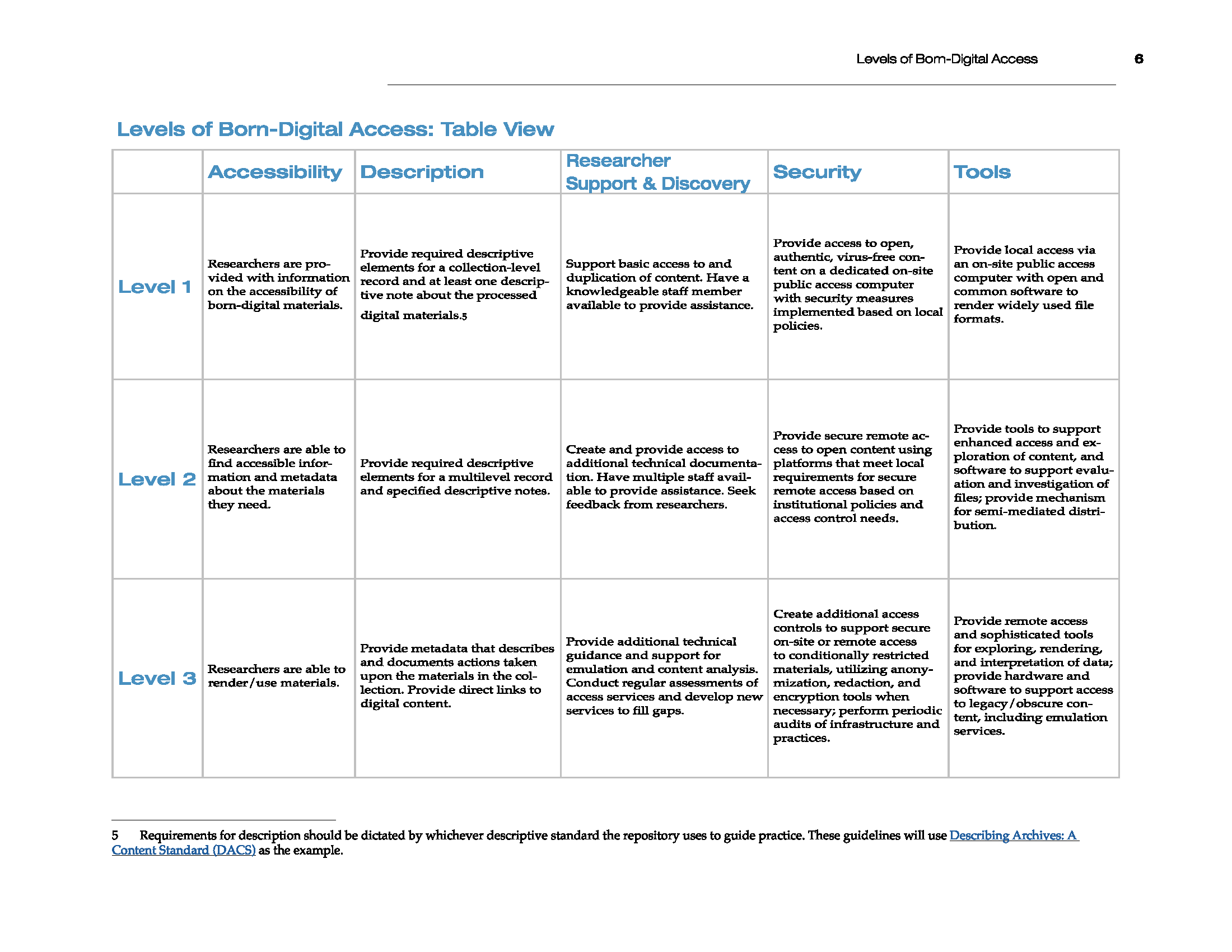
Levels of Born Digital Access Grid Screenshot
  • Project Electron.  A multi-year initiative at the Rockefeller Archive Center to implement sustainable, user-centered, and standards-compliant infrastructure to support the ongoing acquisition, management, and preservation of archival digital records.  The project includes a digital records transfer pipeline called Aurora, as well as a transfer specification and integrations with existing archival systems for accessioning, digital preservation, and description.  The awards panel was particularly impressed by the Project’s comprehensive adaptation and extension of traditional archival principles and workflows to digital materials.  The panel also recognizes the positioning of this initiative as an open-source and standards-based effort, maximizing opportunities for its transferability to other programmatic contexts.  Many archival institutions face significant challenges in supporting digitized and born-digital records and special collections.  The work of Project Electron provides an important exemplar for effective and sustainable digital archival handling.
Project Electron Logo


  • Tribesourcing Southwest Film Project.  The Tribesourcing project aims to preserve — in a culturally appropriate way — a digitized collection of non-fiction films that document Native cultures across North and South America.  Many of these films contain beautiful and valuable images; however, the original narrations are often insensitive and racist.  The project invites Native community members to record new, culturally-competent narrations in indigenous or European languages as alternate audio tracks for the films.  This process, which project lead Jennifer Jenkins has termed “tribesourcing,” has the double benefit of repatriating historic images and decolonizing these archival films.  By including Native language narrations, the project also creates a digital repository for language preservation tied to films about culture and lifeways.  These narrations are recorded and presented online using accessible and open source tools.  The Tribesourcing project models an innovative solution to the question of integrating ethics and cultural competencies in digital preservation work. 
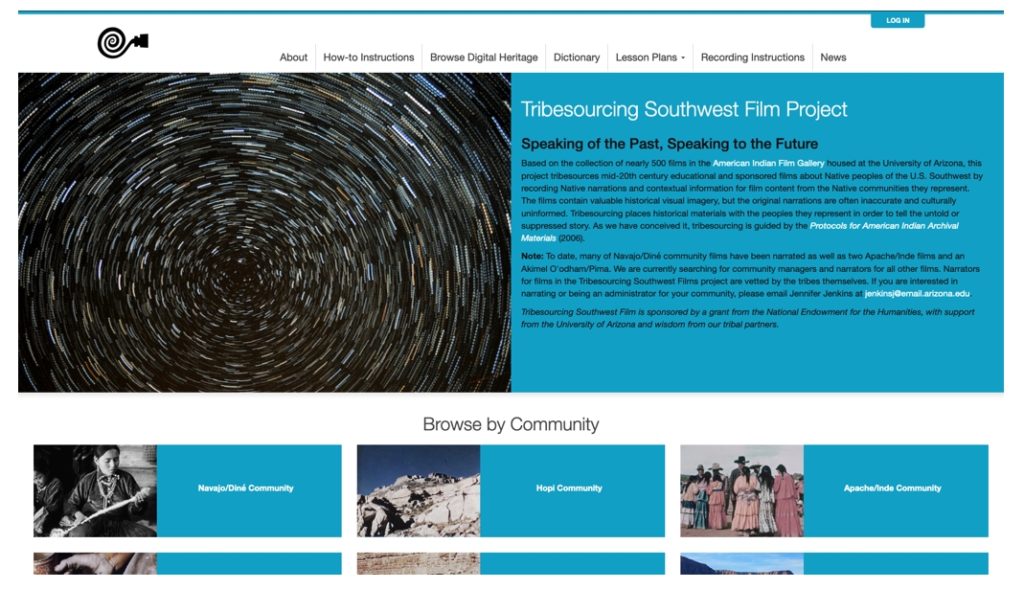
Tribesourceing Website Screenshot


~ The NDSA Innovation Awards Working Group

  • Samantha Abrams (Ivy Plus Libraries Confederation)
  • Stephen Abrams (Harvard University; co-chair)
  • Lauren Goodley (Texas State University)
  • Grete Graf (Yale University)
  • Kari May (University of Pittsburgh)
  • Krista Oldham (Clemson University; co-chair)
Announcing Incoming NDSA Coordinating Committee Members for 2021- 2023

Please join me in welcoming the two newly elected Coordinating Committee members Elizabeth England and Jessica Neal, and one re-elected member, Linda Tadic. Their terms begin January 1, 2021 and run through December 31, 2023. 

 Elizabeth England is a Digital Preservation Specialist at the U.S. National Archives and Records Administration, where she participates in strategic and operational initiatives and services for the preservation of born-digital and digitized records. She previously was the Digital Archivist and a National Digital Stewardship Resident at Johns Hopkins University. Elizabeth currently serves on the NDSA Communications and Publications group and the DigiPres 2020 Planning Committee.

Jessica Neal, was recently named the Sterling A. Brown Archivist at Williams College, having previously been the  College Archivist at Hampshire College. Additionally, Jes is a workshop facilitator with DocNow, and a member of NDSA’s DigiPres 2020 Planning Committee.

 Linda Tadic has served on the Coordinating Committee for the past two years. As an educator, she incorporates NDSA reports and projects into her courses in the UCLA Information Studies department. Additionally, Linda brings her diverse experience working in non-profit and educational archives, managing digital asset management systems, and founding Digital Bedrock, a managed digital preservation service provider.

We are also grateful to the very talented, qualified individuals who participated in this election.

We are indebted to our outgoing Coordinating Committee members, Karen Cariani, Bradley Daigle (Chair), Sibyl Schaefer, and Paige Walker, for their service and many contributions. To sustain a vibrant, robust community of practice, we rely on and deeply value the contributions of all members, including those who took part in voting.

DLF and NDSA Among Finalists for Digital Preservation Awards 2020

We’re thrilled by today’s announcement that projects from both DLF’s Born-Digital Access Working Group (BDAWG) and NDSA are among the finalists for the Digital Preservation Coalition’s (DPC’s) prestigious Digital Preservation Awards 2020.  

One of three finalists for the Software Sustainability Institute Award for Research and Innovation, BDAWG is being recognized for its white paper, Levels of Born-Digital Access (LBDA), a set of benchmarks and practical guidelines supporting access to born-digital materials. LBDA lays out recommendations for accessibility, description, researcher support and discovery, security, and tools that institutions can consider implementing according to their needs, resources, and abilities. Read more about the project.

NDSA’s Levels of Digital Preservation Revision Project (LoDP) is among three finalists for the International Council on Archives (ICA) Award for Collaboration and Cooperation. First released in 2013 as a tiered set of recommendations for how organizations should begin to build or enhance their digital preservation activities, LoDP was updated in 2019 with broad community input. Read more about the project.

Learn more about other finalists and award categories at https://www.dpconline.org/events/digital-preservation-awards/the-finalists, and tune in to the #WeMissiPRES program showcasing “The Best of Digital Preservation in 2020” on Wednesday, Sept. 23.

We congratulate all of the finalists! DPC member voting opens Sept. 16 and goes through Oct. 2. Winners will be announced on World Preservation Day, Nov. 5, as part of an online celebration.

Looking for your feedback on the V2.0 of the Levels of Preservation

We can’t believe it’s been almost 9 months since Version 2 of the Levels of Preservation was released at DigiPres 2019! As we continue to move forward with other resources that build on the revised Levels, we wanted to hear from you about how the revisions and associated documents like the Implementation Guidelines and Assessment Tool have worked for you over these past 9 months.  

If you have used the revised Levels or associated materials, we would love to know how you used them and how they were useful to you and your organization! Please send us an email at ndsa-digipres@gmail.com or fill out this form.  Responses are requested by July 31, 2020.  

~ The Levels of Preservation Steering Group

DLF Forum and Fall Events Move Online

2020 Forum & Affiliated Events

Based on the overwhelming responses to our community survey, the number and distribution of proposals for all CFPs, and CLIR’s ongoing monitoring of the pandemic situation, it has become clear to us that for the health and safety of our attendees and presenters, we must transition all of our fall events to a virtual format. We are sorry we won’t be able to explore Baltimore in 2020, but we’re already making arrangements to hold our 2022 events there, so we’ll just have to wait a bit longer to enjoy time together in Charm City.

What does this mean for 2020? We are not entirely sure yet, but we would love your input. We are happy to share this second community survey about virtual events in which we ask for your thoughts on what you’d like to see from a virtual CLIR/DLF event or series of events this fall. We would appreciate your input by Monday, June 1.

We understand that you may have questions, and while we may not have the answers just yet, we welcome the dialogue with you. Please don’t hesitate to reach out to us at forum@diglib.org, and thank you so much for your understanding and patience during this unprecedented time. Stay healthy and safe, and we’ll be in touch with more soon.

CFPs are here! 2020 DLF Forum and Affiliated Events


combo banner

UPDATE 3/26/2020: The deadline for all CFPs has been extended to Monday, May 11, 2020. For more updates on DLF Forum & COVID-19, please see the Forum website.

It’s hard to believe, but CFP season is here once again!

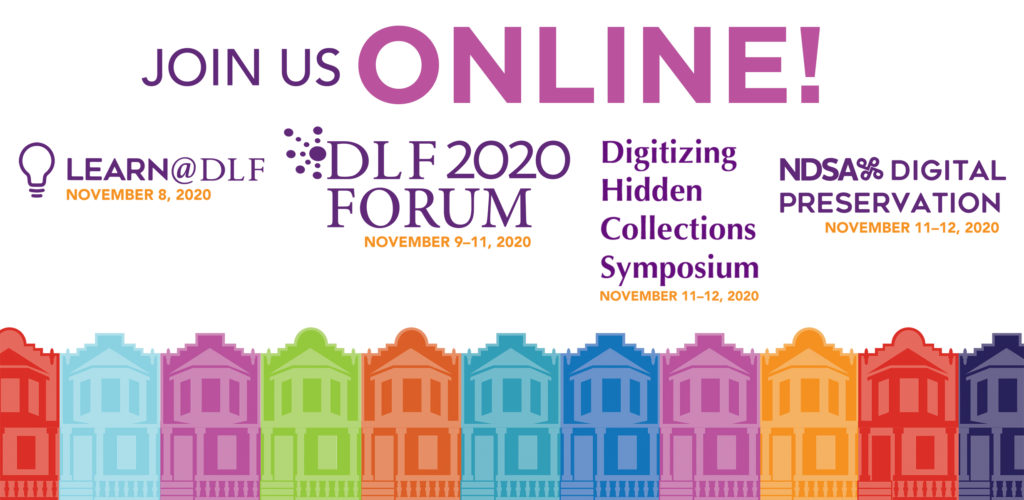
Have a great idea for a session to share at one of our events in Baltimore? You’re in luck! We have just issued Calls for Proposals for our conferences happening this November: the DLF Forum (#DLFforum, November 9-11), our Learn@DLF pre-conference (#LearnAtDLF, November 8), NDSA’s Digital Preservation 2020: Get Active with Digital Preservation (#digipres20, November 11-12), and CLIR’s Digitizing Hidden Collections Symposium (#digHC, November 11-12).

For all events, we welcome submissions from members and nonmembers alike. Students, practitioners, and others from any related field are invited to submit for one conference or multiple (though, different proposals for each, please). Please keep in mind that submissions for the Digitizing Hidden Collections Symposium should come from current or former participants in CLIR Digitizing Hidden Collections grant projects.

The DLF Forum and Learn@DLF CFP is here: https://forum2020.diglib.org/call-for-proposals 

NDSA’s Digital Preservation 2020: Get Active with Digital Preservation CFP is here: https://ndsa.org/digital-preservation-2020-cfp/ 

CLIR’s Digitizing Hidden Collections Symposium CFP is here : https://www.clir.org/hiddencollections/2020-symposium/call-for-proposals/ 

Session options range from 2-minute lighting talk sessions at DigiPres to half-day workshops at Learn@DLF, with many options in between.

New this year, we’ve put together a video with some tips for successful conference proposals. We encourage everyone to watch and incorporate these suggestions clearly into your submissions. Watch the video here: https://youtu.be/xxrIQ273q30 

[youtube https://www.youtube.com/watch?v=xxrIQ273q30&w=560&h=315]

The deadline for all opportunities is Monday, May 11, at 11:59pm Eastern Time.

This is an extension from the original deadline of April 27.

If you have any questions, please write us at forum@diglib.org, and be sure to subscribe to our Forum newsletter to stay up on all Forum-related news. We’re looking forward to seeing you in Baltimore!

French Translation of the 2013 Levels of Preservation Now Available

While all of the recent news has been about the Levels of Digital Preservation V2.0, we have an update to share about the 2013 version of the Levels.  Our colleagues from the National Library of France (BnF) have translated the original Levels of Preservation into French.  

Stay tuned for the release of the Levels of Digital Preservation V2.0 in French which more colleagues from the French watch group on formats are currently drafting!  

If you would be interested in translating the Levels of Digital Preservation V2.0 into another language please contact us at ndsa.digipres@gmail.com


La traduction en français des Niveaux de Préservation Numérique (NDSA Levels) 2013 est maintenant disponible

Bien que les nouvelles récentes concernent essentiellement les Niveaux de Préservation Numérique V2.0, nous avons une mise à jour à partager sur la version 2013 des Niveaux. Nos collègues de la Bibliothèque nationale de France (BnF) ont traduit la première version des Niveaux de Préservation Numérique en français.

Restez à l’écoute pour la sortie de Niveaux de Préservation Numérique V2.0 en français : les collègues de la cellule nationale de veille sur les formats en ont déjà une première ébauche !

Si vous souhaitez traduire les niveaux de préservation numérique V2.0 dans une autre langue, veuillez nous contacter à ndsa.digipres@gmail.com.

Announcing Incoming NDSA Coordinating Committee Members for 2020

Please join me in welcoming the three new 2020 elected Coordinating Committee members: Courtney Mumma, Daniel Noonan, and Nathan Tallman.

Courtney C. Mumma, is an archivist and a librarian. She is the Deputy Director of the Texas Digital Library consortium, a collective of university libraries working towards open, sustainable, and secure digital heritage and scholarly communications. She has over a decade of experience in open source software development and maintenance, infrastructure support and digital preservation good practice and education.

Daniel Noonan, Associate Professor/Digital Preservation Librarian at The Ohio State University, plays a key role in developing a trusted digital preservation ethos and infrastructure at The Ohio State University Libraries (OSUL). This position contributes strategy and expertise, and provides leadership through close collaboration with faculty, staff, and other leaders in OSUL’s Information Technology, Preservation & Reformatting, Special Collections & Archives, Archival Description and Access, and Publishing and Repository Services groups. Previously, he was OSUL’s Electronic Records/Digital Resources Archivist and Electronic Records Manager/Archivist. Simultaneously, Dan was an adjunct faculty member for Kent State University, teaching an archives foundations course.

Nathan Tallman, Digital Preservation Librarian at Penn State University, coordinates policies, workflows and practices to ensure the long-term preservation and access of the University Libraries’ born-digital and born-analog collections. He advises on equipment, infrastructure, and vendors for Penn State digital content. Nathan also helps manage access systems by coordinating local practices and support for digital collections.

Members of the NDSA Coordinating Committee serve staggered terms. We thank our outgoing Coordinating Committee members, Carol Kussmann and Helen Tibbo, for their service and many contributions. We are also grateful to the very talented, qualified individuals who participated in this election.

To sustain a vibrant, robust community of practice, we rely on and deeply value the contributions of all members, including those who took part in voting.
Best wishes to all as we welcome Courtney, Dan, and Nathan to their new roles within NDSA!

~ Bradley J. Daigle, Chair NDSA Leadership Team

NDSA Announces the Levels of Digital Preservation 2.0

After over a year of hard work, the Levels of Digital Preservation Working group announces the Levels of Digital Preservation 2.0!

In 2018 the NDSA sent out a call to the larger digital preservation community asking for interest in updating the Levels of Preservation.  Response was high – 125 individuals responded! NDSA then convened the Levels of Preservation Working group, which divided up into subgroups to tackle the many areas the community wanted to see addressed in a Levels Reboot. Individuals worked with their chosen subgroups.   

The Implementation Subgroup, led by Corey Davis and Eleni Castro, surveyed the community to see how the Levels had been used in the past and what people liked and didn’t like.  This information was one of the sources used to assist with the revision of the Levels Matrix. The survey results are available on the NDSA OSF site.  

The Revisions Subgroup, led by Karen Cariani and Dan Noonan, met almost weekly for months to address the community’s needs and concerns about updating the Levels Matrix.  Their dedicated work produced the updated Levels Matrix and Implementation Guide.

The Assessment Subgroup, led by Carol Kussmann and Amy Rudersdorf, worked to further explore how the Levels had been used as an assessment.  A report of findings was published on the NDSA OSF site.  In addition, an Assessment Tool that is based on the updated Levels Matrix was created to be used as part of an assessment.  

The Curatorial Subgroup, led by Bradley Daigle and Angela Beking have a public draft available of both the visual and written components. The Curatorial work is meant to form the basis of a series of discussion and decision points around how collections materials can be mapped to the Levels and other elements within an organizations’ preservation strategy.   

The next steps are to create a subgroup to address the development of strategy and additional materials to support the Levels of Digital Preservation v2.0 educational and advocacy efforts. Please contact Bradley Daigle at ndsa.digipres [at] gmail [dot] com if you are interested in working on this or being added to the Levels of Preservation Google Group.  

Full Programs NOW LIVE for DLF Forum, Learn@DLF, and NDSA’s Digital Preservation!

We are thrilled to announce the release of the full program for our 2019 DLF Forum, Learn@DLF, and Digital Preservation 2019: Critical Junctures, taking place October 13-17 in Tampa, Florida. This year’s program is remarkable, and you won’t want to miss it. 

Browse the programs!

We are especially grateful to our volunteer Reviewers and Program Committee, without whom this fabulous program would not have come together. And, thank you to all who submitted proposals. This year’s field was especially competitive, and it shows in the strong program we’re sharing today.

Registration remains open for all events, but hurry, tickets for the DLF Forum are going quickly! We expect to go on the waitlist in the coming month, so secure your spot now. (Presenting at the Forum? You’re in! But please register now, since we’re holding spots for you.)

What are the DLF Forum, Learn@DLF, and Digital Preservation?

  • The DLF Forum (#DLFforum, October 14-16), our signature event, welcomes digital library practitioners and others from member institutions and the broader community, for whom it serves as a meeting place, marketplace, and congress. The event is a chance for attendees to present work, meet with other DLF working group members, and share experiences, practices and information. Learn more here: https://forum2019.diglib.org/about
  • Learn@DLF (#learnatdlf, October 13) is our dedicated pre-conference workshop day for digging into tools, techniques, workflows, and concepts. Through engaging, hands-on sessions, attendees will gain experience with new tools and resources, exchange ideas, and develop and share expertise with fellow community members. Learn more here: https://forum2019.diglib.org/learnatdlf/ 
  • Digital Preservation (#digipres19, October 16-17), the major annual meeting of the National Digital Stewardship Alliance, will help to chart future directions for both the NDSA and digital stewardship, and is a crucial venue for intellectual exchange, community-building, development of best practices, and national-level agenda-setting in the field. Learn more about this year’s event, whose theme is ‘Critical Junctures,’ here: http://ndsa.org/meetings/ 

As you can see, we have an exciting week planned. Don’t delay – register now to secure your spot. 

Skip to content