Celebrating DigiPres 2023 and Looking Ahead to Next Year

The 2023 Digital Preservation Conference, which wrapped up in St Louis on November 16, was a welcome opportunity to connect with colleagues, hear about their work, and find opportunities for future collaborations. It was also a chance to celebrate groups and individuals who have made outstanding contributions to the field of digital stewardship. NDSA Leadership is grateful to the conference planning committee, presenters, attendees, and our hosts for making the event such a great success.

While the DigiPres planning committee was hard at work planning for this year’s conference, there was another working group that was reimagining what the future of the conference might look like. Like many organizations, NDSA held a virtual conference in 2020 and 2021, which allowed us to have greater attendance and a farther reach than ever before. Even as we held in-person conferences in 2022 and 2023, we were aware that returning to a pre-pandemic status quo was not feasible or desirable for many members of our community. We received feedback on the format, length, cost, and content of the conference, and we wanted to address the concerns and barriers expressed in that feedback. In late 2022, the Long-Term Conference Planning Working Group was charged with examining NDSA’s annual conference practices and making strategic recommendations on the future of NDSA conferencing and events. Over the past year, the group gathered information about a variety of conference models from other organizations and participated in facilitated discussion to brainstorm how we might make in-person NDSA events more equitable, inclusive, and sustainable.

The Long-Term Conference Planning Working Group delivered their recommendations last month. They have recommended that NDSA lengthen the interval between its national in-person conferences and create a clear mission statement for those in-person gatherings. They have also recommended that NDSA explore the implementation of smaller “Designated Community” events to be held in partnership with other national and/or regional organizations (spot the OAIS joke!). These recommendations suggest developing a more holistic strategy for programming and events held by NDSA, and they deserve time and careful consideration for implementation.

Therefore, NDSA has decided not to hold a conference in 2024. Instead, we will focus our energy on building on the recommendations made by the Long-Term Conference Planning Working Group. We have charged a new working group for NDSA Events Strategy, which will receive support from NDSA Leadership and guidance from the individuals who have stewarded the conference up until this point.

We understand that the lack of DigiPres next year will be disappointing to many members of our community. It is our hope that the community will also understand the need for a more deliberate approach to planning conferences and other events, and that planning such a strategy requires its own time and focus, especially in an organization that relies on volunteer contributions. We strongly encourage anyone who may have otherwise been involved in planning or preparing for DigiPres next year to volunteer for the NDSA Events Strategy Working Group, which will start recruiting in January 2024. We are especially interested in having participation from previous conference planning committee participants and co-chairs, as well as other individuals who have experience with programming and events.

Thank you again to everyone who helped make DigiPres 2023 the success that it was! We hope to see you at the virtual event starting January 31, 2024.


~ Hannah Wang, NDSA Coordinating Committee Chair
~ Bethany Scott, NDSA Coordinating Committee Vice Chair
~ Stacey Erdman, DigiPres Conference Planning Committee Chair
~ Déirdre Joyce, DigiPres Conference Planning Committee Vice Chair

Announcing the 2023 NDSA Excellence Award Winners

2023 Excellence Award Winners

We are pleased to highlight the 2023 Excellence Awards winners. Awards are divided into six categories: Future Stewards, Educators, Individuals, Organizations, Projects, and Sustainability Activities. Awards were presented at the 2023 Digital Preservation conference. 

Read on to learn more about this year’s awardees! 

Future Stewards

Future Stewards are recognized as students and early-career professionals or academics taking a creative approach to advancing knowledge of digital preservation issues and practices. This year’s awardee in the Future Stewards category is Sophia van Hoek.

Headshot of Sophia van Hoek

Sophia van Hoek recently graduated at the Reinwardt Academy (Amsterdam University of the Arts) for her BA in cultural heritage and archival studies. Her thesis research asked how the National Archives of the Netherlands can responsibly reduce the ecological impact of its IT and data storage without sacrificing digital sustainability. Green archiving is a relatively new topic within digital preservation. Sophia’s research can be seen as a practical elaboration of theoretical solutions already proposed. In addition to providing information directly relevant to the National Archives of the Netherlands, Sophia created a Green Digital Manifesto and step-by-step plans for any organization wishing to implement more environmentally sustainable digital preservation practices. As a nominator stated, “Sophia is a true ambassador for this topic and for the broader field of digital preservation.”

Congratulations, Sophia!

Educator Awards

The Educator Awards recognizes academics, trainers, and curricular endeavors promoting effective and inventive approaches to digital preservation education through academic programs, partnerships, professional development opportunities, and curriculum development.

This year’s awardee in the Educator category is Ashley Blewer.

Head shot of Ashley Blewer

Ashley Blewer (she/her) has been actively creating and contributing to digital preservation educational initiatives for over a decade. She strives to create open educational resources that demystify digital preservation practices and tools. Through professional positions, Ashley has created software and documentation for tools like AtoM, Archivematica, QCTools, MediaInfo, MediaConch, BWF MetaEdit, and DVRescue. Additionally, she has dedicated significant personal time to create dozens of online guides, educational blog posts, training materials, and interactive websites that support digital preservation education and are freely available. Some of these initiatives include resources for the identification of media formats (Media Format Guides), documentation of problems with digitization or digital transfer of media materials (A/V Artifact Atlas), supplemental documentation for difficult-to-understand tools (MediaInfo Parameter Definitions, ffmprovisr), and websites that support the use of digital preservation software (XML validators for PBCore and Archivematica, Collection Management System collection, Minimum Viable Station). Through these distinct efforts, she seeks to facilitate educational opportunities that are more accessible to beginners and supportive to practitioners throughout their careers. 

Congratulations, Ashley! 

Individual

Individuals are recognized for making a significant contribution to the digital preservation community through advances in theory or practice. This year’s awardee in the Individual category is Stephen Abrams.

Headshot of Stephen AbramsAcknowledged as a “Digital Preservation Pioneer” by the Library of Congress, Stephen Abrams emerged as an early digital stewardship trailblazer and leader. Since the 1990s, his contributions – both practical solutions and theoretical principles – have propelled our field forward and his ability to forge partnerships and surface opportunities has brought to fruition tools and standards our field has used for decades. In the early 2000s, he helped develop the archival PDF format PDF/A. During that time, he also helped design the first instantiation of the file format identification and characterization tool JHOVE, subsequently leading projects such as JHOVE2 and Cobweb, a web archiving registry.

Aside from these tools and standards, he was also an architect in one of the first in-production digital preservation repositories (the DRS at Harvard Library), which was initially launched in 2000. Returning to Harvard in 2018, he secured major grant funding to completely re-think a digital preservation infrastructure for the next generation – ensuring the outputs were shared with the greater community and not simply created within an academic silo.

Stephen possesses creative thinking and diplomacy skills which have been key in forging alliances across organizations, such as the PDF Association, the Digital Preservation Coalition and others. And as his nominator wrote, “Stephen is always looking for opportunities to usher in and advance future generations of digital stewards; never hesitating to bolster others, offer people leadership and growth opportunities, and generously giving credit to his colleagues.”

Congratulations, Stephen!

Organizations

Organizations are recognized for innovative approaches to providing support and guidance to the digital preservation community. This year’s awardee in the Organizations category is Grupo de Preservación Digital.
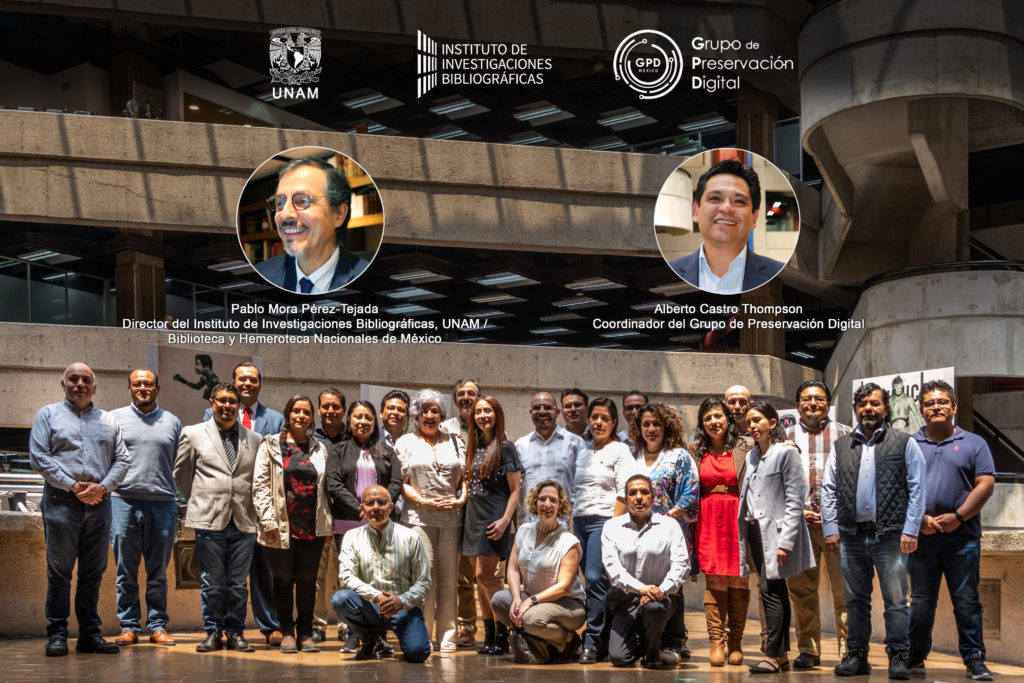
Group photo of Grupo de Preservación Digital

Formed in 2017 in Mexico, the Grupo de Preservación Digital (GPD)  is a multidisciplinary and inter-institutional group that seeks to promote research and training in digital preservation. The group works to address the urgent need for collaboration in research and open discussion integrating diverse perspectives to produce guidelines, good practices, and policies reflecting a broad understanding of substantive tasks in and around the preservation of digital heritage materials. The group has enjoyed continued growth through the participation of not only its members, but many institutions and individuals interested in digital preservation. The GPD divides its work into three basic areas: Digital legal deposit, Research, and Technology- all of which reach the entire Spanish-speaking region. GPD hosts educational events, manages a Knowledge Base offering free access to, articles, books, and video recordings of presentations, created by the GPD, as well as a list of links to other resources.

For their work in continued advocacy for sustainable preservation of digital heritage materials, for their leadership in advancing practices and policies, and for their offering educational opportunities to the digital preservation community, we are glad to present this year’s Organization Award to the Grupo de Preservación Digital.

Congratulations to the Grupo de Preservación Digital team!

Projects

Projects are recognized for activities whose goals or outcomes represent an inventive, meaningful addition to the understanding or processes required for successful, sustainable digital preservation stewardship. This year’s awardee in the Projects category is The Reliable, Robust, and Resilient Digital Infrastructure for Nuclear Decommissioning project. 
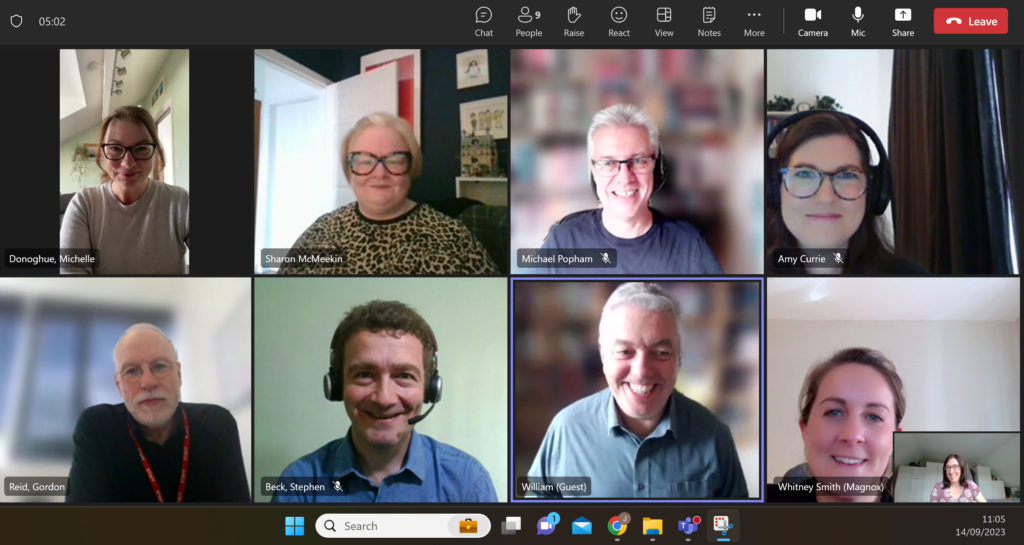
Zoom screenshot of the members of the Reliable, Robust, and Resilient Digital Infrastructure for Nuclear Decommissioning project team

The project represents a four-year partnership between the UK Nuclear Decommissioning Authority (NDA) and the Digital Preservation Coalition (DPC). The NDA is charged with the complicated task of decommissioning and cleaning the seventeen principal nuclear energy plants in the UK. The work involved the preservation of data with an extended life cycle and significant security requirements. During the initial phase of the project, the team worked to understand legacy systems and data and adapt current systems to ensure long-term viability. In the course of this critical work, the project team not only considered the unique needs of the NDA, but also sought to make connections to the wider digital preservation community. Several resources for digital preservation program assessment and technology watch guides were created and shared in conjunction with the project. 

Project team members include Simon Tucker (NDA), Martin Robb (NDA (retired),  Michelle Donoghue (NDA), Bob Radford (Magnox), Whitney Smith (Magnox), Gordon Reid (Nucleus), Stephen Beck (Sellafield Ltd),  Martin Denvir (Sellafield Ltd),  Clare Gallagher, (Nucleus), Jenny Mitcham (DPC), Paul Wheatley (DPC), Michael Popham (DPC). 

Congratulations to the NDA project team!

Sustainability

The Sustainability Awards were created to recognize those activities whose goals or outcomes make a significant contribution to operational trustworthiness, monitoring, maintenance, or intervention necessary for sustainable digital preservation stewardship.

This year’s awardees in the Sustainability category are Dr. David S.H. Rosenthal & Victoria Reich.

Headshots of Dr. David S.R. Rosenthal & Victoria Reich.

2023 marks a significant date for the LOCKSS Program: It is the twenty-fifth anniversary of the friendly hikes in Joseph Grant State Park and Big Basin where Victoria Reich and Dr. David S.H.  Rosenthal first conceived of LOCKSS, “lots of copies keep stuff safe,” as a guiding principle for long-term access and preservation to digital library resources. It is also the twentieth anniversary of the transition of the LOCKSS project from beta testing in 2002 to full production release. In the words of the duo’s nominator, “Even if you don’t know David Rosenthal and Vicky Reich by name, you’ve almost certainly heard their rallying cry for digital preservation: Lots Of Copies Keep Stuff Safe. This ethos has informed digital preservation best practices since its introduction, and has shaped the design and implementation of the LOCKSS open-source software.” 

David Rosenthal and Vicky Reich’s brainchild—and the enduring preservation networks that it has made possible—was at the leading edge of a global wave of digital preservation initiatives in the early 21st century. The effectiveness and reliability of LOCKSS software has been validated through rigorous third-party evaluation, including ongoing certification of the CLOCKSS archive as a trustworthy digital repository under the TRAC standard since 2014. The LOCKSS project has provided enduring proof of the concept that large-scale digital preservation work can be accomplished cost-effectively and with community benefits (not vendor profits) as the primary driver. 

Rosenthal and Reich’s work on LOCKSS stands as a benchmark against which other approaches to digital preservation and persistent access to digital resources are measured. 

Congratulations to all!

Excellence Awards Working Group

The 2023 NDSA Excellence Awards Working Group was led by co-chairs Kari May (University of Pittsburgh Libraries) and Matt McEniry (Texas Tech University Libraries), with members Julie Allen (Open Preservation Foundation), Chris Banuelos (Rice University Libraries), Sarah Middleton (Digital Preservation Coalition Representative), Dorothea Salo (University of Wisconsin-Madison), Jessica Venlet (University of North Carolina at Chapel Hill Libraries). Aliya Reich at CLIR provided administrative support for the entire awards process.  In addition to information about the Excellence Awards group, the group’s website provides information on past winners.  

Announcing Incoming NDSA Coordinating Committee Members for 2024-2026

Please join me in welcoming the three newly elected Coordinating Committee members: Michael Barera, Chelsea Denault, and Jessica Venlet. Their terms begin January 1, 2024 and run through December 31, 2026.  Read more about their backgrounds and interest below.  

Michael Barera

Michael Barera has been the Assistant Archivist and Digitization Specialist at the Milwaukee County Historical Society (MCHS) Research Library since June 2022. This position ranges broadly from traditional archival responsibilities such as digitization, processing, and reference to unique and often innovative programs and projects related to Milwaukee history, including creating questions for and calling Milwaukee History Trivia Nights at local breweries and leading historical kayak tours on the Milwaukee River. Michael earned a Bachelor of Arts (BA) in history from the University of Michigan in 2012 and obtained a Master of Science in Information (MSI) in both Archives and Records Management (ARM) and Preservation of Information (PI) from the University of Michigan School of Information in 2014. Prior to taking his current position at MCHS, he previously served as an Assistant Archivist at the Texas A&M University-Commerce Libraries (from 2015 to 2019) and as the University and Labor Archivist at the University of Texas at Arlington Libraries (from 2019 to 2022). He has been a Certified Archivist since 2016.

Michael ran for NDSA Coordinating Committee for two primary reasons. The first is to bring the perspective of a small but innovative county historical society to the committee. The second is to learn from the committee and engage more deeply with NDSA as a whole, with the ultimate goal of learning more born-digital and digitization best practices that can be realistically implemented at MCHS and thus raise its level of practice.

Chelsea Denault

Chelsea leads the Michigan Digital Preservation Network, a program of the Midwest Collaborative for Library Services with support from the Library of Michigan. As the MDPN’s Coordinator, she works to build a community-centered statewide service focused on leveraging shared resources and expertise to make digital preservation affordable and accessible to all cultural memory institutions. As part of her efforts, Chelsea provides guidance and training on digital preservation in Michigan and leads the MDPN’s policy development and member recruitment. She also serves as the PI for the MDPN’s IMLS-funded grant to explore simplifying digital preservation workflows and provide training for non-technical users at under-resourced institutions in Michigan and beyond. Chelsea has served the NDSA on the DigiPres Conference Planning Committee (2021-2023) and the Long-Term Conference Planning Working Group. She also represents the MDPN in the Private LOCKSS Network (PLN) Community, and contributes to the Cross-PLN Technical Committee and the Shared Messaging Group. Before joining the MDPN, Chelsea was a public historian engaged in community outreach and collections work, and she holds an MA and a PhD in Public History/US History from Loyola University Chicago. Chelsea is guided by the MDPN’s commitment to small, underserved organizations, and plans to represent their needs on the Coordinating Committee.

Jessica Venlet

Jessica Venlet works as the Assistant University Archivist for Digital Records and Records Management at the University of North Carolina at Chapel Hill Libraries. In this role, she is responsible for a variety of things related to both records management and digital preservation. In particular, she leads the processing and management of born-digital archival materials.

Jessica is drawn to participation with NDSA because of how valuable the resources and network are to her work and to the profession overall. She has recently participated in working groups for the 2019 Levels of Digital Preservation Reboot (assessment subgroup), the 2021 NDSA Staffing Survey, and the 2023 NDSA Excellence Awards. She is excited to join the Coordinating Committee and contribute to the continued development of the NDSA organization and all its associated programs and working groups.


We are also grateful to all of the very talented, qualified candidates who participated in this election.

We are indebted to our outgoing Coordinating Committee members, Elizabeth England, Jes Neal, and Linda Tadic, for their service and many contributions. To sustain a vibrant, robust community of practice, we rely on and deeply value the contributions of all members, including those who took part in voting.

Bethany Scott, Vice Chair, on behalf of the NDSA Coordinating Committee

Now Accepting Nominations for the NDSA 2023 Excellence Awards

Nominations are now being accepted for the National Digital Stewardship Alliance (NDSA) 2023 Excellence Awards!

The biennial NDSA Excellence Awards (previously the annual Innovation Awards) were established to recognize and encourage exemplary achievement in the field of digital preservation stewardship at a level of national or international importance. Seeking to highlight and commend all forms of creative and meaningful contributions in the field of digital preservation, this working group accepts nominations for individuals, educators, future stewards, organizations, projects, and sustainability activities categories. Acknowledging that exemplary digital stewardship can take many forms, eligibility for these awards has been left purposely broad. Anyone, any institution, or any project acting in the context of the categories listed below can be nominated for an award. No NDSA membership or affiliation is required. Self-nomination is accepted and encouraged, as are submissions reflecting the needs and accomplishments of historically marginalized and underrepresented communities.

Awards categories are:

  • Individual Award: Recognizing those individuals making a significant contribution to the digital preservation community through advances in theory or practice.
  • Educator Award: Recognizing academics, trainers, and curricular endeavors promoting effective and inventive approaches to digital preservation education through academic programs, partnerships, professional development opportunities, and curriculum development.
  • Future Steward Award: Recognizing students and early-career professionals making an impact on advancing knowledge and practice of digital preservation stewardship.
  • Organization Award: Recognizing those organizations providing support, guidance, advocacy, or leadership for the digital preservation community.
  • Project Award: Recognizing those activities whose goals or outcomes make a significant contribution or strategic or conceptual understanding necessary for successful digital preservation stewardship.
  • Sustainability Award: Recognizing those activities whose goals or outcomes make a significant contribution to operational trustworthiness, monitoring, maintenance, or intervention necessary for sustainable digital preservation stewardship.

The NDSA is an organization consisting of a diverse international membership sharing a commitment to digital preservation. The development and support of a broad range of successful digital preservation activities is key to the future of digital stewardship. We encourage all members of the international digital preservation community to help us highlight and reward distinctive approaches to the challenges of digital preservation by submitting nominations for worthy candidates here: 2023 NDSA Excellence Awards Nominations

Nominations will be accepted until Friday, August 4, 2023.

Awards will be presented on November 15th as part of the Opening Plenary session at the 2023 NDSA Digital Preservation conference in St. Louis, Missouri, USA.

Attendance at the conference is encouraged but not required for awardees or nominators.

Information and details on awards from previous years is available on the Excellence Awards webpage.

DigiPres 2023 Keynote Speaker: Dr. Jamie Lee!

We are pleased to announce Dr. Jamie Lee as the keynote speaker for Digital Preservation 2023: Communities of Time and Place (#DigiPres23). Dr. Lee is an Associate Professor of Digital Culture, Information, and Society at the School of Information, University of Arizona, and is a scholar, activist, filmmaker, archivist, oral historian, partner, co-parent, neighbor, and friend. They founded and direct the Arizona Queer Archives (www.arizonaqueerarchives.com) where they train community members on facilitating oral history interviews and building collections in and with their own families and communities. With storytelling at the heart of their life’s work, Lee also directs the Digital Storytelling & Oral History Lab and co-founded the Critical Archives and Curation Collaborative, the co/lab, through which they collaborate on such storytelling projects as secrets of the agave: a Climate Justice Storytelling Project (www.secretsoftheagave.com), the Climate Alliance Mapping Project, CAMP (www.climatealliancemap.org), and the Stories of Arizona’s Tribal Libraries Oral History Project (with Dr. Sandy Littletree and Knowledge River). Lee’s 2021 research monograph, Producing the Archival Body, engages storytelling to re-consider how archives are defined, understood, deployed, and accessed to produce subjects. Arguing that archives and bodies are mutually constitutive and developing a keen focus on the body and embodiment alongside archival theory, Lee introduces new understandings of archival bodies that interrogate how power circulates in archival contexts in order to build critical understandings of how deeply archives shape the production of knowledges and human subjectivities. For more on Lee’s projects, visit www.thestorytellinglab.io. In their keynote talk,“​​Kairotic and Kin-centric Archives: Addressing Abundances and Abandonments,” Dr. Lee traverses the persistent memories and memory-making practices of their local queer borderlands communities through frameworks of the kairotic and kin-centric. Sharing stories from two distinct community-based digital archiving projects, Lee attends to loss and to re-collection and explicitly addresses both abundances and abandonments.

More information on Dr. Lee’s keynote talk will be shared when the DigiPres program schedule is released soon! 


Skip to content