Submitting a Notable Nomination: Suggestions from the Excellence Award Working Group

The National Digital Stewardship Alliance (NDSA) is an organization with a diverse international membership sharing a commitment to digital stewardship and preservation. Its Excellence Awards Working Group (EAWG) is just as diverse and just as committed. Since 2012 this team has come together to select awardees who have offered their significant engagement with the theory and practice of long-term digital preservation stewardship at a level of national or international importance. EAWG members understand the importance of innovation and risk-taking in the developing successful digital preservation tools and activities. This means that excellent digital stewardship can take many forms; therefore, eligibility for these awards has been left purposely broad. 

I started as a member of the EAWG in 2019 and took part in discussions that led to the group’s move to presenting awards biennially in the odd-numbered years, to interleave them with the Digital Preservation Coalition’s Digital Preservation Awards. I have been co-chairing the group since January 2023, and, although the timing for awards may have changed, our standards have not. Any person, any institution, or any project meeting the criteria for any of the Excellence Awards’ six categories can be nominated. Neither nominators nor nominees need to be NDSA members or to be affiliated with member institutions. Self-nomination is accepted and encouraged, as are submissions reflecting responses to the needs or accomplishments of historically marginalized and underrepresented communities. It is truly inspiring to receive the nominations each year and learn about exciting work that is happening in the field of digital stewardship and preservation that we may never have known about otherwise.
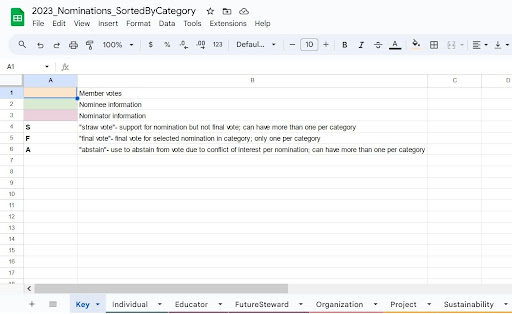
Screenshot of spreadsheet for reviewing nominations.
Basic spreadsheet shared by Excellence Awards Working Group members to review, discuss, and select awardees.

Award categories are: Individual, Educator, Future Steward, Organization, Project, and Sustainability. The criteria for each category specified on the EAWG webpage will help nominators select the “big bucket” their nominations will best fit, and every nomination must support the specific contributions named with evidence of their significance. Yet individual nominations focus on individual efforts. So, what can a nominator include to encourage EAWG members to recognize the importance of the nominee’s contributions? Let’s look at a few things that can help a nomination stand out.


  • Firsts
    • Efforts producing—or even on their way to producing—something absolutely fresh for the field of digital stewardship are worth nominating. This could be work to produce new tools, connections, workflows, methods, strategies, and more. Nominations for the new developments could offer information showing such aspects as: how this output is new; why it is notably original; what its impact or expected impact will be; and what potential it will have for widespread use. Past nominations have included phrases such as “facilitate the creation of a field that is easier, kinder, smarter, and faster,” “establish tangible solutions to put into practice,” “drawing on the collective experience of those in the field,” and “open resources that have been created and shared.”
  • A New Angle on the Known
    • Another perspective on fresh outputs is that of rethinking the known. This work could offer updated preservation formats, updated tools, or even an enhancement  for providing access or enhancing discoverability. Nominations for such work could offer information evidencing: how this update is an improvement; why it is important to the field; what benefit it will provide; and how wide a range of digital stewards can implement it. Nominations for this type of work have included phrases like: “re-thinking this for the next generation,” “ensuring the outputs were shared with the greater community and not created within an academic silo,” “advance future generations of digital stewards,” and “enhancing tools and standards our field has used for decades.”
  • Hot Topics
    • Significant work being done in areas of high interest to the digital stewardship and preservation communities is certainly worth nominating. Recently, such areas of interest have included DEI initiatives, study on the environmental impact of digital stewardship, and the use of artificial intelligence. Nominations reflecting efforts in such areas have incorporated aspects including: multidisciplinary connections, research and training methodologies, the promotion of integrating diverse perspectives, and strategies to increase awareness of a specific digital preservation challenge. Such efforts have been described as “uplifting while educating,” “improving experience for new digital preservationists through work on documentation, information-sharing, and tools development,” and “actively seeks out venues to spread the message.”
  • Widespread Impact
    • Another type of work worthy of nominating is that which will bring a positive impact to a significant portion of the field of digital stewardship. This impact will often include the characteristics of recognized reusability or adaptability and could be seen via open access to code, guides to a topic or practice, or policies that were developed. It could possibly be achieved through outreach activities or collaborations. Nominations describing such work have noted details such as: “demystifying often-challenging material required for working in digital preservation,” “bolsters others offering leadership and growth opportunities,” “informs digital preservation best practices,” “shaped the design and implementation of open-source software,” and “engaged with the preservation community as speakers, writers, and collaborators.”

These are just a few suggestions on nominating your colleagues and their work. There are certainly more areas, perspectives, and outputs that could be recognized. For more ideas, links to announcements for past winners can be found at the bottom of the Excellence Awards Working Group webpage. Remember, there is no perfect nomination expected by the EAWG. All submissions are received, reviewed, and discussed by all group members equally. Working group members realize that this is an opportunity to celebrate the achievements of our colleagues, and the selection has never been easy. Yet during my time with the group, we have ensured that no final selection has been solidified without the unanimous support of the members.

The EAWG will be seeking nominations again next year. Until then, we will be offering other blogs and video clips to help digital stewards and preservationists better understand our work. We also hope this information will encourage them to nominate their colleagues or themselves. We look forward to your submissions! 

Written by Kari May, Excellence Awards Working Group, Co-Chair
 

NDSA Excellence Awards: A history of growth and celebration

For almost a dozen years the National Digital Stewardship Alliance (NDSA) has been home to the Excellence Awards. From simple beginnings these awards have evolved in response to changes in the field of digital preservation and stewardship, and they will continue to evolve as the field grows and embraces new possibilities. This post offers key points in the history and current practices of the awards. 

In August of 2011, a guest post from Trevor Owens on the Library of Congress blog The Signal asked the question: “What kinds of awards would help recognize and encourage work with important collections, tools, services, organizations, and student projects related to digital stewardship and preservation?” This question led to the NDSA Innovation Working Group assembling an action team to complete the first awards cycle in 2012.

In 2016, the awards became more formalized with the adoption of an Innovation Working Group Charter. This document was made available via a wiki and noted that success would be signified by the completion of an awards cycle and increasing awareness of innovations in the field of digital preservation. It also recognized that the merit of the awards was their ability to “communicate the value of digital preservation work within the community and externally to stakeholders at member organizations and the larger world.”

The awards began by accepting nominations in four categories: individual, future steward, project, and organization. In 2017, the Charter was updated, and the Educator category was added, and these five categories were maintained through 2020. In 2021, the working group felt that the long-term impact of innovation should be recognized. To promote this broader perspective, the sixth category, Sustainability, was adopted.

Other important changes were to follow in 2021. First, the working group wanted to provide greater opportunities for NDSA to “highlight and commend all forms of creative and meaningful contributions in the field of digital preservation.” Many felt that the current name of the awards did not support this expanded and purposely broad view; therefore, the name of the awards was changed from the Innovation Awards to the Excellence Awards. A relationship was also growing between the NDSA and the Digital Preservation Coalition (DPC). It was recognized that the biennial DPC Digital Preservation Awards overlapped with the NDSA Excellence Awards, possibly causing confusion and stress on the part of individuals wondering which awards would be the better choice for their submission. Negotiations between the two were completed in 2022, and now the NDSA and DPC interleave their awards ceremonies, giving each cycle the opportunity to receive primary focus.

This agreement also includes cooperative efforts. During each awards cycle, a member will be invited for representative participation of the other on their juries. This agreement reflects the merit sought in the 2016 Charter by promoting greater consistency in criteria and evaluation of nominations, enhancing organizational continuity between the affiliates, and amplifying the award-related communications of each.

In 2023, the working group was facing a complete turnover of its members. Additionally, the DigiPres 2023 Conference Planning Committee had established a liaison position to help coordinate the awards presentation during the conference in November. New members were needed to facilitate the objectives of the group; a call for members returned six respondents, including representatives from the DPC and the Open Preservation Foundation. The roles of the 2023-2025 co-chairs were filled by Kari May and Matthew McEniry.

The group immediately started work on the newest award nominations, reviewing 51 submissions for 24 individual nominees by August 2023. This was done using updated evaluation criteria determined by the working group.The group also utilized new outreach channels offered by new members to garner more submissions from organizations and individuals outside of the U.S.

A microphone and three NDSA mugs in a row on a stageAfter the awardees had been selected and accepted, the group put together blogs to highlight past winners, showcase previous projects, and build up to the current cohort of award winners. The co-chairs meticulously put together an awards presentation that held to the time limitations of the conference (just 15 minutes) and successfully fulfilled the obligations of the group for the year. 

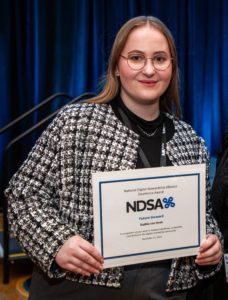
Photo of Sophia von Hoek holding the NDSA award certificate

January 2024 was the month of the DigiPres Redux virtual conference. Four of the awardees participated in the conference to highlight their work: Stephen Abrams (Individual), Sophia van Hoek (Future Steward), Ashley Blewer (Educator), Michelle Donoghue (Project). 

Working Group members facilitated this session and helped to promote a positive and educational environment for all participants. With the rest of 2024 being an interim year with no awards, the group is assembling a number of blogs and video clips to offer a peek into the  work and its importance to the field digital stewardship. The first video clip, presenting information on the Individual Category, is now live on the NDSA YouTube channel. 

The co-chairs have also spent time reshaping the group’s charter and guidelines to align with current procedures and standards. As 2025 creeps closer, they will soon begin working on the next iteration of the Excellence Awards. Look for more clips to come and remember, if you know some organization or individual you may want to nominate for an award, we’d love to take a look at how they are impacting and supporting digital stewardship.

~ Excellence Awards co-chairs Kari May and Matt McEniry


Celebrating DigiPres 2023 and Looking Ahead to Next Year

The 2023 Digital Preservation Conference, which wrapped up in St Louis on November 16, was a welcome opportunity to connect with colleagues, hear about their work, and find opportunities for future collaborations. It was also a chance to celebrate groups and individuals who have made outstanding contributions to the field of digital stewardship. NDSA Leadership is grateful to the conference planning committee, presenters, attendees, and our hosts for making the event such a great success.

While the DigiPres planning committee was hard at work planning for this year’s conference, there was another working group that was reimagining what the future of the conference might look like. Like many organizations, NDSA held a virtual conference in 2020 and 2021, which allowed us to have greater attendance and a farther reach than ever before. Even as we held in-person conferences in 2022 and 2023, we were aware that returning to a pre-pandemic status quo was not feasible or desirable for many members of our community. We received feedback on the format, length, cost, and content of the conference, and we wanted to address the concerns and barriers expressed in that feedback. In late 2022, the Long-Term Conference Planning Working Group was charged with examining NDSA’s annual conference practices and making strategic recommendations on the future of NDSA conferencing and events. Over the past year, the group gathered information about a variety of conference models from other organizations and participated in facilitated discussion to brainstorm how we might make in-person NDSA events more equitable, inclusive, and sustainable.

The Long-Term Conference Planning Working Group delivered their recommendations last month. They have recommended that NDSA lengthen the interval between its national in-person conferences and create a clear mission statement for those in-person gatherings. They have also recommended that NDSA explore the implementation of smaller “Designated Community” events to be held in partnership with other national and/or regional organizations (spot the OAIS joke!). These recommendations suggest developing a more holistic strategy for programming and events held by NDSA, and they deserve time and careful consideration for implementation.

Therefore, NDSA has decided not to hold a conference in 2024. Instead, we will focus our energy on building on the recommendations made by the Long-Term Conference Planning Working Group. We have charged a new working group for NDSA Events Strategy, which will receive support from NDSA Leadership and guidance from the individuals who have stewarded the conference up until this point.

We understand that the lack of DigiPres next year will be disappointing to many members of our community. It is our hope that the community will also understand the need for a more deliberate approach to planning conferences and other events, and that planning such a strategy requires its own time and focus, especially in an organization that relies on volunteer contributions. We strongly encourage anyone who may have otherwise been involved in planning or preparing for DigiPres next year to volunteer for the NDSA Events Strategy Working Group, which will start recruiting in January 2024. We are especially interested in having participation from previous conference planning committee participants and co-chairs, as well as other individuals who have experience with programming and events.

Thank you again to everyone who helped make DigiPres 2023 the success that it was! We hope to see you at the virtual event starting January 31, 2024.


~ Hannah Wang, NDSA Coordinating Committee Chair
~ Bethany Scott, NDSA Coordinating Committee Vice Chair
~ Stacey Erdman, DigiPres Conference Planning Committee Chair
~ Déirdre Joyce, DigiPres Conference Planning Committee Vice Chair

Registration Open for NDSA’s Virtual Event

Registration is now open for NDSA’s Virtual Digital Preservation Conference Redux: Communities of Time and Place. This virtual extension of our November 2023 in-person event will feature a selection of panelists who presented in St. Louis as well as additional presenters bringing in new content, including – but not limited to – more extensive updates from our Excellence Awards Winners as well as updates from NDSA’s Interest and Working Groups. While presentations will be recorded and uploaded to NDSA’s YouTube Channel, the event will feature live discussions and Q&A with many of our talented presenters. 

As we are creating the conference schedule to fit the content, a final schedule is not yet available, though it should be posted later this month (December). Even so, you can register for the event now and get all the schedule updates as they become available.

This event will be held from January 31 – February 1, 2024. In order to serve the broadest community possible, events will be held on both days from 4:00pm – 8:30pm GST (UTC +0)/11:00am – 3:30pm EST (UTC -5)/8:00am – 12:30am (UTC -8)

This NDSA Virtual Digital Preservation Conference Redux is hosted in partnership with NDSA member organization, Syracuse University Libraries and is offered at NO CHARGE to both NDSA members and non-members.

If you have any questions, please write to us at ndsa [dot] digipres [at] gmail [dot] com. We’re looking forward to seeing you online!

~  The NDSA DigiPres Planning Committee

Announcing the 2023 NDSA Excellence Award Winners

2023 Excellence Award Winners

We are pleased to highlight the 2023 Excellence Awards winners. Awards are divided into six categories: Future Stewards, Educators, Individuals, Organizations, Projects, and Sustainability Activities. Awards were presented at the 2023 Digital Preservation conference. 

Read on to learn more about this year’s awardees! 

Future Stewards

Future Stewards are recognized as students and early-career professionals or academics taking a creative approach to advancing knowledge of digital preservation issues and practices. This year’s awardee in the Future Stewards category is Sophia van Hoek.

Headshot of Sophia van Hoek

Sophia van Hoek recently graduated at the Reinwardt Academy (Amsterdam University of the Arts) for her BA in cultural heritage and archival studies. Her thesis research asked how the National Archives of the Netherlands can responsibly reduce the ecological impact of its IT and data storage without sacrificing digital sustainability. Green archiving is a relatively new topic within digital preservation. Sophia’s research can be seen as a practical elaboration of theoretical solutions already proposed. In addition to providing information directly relevant to the National Archives of the Netherlands, Sophia created a Green Digital Manifesto and step-by-step plans for any organization wishing to implement more environmentally sustainable digital preservation practices. As a nominator stated, “Sophia is a true ambassador for this topic and for the broader field of digital preservation.”

Congratulations, Sophia!

Educator Awards

The Educator Awards recognizes academics, trainers, and curricular endeavors promoting effective and inventive approaches to digital preservation education through academic programs, partnerships, professional development opportunities, and curriculum development.

This year’s awardee in the Educator category is Ashley Blewer.

Head shot of Ashley Blewer

Ashley Blewer (she/her) has been actively creating and contributing to digital preservation educational initiatives for over a decade. She strives to create open educational resources that demystify digital preservation practices and tools. Through professional positions, Ashley has created software and documentation for tools like AtoM, Archivematica, QCTools, MediaInfo, MediaConch, BWF MetaEdit, and DVRescue. Additionally, she has dedicated significant personal time to create dozens of online guides, educational blog posts, training materials, and interactive websites that support digital preservation education and are freely available. Some of these initiatives include resources for the identification of media formats (Media Format Guides), documentation of problems with digitization or digital transfer of media materials (A/V Artifact Atlas), supplemental documentation for difficult-to-understand tools (MediaInfo Parameter Definitions, ffmprovisr), and websites that support the use of digital preservation software (XML validators for PBCore and Archivematica, Collection Management System collection, Minimum Viable Station). Through these distinct efforts, she seeks to facilitate educational opportunities that are more accessible to beginners and supportive to practitioners throughout their careers. 

Congratulations, Ashley! 

Individual

Individuals are recognized for making a significant contribution to the digital preservation community through advances in theory or practice. This year’s awardee in the Individual category is Stephen Abrams.

Headshot of Stephen AbramsAcknowledged as a “Digital Preservation Pioneer” by the Library of Congress, Stephen Abrams emerged as an early digital stewardship trailblazer and leader. Since the 1990s, his contributions – both practical solutions and theoretical principles – have propelled our field forward and his ability to forge partnerships and surface opportunities has brought to fruition tools and standards our field has used for decades. In the early 2000s, he helped develop the archival PDF format PDF/A. During that time, he also helped design the first instantiation of the file format identification and characterization tool JHOVE, subsequently leading projects such as JHOVE2 and Cobweb, a web archiving registry.

Aside from these tools and standards, he was also an architect in one of the first in-production digital preservation repositories (the DRS at Harvard Library), which was initially launched in 2000. Returning to Harvard in 2018, he secured major grant funding to completely re-think a digital preservation infrastructure for the next generation – ensuring the outputs were shared with the greater community and not simply created within an academic silo.

Stephen possesses creative thinking and diplomacy skills which have been key in forging alliances across organizations, such as the PDF Association, the Digital Preservation Coalition and others. And as his nominator wrote, “Stephen is always looking for opportunities to usher in and advance future generations of digital stewards; never hesitating to bolster others, offer people leadership and growth opportunities, and generously giving credit to his colleagues.”

Congratulations, Stephen!

Organizations

Organizations are recognized for innovative approaches to providing support and guidance to the digital preservation community. This year’s awardee in the Organizations category is Grupo de Preservación Digital.

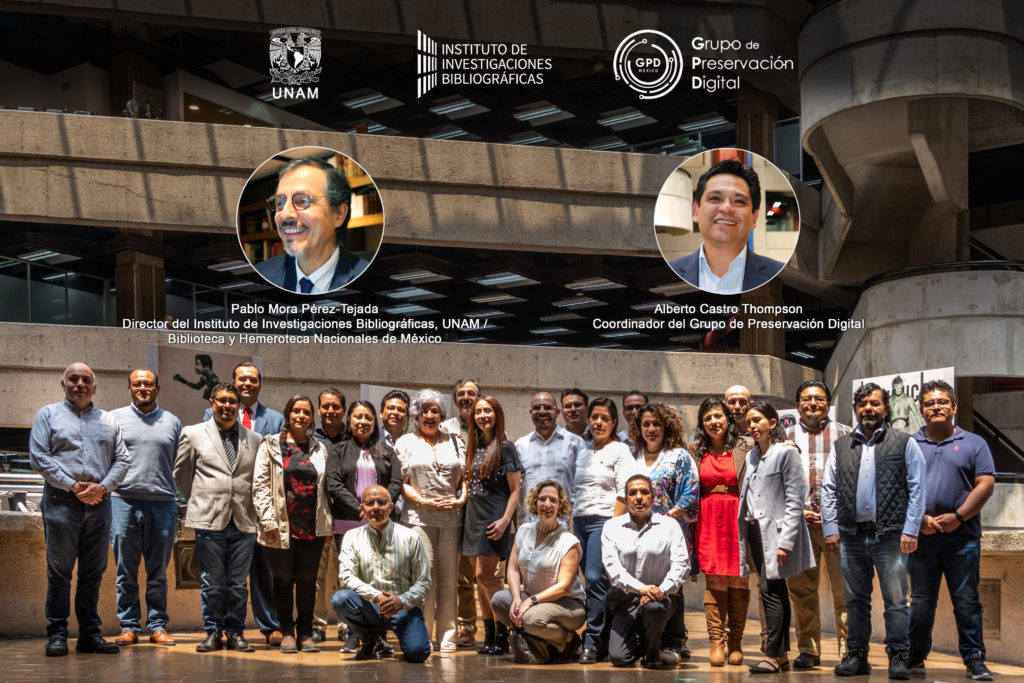
Group photo of Grupo de Preservación Digital

Formed in 2017 in Mexico, the Grupo de Preservación Digital (GPD)  is a multidisciplinary and inter-institutional group that seeks to promote research and training in digital preservation. The group works to address the urgent need for collaboration in research and open discussion integrating diverse perspectives to produce guidelines, good practices, and policies reflecting a broad understanding of substantive tasks in and around the preservation of digital heritage materials. The group has enjoyed continued growth through the participation of not only its members, but many institutions and individuals interested in digital preservation. The GPD divides its work into three basic areas: Digital legal deposit, Research, and Technology- all of which reach the entire Spanish-speaking region. GPD hosts educational events, manages a Knowledge Base offering free access to, articles, books, and video recordings of presentations, created by the GPD, as well as a list of links to other resources.

For their work in continued advocacy for sustainable preservation of digital heritage materials, for their leadership in advancing practices and policies, and for their offering educational opportunities to the digital preservation community, we are glad to present this year’s Organization Award to the Grupo de Preservación Digital.

Congratulations to the Grupo de Preservación Digital team!

Projects

Projects are recognized for activities whose goals or outcomes represent an inventive, meaningful addition to the understanding or processes required for successful, sustainable digital preservation stewardship. This year’s awardee in the Projects category is The Reliable, Robust, and Resilient Digital Infrastructure for Nuclear Decommissioning project. 

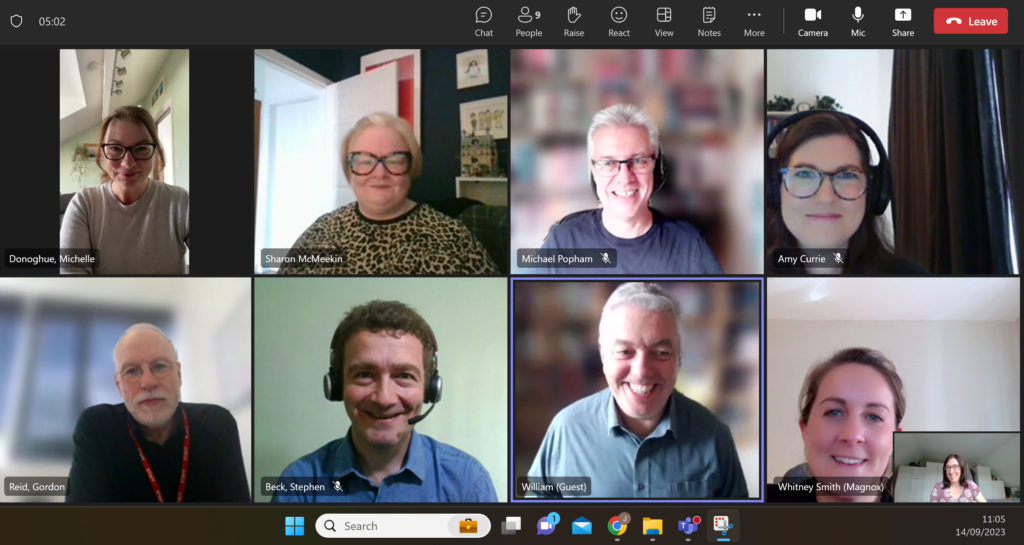
Zoom screenshot of the members of the Reliable, Robust, and Resilient Digital Infrastructure for Nuclear Decommissioning project team

The project represents a four-year partnership between the UK Nuclear Decommissioning Authority (NDA) and the Digital Preservation Coalition (DPC). The NDA is charged with the complicated task of decommissioning and cleaning the seventeen principal nuclear energy plants in the UK. The work involved the preservation of data with an extended life cycle and significant security requirements. During the initial phase of the project, the team worked to understand legacy systems and data and adapt current systems to ensure long-term viability. In the course of this critical work, the project team not only considered the unique needs of the NDA, but also sought to make connections to the wider digital preservation community. Several resources for digital preservation program assessment and technology watch guides were created and shared in conjunction with the project. 

Project team members include Simon Tucker (NDA), Martin Robb (NDA (retired),  Michelle Donoghue (NDA), Bob Radford (Magnox), Whitney Smith (Magnox), Gordon Reid (Nucleus), Stephen Beck (Sellafield Ltd),  Martin Denvir (Sellafield Ltd),  Clare Gallagher, (Nucleus), Jenny Mitcham (DPC), Paul Wheatley (DPC), Michael Popham (DPC). 

Congratulations to the NDA project team!

Sustainability

The Sustainability Awards were created to recognize those activities whose goals or outcomes make a significant contribution to operational trustworthiness, monitoring, maintenance, or intervention necessary for sustainable digital preservation stewardship.

This year’s awardees in the Sustainability category are Dr. David S.H. Rosenthal & Victoria Reich.

Headshots of Dr. David S.R. Rosenthal & Victoria Reich.

2023 marks a significant date for the LOCKSS Program: It is the twenty-fifth anniversary of the friendly hikes in Joseph Grant State Park and Big Basin where Victoria Reich and Dr. David S.H.  Rosenthal first conceived of LOCKSS, “lots of copies keep stuff safe,” as a guiding principle for long-term access and preservation to digital library resources. It is also the twentieth anniversary of the transition of the LOCKSS project from beta testing in 2002 to full production release. In the words of the duo’s nominator, “Even if you don’t know David Rosenthal and Vicky Reich by name, you’ve almost certainly heard their rallying cry for digital preservation: Lots Of Copies Keep Stuff Safe. This ethos has informed digital preservation best practices since its introduction, and has shaped the design and implementation of the LOCKSS open-source software.” 

David Rosenthal and Vicky Reich’s brainchild—and the enduring preservation networks that it has made possible—was at the leading edge of a global wave of digital preservation initiatives in the early 21st century. The effectiveness and reliability of LOCKSS software has been validated through rigorous third-party evaluation, including ongoing certification of the CLOCKSS archive as a trustworthy digital repository under the TRAC standard since 2014. The LOCKSS project has provided enduring proof of the concept that large-scale digital preservation work can be accomplished cost-effectively and with community benefits (not vendor profits) as the primary driver. 

Rosenthal and Reich’s work on LOCKSS stands as a benchmark against which other approaches to digital preservation and persistent access to digital resources are measured. 

Congratulations to all!

Excellence Awards Working Group

The 2023 NDSA Excellence Awards Working Group was led by co-chairs Kari May (University of Pittsburgh Libraries) and Matt McEniry (Texas Tech University Libraries), with members Julie Allen (Open Preservation Foundation), Chris Banuelos (Rice University Libraries), Sarah Middleton (Digital Preservation Coalition Representative), Dorothea Salo (University of Wisconsin-Madison), Jessica Venlet (University of North Carolina at Chapel Hill Libraries). Aliya Reich at CLIR provided administrative support for the entire awards process.  In addition to information about the Excellence Awards group, the group’s website provides information on past winners.  

A Spotlight on Dedication, Creativity, and Effectiveness: Jes Neal on the NDSA Excellence Awards

Jessica C. Neal (she/they) is an archivist, records manager, and memory worker. She is currently the Records Management ProjectJes Neal standing in front of a wall that says Black Cultural Archives Manager at the Massachusetts Institute of Technology, and an archival consultant with Vanguard Archives Consulting. Jes’s work centers archives, preservation, data management, and developing ethical frameworks to better steward digital collections and projects that specifically focus on Black-led and -created social movements, oral histories, art, and literary history and culture.
We caught up with Jes recently, and she offered her perspective on the NDSA Excellence Awards.


In what way are you connected to the National Digital Stewardship Alliance

I’ve been involved as a member of the NDSA since 2017 and have been fortunate enough to s

erve on the leadership branch of NDSA, the Coordinating Committee, since 2020. Passionate about the long-term preservation and stewardship of digital information, NDSA has been a great space to build my professional network, expand my digital preservation skillset, and give and receive support from colleagues at various stages of their digital heritage preservation efforts. In our current rapidly evolving digital landsca

pe, the need to preserve digital heritage is critical. As we navigate the challenges of format obsolescence, data integrity, and ever-growing volumes of digital content, recognizing and celebrating outstanding efforts in digital preservation becomes an essential endeavor.

From your perspective, what do the NDSA Excellence Awards represent?

The NDSA Excellence Awards were established in 2012 to highlight and commend all forms of creative and meaningful contributions by individual professionals, future stewards, educators, organizations, projects, and sustainability activities to the field of digital preservation. At its core, The Excellence Awards were established to recognize and encourage exemplary achievement in the field of digital preservation stewardship at a level of national or international importance. However, The Excellence Awards also provide a spotlight on the dedication, creativity, and effectiveness in tackling the multifaceted challenges of digital preservation.


What do you currently see as some of the biggest challenges in digital preservation?

Digital preservation is not just about preserving archival records, datasets, digital images, websites, and emails; it’s about protecting our history, culture, and knowledge for future generations. In a climate of constantly evolving technologies, it is important that digital artifacts remain accessible and usable by wide and varied audiences. To that end, for as long as there have been digital artifacts, there have been archivists and records managers to implement preservation strategies.  

What efforts/advances/ideas of the last few years have you been impressed with or admired in the field of data stewardship and/or digital preservation? 

One aspect of ongoing digital preservation efforts that I’ve followed closely, admired, and participated in over the years is the evolving conversations, imaginings, and application of metadata as more than a record in cultural heritage institutions, especially those that collect and make accessible African American collections. Community involvement and applications of archival description afford marginalized groups to regain autonomy and ownership of their narratives, heritage, and history, while also amplifying historical injustices, social justice, and systemic racism which is essential to the preservation of cultural heritage.  

How do you feel the Excellence Awards encourage practitioners of digital stewardship/preservation?

Whether focusing on metadata and archival description, technological advances in systems and software, storage, creating resources, discovery and innovation of emergent digital preservation tools, collaborative road mapping of local and best practices, or developing digital preservation programs and policies, the work and ideas of practitioners is critically needed to ensure that the efforts of today are sustainable for tomorrow. Storage, sustainability, and the environmental impact of digital preservation are ever present challenges. It is only through collective sense making, creativity, and innovation that we together remedy these issues. 

One way to acknowledge and celebrate the achievement of information professionals and organizations is through recognition.  The NDSA Excellence Awards—in addition to DPCs Digital Preservation Awards—continues to be a means of inspiration, encouragement, and validation for our exemplary digital stewards, who remain committed to advancing digital preservation and stewardship.  


You can keep up with Jes on Twitter @JestheArchivist or Instagram @vanguardarchives!

Catching up with past NDSA Excellence Awards Winners: Tessa Walsh

The NDSA Individual Excellence Award honors individuals making significant contributions to the digital preservation community. In 2019, Tessa Walsh was one of two awardees in this category. Tessa has created an evolving suite of robust open source tools meeting many core needs of the stewardship community in appraising, processing, and reporting upon born-digital collections. At the time of the award, her projects included the Brunnhilde characterization tool; BulkReviewer, for identifying PII and other sensitive information; the METSFlask viewer for Archivematica METS files; SCOPE, an access interface for Archivematica dissemination information packages; and CCA Tools, for creating submission packages from a variety of folder and disk image sources. Taken together, these tools support a very wide gamut of both technical and curatorial activities. 

We recently caught up with Tessa to chat about the Excellence Awards. Read on to hear more about what Tessa has been working on recently! 

1) What have you been doing since receiving an NDSA Excellence Award?

I’ve been busy! Other than the whole global pandemic bit, I shifted from an archivist/librarian coding off the side of my desk to a professional software developer working on open source digital preservation tools, which has been a dream.

From March 2020 (the same week lockdown started here in Montreal) to September 2022, I worked as a Software Developer at Artefactual Systems, primarily on the Archivematica and Access to Memory (AtoM) projects. Getting a chance to grow leaps and bounds as a developer while working on open source software that the digital preservation and archival communities are heavily invested in was a dream come true. And as anyone who has had the chance to work with the folks at Artefactual will know, it’s a really supportive environment filled with kind, curious, multi-skilled people. I’m proud of some of the features I was able to work on there, including implementing an storage adapter for Archivematica to work with nearly any cloud storage provider, adding single sign-on to Archivematica and AtoM, helping users with their migration and theming projects, and working on some supplementary tools for things like reporting and audit logging.

In September 2022, I took a new role as Senior Applications and Tools Engineer at Webrecorder. Getting to work on a friendly and talented small team developing user-friendly open source solutions to challenging problems in web archiving has been fantastic. Since starting at Webrecorder, I’ve made contributions to pywb and Browsertrix Crawler, and have been heavily involved in the development of Browsertrix Cloud, a new open source cloud-native browser-based crawling service that unifies several Webrecorder tools into a single easy-to-use web application for creating, managing, curating, and sharing web archives. We’ve been hard at work developing both the software as well as a sustainable open source business model around it, and will be launching a hosted service as well as support models for the open source software in the coming months and year. It’s a really exciting time to be at Webrecorder, and I’m excited for us to continue furthering Webrecorder’s mission of web archiving for all.

I’ve also kept developing and maintaining a small set of my own open source projects, including putting out several releases of Bulk Reviewer (https://github.com/bulk-reviewer/bulk-reviewer/), a desktop application that aids users in finding and managing private and sensitive information in digital archives that is now included in the BitCurator Environment.

Finally, I’ve had the pleasure of being involved in a few research projects that I hope are helping to push forward thinking on topics that are of special interest to me. With Keith Pendergrass, Walker Sampson, and Laura Alagna, I published the paper “Toward Environmentally Sustainable Digital Preservation” in American Archivist in late 2019, which explores the environmental impact of digital preservation practice and suggests ways for the field to move forward in a more sustainable fashion. With Aliza Leventhal and Julie Collins, I published “Of Grasshoppers and Rhinos: A Visual Literacy Approach to Born-Digital Design Records,” also in American Archivist, in 2021. The paper applies a visual literacy approach to notoriously difficult digital design records such as CAD/BIM and 3D models in architectural archives with the hopes of making these materials more approachable to those responsible for preserving and providing access to them. And finally, with Jess Whyte, I’ve also been conducting interviews with Canadian memory workers on the issues they face and strategies they use in managing private and sensitive information in digital collections. Our paper, titled “‘Carefully and Cautiously’: How Canadian Cultural Memory Workers Review Digital Materials for Private and Sensitive Information,” will be published later this year in the open access journal Partnership: The Canadian Journal of Library and Information Practice and Research.

2) What did receiving the NDSA award mean to you?

Receiving the NDSA award validated the work that I was doing in trying to develop and maintain open source software that makes digital archiving and digital preservation work easier for practitioners. It helped me get over a bit of imposter syndrome and find the confidence to pursue software development as a career rather than just an interest, which I’m deeply grateful for! I hope and suspect it also introduced some new folks to some of the tools that I’d been working on, which is always nice.

3) What efforts/advances/ideas of the last few years have you been impressed with or admired in the field of data stewardship and/or digital preservation?

I think the conversations around environmental sustainability that have been happening in the last few years are wonderful and needed, especially as we see the effects of climate change unfold in real time. Digital stewardship will need to both respond to increasing risks of events like data center outages, and it behooves us to try to reduce our footprint as we can through classic archival practices like careful selection and new techniques like threat modeling and using defined levels of preservation tiers appropriate for various types of content being stored.

In the web archiving space, I’ve been really excited about the possibilities afforded by client-side replay in the browser made possible by Webrecorder’s replayweb.page tool. By being able to render and rewrite web archives in the browser we remove the need to upload data to a server in order to replay web archives and open up new exciting possibilities for access such as embedding web archive viewers into preservation and access systems (for more on that, see: https://replayweb.page/docs/embedding). I’m a big proponent of putting the focus on access to content that we’re preserving and I think this is a big step forward for web archives on that front!

4) How has your work evolved since you won the Excellence Award?

Since winning the Excellence Award, I’ve been fortunate to receive a lot of mentoring and have grown into a senior developer, which is really exciting personally. I’ve also had the opportunity to deepen my thinking on the sustainability of open source projects that the digital stewardship and preservation fields rely on through firsthand experience as a solo maintainer and as a person working on larger open source projects with many contributors. It’s a difficult thing to get right but really important, as we don’t want the burden of maintaining these tools to fall on individuals who aren’t compensated for their labor or for projects to become abandoned after being widely adopted.

5) What do you currently see as some of the biggest challenges or opportunities in digital preservation?

One thing I see as both a challenge and an opportunity currently is beginning to shift the focus from preserving content to providing open, sophisticated, useful access. Ultimately the goal of preservation is (or should be!) for someone to come use what we’re preserving. As the field matures and gets more comfortable in our preservation practices, I think there are a lot of interesting opportunities to demonstrate our value by connecting preserved content to users in forms that are useful to them, whether that means providing computational access to data, making it easier to integrate preserved content with our access systems, or pushing content to where people already are.

I’d also love to see us continue to lower the technical barriers to entry for digital preservation practice. A lot of the tools we rely on assume a certain level of competence with command line interfaces and scripting languages. Those tools can be great for providing a lot of flexibility to practitioners, and the field has done a lot to make learning these skills easier. That said, requiring such skills can also make it difficult to hire and mentor the next generation of digital stewards. I’d love to see our common toolsets continue to get more approachable and easier to use so that we can continue to grow and diversify our field of practitioners.

6) Are you working on any new digital preservation related tools at the moment? If so, could you please share a bit about the tool(s).

I’ve mentioned a few tools already, but I’d like to talk a little bit more about Browsertrix Cloud, the focus of a lot of my activity at Webrecorder these days. In the early days of development, a lot of our focus was on supporting functionality that were already possible through tools like Browsertrix Crawler in a more user-friendly and modern user interface. Now we’re focusing on building features that are new to Webrecorder, such as building and publicly sharing curated collections of web content, and integrating Browsertrix Cloud with existing tools like the archiveweb.page Chrome extension for manually archiving websites in your browser. By the end of the year, we’ll be working on some features that are I think relatively new to the web archiving field as a whole. I’m particularly excited about starting to work on software-assisted quality assurance (QA) of crawls, where we will be analyzing the WACZ files created by our crawler and presenting information to the end user about the relative quality of capture for the pages that have been crawled. That’s really just a start and I’m sure we’ll continue to refine what assisted QA can entail, but it aligns super well with my personal mission of using software to make currently onerous tasks easier for digital stewards, freeing them to use their time on the tasks where our expertise is most valuable.

Click here to read about other winners from the 2019 NDSA Innovation Awards!

Catching up with past NDSA Excellence Awards Winners – Arina Melkozernova

In 2021, Arina Melkozernova received the Future Steward award in recognition for her work and advocacy for “community-driven research that adopts Indigenous methodological and analytical frameworks” that contribute to “advancing knowledge across a variety of fields.” One project was the curation and translation in support of “A Journal of the Plague Year: An Archive of Covid-19,” created in response to the needs of Indigenous partners during the pandemic. Another project provided assistance to a partnership between Coushatta Tribal Archives and Arizona State University. Through this partnership she “explored new tools and software to help preserve, manage, and provide access to digitized material” and increase access to Coushatta history. Alongside archivists from the Coushatta Heritage Department, Arina worked with Mukurtu developers to create a site to ”satisfy the needs of a digital library, featuring important tribal governing documents, reports, photographs, maps,” and “shared herknowledge of best practices.”

Arina continues to advocate for and contribute to best practices that utilize Indigenous knowledge and methodologies. When we contacted her about her recent work at the Smithsonian, she offered the following responses.

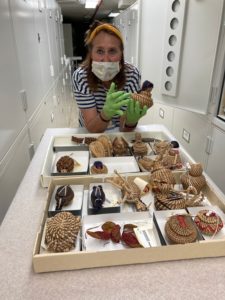
Arina Melkozernova looking at woven baskets

1) What have you been doing since receiving an NDSA Excellence Award?

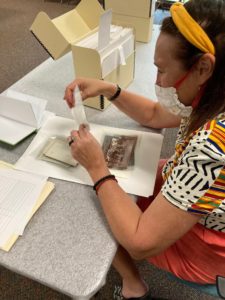
The NDSA award coincided with an invitation to join the “Mapping Traditional Knowledge and Land Use Practices among Southern Tribes/Leadership and Integrative Studies” project with the MOWA Tribal Band of Choctaw Indians led by Dr. Denise Bates. When I had a privilege to explore the Smithsonian collection as a SIMA fellow, I conducted an inventory of Koasati baskets and archival materials about Choctaw culture in the Museum Support Center. The two narratives arose from this data: one about everyday use of baskets made by weavers from the Coushatta Tribe of Louisiana and another – about the ecological resource usage preserved through the stories of the place of the Coushatta and MOWA Choctaw communities. 

2) What did receiving the NDSA award mean to you?

I am thankful for the NDSA recognition of my modest efforts. The NDSA award made me aware of my responsibilities as a researcher and as a member of digital preservation community. The concept of the object’s biographies introduced during the SIMA fellowship combined with a non-western perspective on the baskets’ living properties afforded the opportunity to tell stories about basket weavers in a way that empowers their community and restores their spiritual connections with a place. It highlights the role of women in the tribal economy. The values of Object stories are in reconnection to the place because baskets are the “physical manifestation of knowledge our ancestors left to us. Our responsibilities to take care of the objects and learn from them” as Joe Horse Capture, second-generation indigenous curator, described (lecture, SIMA, June 27 2022)

The most crucial is to recognize that there are different knowledges. Kindly, allow me to tell my story from many years ago when I traveled to the Far East of Russia to do a fieldwork. 

Imagine sitting in a shallow motor boat in the ocean surrounded by thick fog, so thick that you cannot see a palm of your hand in front of your face. You heard that this fog from rapidly melting icebergs could last for couple of weeks. Women and kids in the boat are crying fearing of drifting into the open sea without water or food. There I was, almost ready to graduate with my life science degree, completely disoriented and despaired. The fisherman on the boat saved our lives. He was Nivkh, the local indigenous person. He found the path to the land in zero visibility. The Nivkh fisherman had learned from his culture how-to navigate the surroundings that cannot be explained or framed with any oral language, only rest on this particular experience. I am here today because of this Nivkh fisherman’s skills and his knowledge of a sea navigation in extreme fog. Unfortunately, there is no technology to preserve certain embodied skills without supporting traditional lifestyle.

Although our data show that Coushatta and MOWA Choctaw communities are facing the common challenges to preserve their traditional lifestyle, my work is focused on translating the traditional knowledges and with technologies that are available today. For example, using the eco-geographical mapping method allows visualizing cultural intelligence and preserving community memories to secure the future of the next generations. Having guided by mentors access to searchable databases at the Smithsonian during the SIMA fellowship facilitated my ability to connect the baskets’ tangible and intangible qualities to the traditional knowledge embedded in them and to basket weavers, who embodied this entanglement.

3) What efforts/advances/ideas of the last few years have you been impressed with or admired in the field of data stewardship and/or digital preservation?Arina Melkozernova looking at photographs

I see how the museum culture is changing to embrace non-Western knowledge systems. I appreciate the everyday efforts and baby steps that transforming the fields of anthropology and biology. I observe how the Smithsonian museum is becoming a meeting space to build allies. Their Repatriation Office collaborates with Native American, Alaska Native and Native Hawaiian tribal representatives. Multiple databases are searchable and accessible. I was

pleasantly surprised that herbariums are completely digitized! And some descriptions contain common names listed in native languages with English transcription! (Try to search for Abelmoschus moschatus Medik). However, the references to the traditional ecological knowledge is missing. This will be my next collaborative project.

4) How has your curation evolved since you won the Excellence Award?

I am grateful to Dr. Denise Bates, Museum Director Maggie Rivers, and the members of the MOWA Band of Choctaw Indians for the opportunity to prepare a collection of traditionally cultivated plants for the display in the MOWA Choctaw museum. To extend the narrative, I plan to analyze further in depth the ecological resource usage preserved through the stories of the place along with the traditional knowledge embedded in them. Data from the various documents from the National Archives that describes medicinal, sacred and nutritional qualities of source materials along with stories of plants gathered locally will be presented in Choctaw language. Every deliverable will be evaluated by the community and approved by the director of the museum.

Arina Melkozernova looking at documents

5) What do you currently see as some of the biggest challenges in digital preservation?  

As a non-indigenous researcher involved in collaborations with tribes, I see personal challenges that are common for the field of digital preservation. To become a Western interdisciplinary scholar, who supports involvement of indigenous knowledge holders in framing research questions, shaping analyses, and determining research instruments based on their assumptions, values, concepts, orientations, and priorities for co-producing results means to unlearn colonial gaze and relearn two-eye seeing. The biggest challenge is to set the rules for the knowledge sharing and decide on the format that is not harmful to the community. Making such decisions requires building the trust, which takes time. Following the principles of the community-driven participatory research support is important for arriving to a common space from which the collaboration between Indigenous scholars and TEK holders and Western scientists could emerge. In digital preservation field, the expectations are the same – respect, reciprocity and data sovereignty.

Reach out to Arina via her Twitter handle –   @melkozernova

Read about other 2021 Excellence Awards winners here!

Peer Recognition and Motivation: Krista Oldham on the NDSA Excellence Awards

Krista Oldham headshot

Krista Oldham is the University Archivist at Texas A&M University, College Station, where her responsibilities include overseeing the acquisition, description, and preservation of University records, as well as supporting and promoting their use. Additionally, Krista provides oversight for the Texas A&M records management program. Prior to starting her position at Texas A&M, Krista worked at Clemson University as the University Archivist, Haverford College as the College Archivist/Records Manager for Quaker and Special Collections and at the University of Arkansas, Fayetteville Special Collections as the Senior Archivist and the Senior Archives Manager. In addition to her archival work, Krista served as Co-Director of the Arkansas Delta Oral History Project and  co-author of The Arkansas Delta Oral History Project: Culture, Place, and Authenticity, published in 2016.

Krista also co-chaired the Excellence Awards Working Group from 2021 to 2023. So, we reached out to her to ask for her perspective on these awards.

In what way are you connected to the National Digital Stewardship Alliance?

Currently, I am serving on the NDSA’s Long-term Conference Planning Working Group and I just confirmed my commitment to serving as a member of the NDSA Storage Survey Working Group. 

From your perspective, what do the NDSA Excellence Awards represent?

I think that they represent peer recognition of excellence in the field of digital preservation. I think the award encourages and motivates individuals to strive to advance digital preservation through meaningful contributions at an individual level and an institutional/programmatic level.

What efforts/advances/ideas of the last few years have you been impressed with or admired in the field of data stewardship and/or digital preservation?

For me, I have really enjoyed the community-driven digital preservation projects that have emerged in the last few years. I am extremely impressed when folk get together, collaborate, and pool resources to help others achieve their goals.

How do you feel the Excellence Awards encourage practitioners of digital stewardship/preservation?

I hope it encourages ideas and shows folks that their hard work matters and that the future success of digital preservation is a collaborative venture.

What do you currently see as some of the biggest challenges in digital preservation?

Not having the appropriate amount of resources and that can be monetary or staffing. The NDSA Staffing Survey, which I was a member of the WG, clearly indicated that staffing-levels are not where they need to be. I also think a challenge is working toward being environmentally sustainable with our digital preservation practices.

Catching up with past NDSA Excellence Awards Winners: Project Electron

In 2020, Project Electron received the NDSA Innovation Award in the Project category. It impressed the awards panel with its comprehensive adaptation and extension of traditional archival principles and workflows to digital materials. A multi-year initiative at the Rockefeller Archive Center, it sought to implement sustainable, user-centered, and standards-compliant infrastructure to support the ongoing acquisition, management, and preservation of archival digital records. The panel also appreciated the positioning of this initiative as an open-source and standards-based effort. This would allow maximum opportunities for its transferability to other programmatic contexts in a time when many archival institutions face significant challenges in supporting digitized and born-digital records and special collections. Headshot for Hillel Arnold

We contacted Hillel Arnold and found out how Project Electron has evolved and learned how it has impacted other work.

1) What have you been doing since receiving an NDSA Excellence Award?

We operationalized Project Electron in August 2019. Since then, we’ve continued to build on the infrastructure, methodologies, and expertise we built during the project.

One of the next big pieces of work we undertook was a complete rebuild of our discovery environment, locally branded as DIMES. The knowledge about building event-driven pipelines we picked up from Project Electron shaped this project, and also allowed us to complete it relatively quickly under challenging circumstances during the COVID-19 pandemic. You can read more about this project in the blog post announcing its launch.

Once we’d done all of that, the number of applications we needed to maintain had grown significantly, so we’ve also spent a fair amount of time improving our maintenance chops. As many folks know, I feel strongly that maintenance practices are both a core part of technology work as well as an enabler of strategic initiatives. We refined our continuous integration and continuous deployment pipelines, and instituted regular, efficient processes for dependency management. This continues to be an important area of focus for us, as we look for ways to implement DevOps methodologies and tools which help to expand our pool of developers among our colleagues. 

Finally, we’ve continued to invest in building a User Experience and Accessibility program to support ongoing evaluation and improvement of these systems. 

2) What did receiving the NDSA award mean to you?

For us, the Innovation Award was important because it provided external validation not only of what we were doing, but how we were going about it. It felt really good to know that other people saw value in what we were doing, even if they weren’t going to use our code, or if a completely different approach made sense for them. It also verified that our project values had been instrumental in directing us towards solutions that were reproducible and based in archival standards and practice. Most of all though, the award reaffirmed our participation in a community of digital preservation practitioners, which is incredibly important to the project team as well as the Rockefeller Archive Center as an institution. We have a lot to learn from each other!

3) How has Project Electron evolved since you won the Excellence Award?

As I mentioned above, Project Electron was an important platform for us in a number of ways. On the systems side, the approach we took has allowed us to extend the existing infrastructure to support additional workflows. So far we’ve built additional services to support a data pipeline for archival description, creation of image derivatives and IIIF manifests, and we’re in the process of building out services to support the ingest of digitized AV content. We’ve also spent some time improving the infrastructure’s scalability so we can process large files and large packages of files. 

Going into the project, we always knew we would have to build more than just software applications. So, we’ve also spent a significant amount of time building a user community around the tools and working to support adoption across our donor organizations. In many cases this has involved implementing other tools such as DART to support the creation of BagIt bags by organizations. 

We’re also trying to find ways to support records management processes in our donor organizations, since having an empowered records management function is key to successfully onboarding organizations because they are an effective way of mitigating concerns many of our donor organizations have about risk management. We’ve taken some broader approaches in this area too, such as spinning up a Records and Information Management Program to support these efforts, as well as establishing the Advancing Foundation Archives conference and community. 

4) What do you currently see as some of the biggest challenges in digital preservation?  

Climate change. In order for the work of digital preservation to be useful, there needs to be a future in which the records we’re preserving will be used. Thankfully, there is a growing conversation around issues of climate change and sustainability, and the ways that digital preservation is impacted by and can impact them. The things that make us skilled digital preservation practitioners (thinking about systems, data flows and disaster recovery) are also key ingredients in supporting sustainability, so we have a lot to offer. At the same time, significant changes in this area are going to require us to both work collectively across the entire archival sector, and also to develop partnerships outside of it.

~

Learn more about the other winners from the 2020 NDSA Innovation Awards!

Skip to content