Catching up with past NDSA Excellence Awards Winners: Dr. Dinesh Katre!

The NDSA Individual Excellence Award honors individuals making significant contributions to the digital preservation community. In 2019, Dr. Dinesh Katre was one of two awardees in this category. Dr. Katre was recognized for his work to advocate for and deploy the Indian National Digital Preservation Programme which provides a robust and comprehensive platform for the effective long-term preservation of digital materials. As Chief Investigator of the Programme’s flagship project to establish a Center of Excellence for Digital Preservation

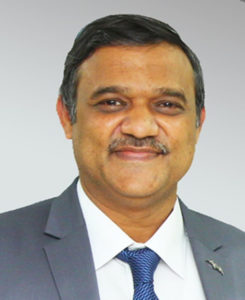
Headshot of Dr. Dinesh Katre, Senior Director & Head of Department, Centre for Development of Advance Computing (C-DAC), Pune, INDIA.

Dr. Katre led the process to develop a digital preservation standard for India. He also conceptualized, designed and led the development of DIGITĀLAYA, a software framework, which comprehensively implements the OAIS reference model. Katre’s efforts culminated in the first repository in the world to achieve ISO 16363 certification.

We recently caught up with Dr. Katre to learn more about the progress of his work on the Indian National Digital Preservation program and other projects over the last few years.

1) What have you been doing since receiving an NDSA Excellence Award?

I have spearheaded the working group constituted by Supreme Court of India, which has defined the Digital Preservation Standard Operating Procedure (SOP) for the Indian Judiciary which provides coverage for Supreme Court of India, 25 High Courts and 672 District Courts. The SOP provides guidelines and recommendations with regard to Information Governance (IG) policies for courts, digitization of judicial records, cloud infrastructure for establishing Judicial Digital Repositories, tools and technologies, standards, AI/ML based applications to leverage upon massive data repositories to modernize the Indian Judiciary for accelerating the justice delivery.  Most interestingly, we conducted 5 rounds of surveys across all high courts and district courts to collect information on various aspects of digitization. Huge amount of data was collected and analyzed for developing the insights. I am pleased to inform that the Digital Preservation Standard Operating Procedure (SOP) has been approved by honorable Chief Justice of India and sanctioned by the Law Ministry for implementation across the judiciary. The SOP is available at the following URL: https://ecommitteesci.gov.in/document/digital-preservation/

2) What did receiving the NDSA award mean to you?

I have worked extensively towards establishing the Indian National Digital Preservation Program since 2008, which involved development of archival systems, tools, standards, and digital repositories to comply as per the ISO 16363. As a part of my research, I had organized an Indo-US workshop to study the international trends in digital preservation in collaboration with the experts from National Digital Information Infrastructure and Preservation Program (NDIIPP) of the Library of Congress. I knew that National Digital Stewardship Alliance (NDSA) was originally launched by NDIIPP in 2010. Therefore, it was an immensely inspiring and encouraging moment for me to receive the NDSA Individual Innovation Award in 2019.

3) What efforts/advances of the last few years have you been impressed with or admired in the field of data stewardship and/or digital preservation?

I am particularly impressed with the advances in Digital Humanities and Computational Archival Science (CAS) which leverage upon artificial Intelligence/machine learning technologies to enable automation of digital preservation procedures and knowledge extraction from the digital repositories.

4) How has your work evolved since you won the Excellence Award?

The NDSA award infused me with a great deal of confidence and courage to embrace the evolving technological landscape. Since then, I have initiated R & D on the development of intelligent archiving tools for automatic metadata extraction, ontology-based classification of records, document orientation detection, visual entity tagging in miniature paintings and information extraction from documents. 

5) What do you currently see as some of the biggest challenges or opportunities in digital preservation?

Whether proprietary or open source, the major challenge is heterogeneity and inconsistency in the properties of file formats. The digital preservation domain has been relying on open-source file formats but we must understand that they are primarily evolved for the purpose of interoperability. Therefore, a wider consensus is required for defining comprehensive “Universally Intelligible & Interoperable File Formats (UNIIFormats, a term coined by me) for all major types of contents, which would be specially designed for the purpose of digital preservation. The proposed UNIIFormats should provide built-in support for self-description, knowledge markup, semantic linkability, searchability, accessibility, discoverability, authenticity, and backward & forward compatibility. One should have a choice of storing information in the proposed UNIIFormat, if it requires long term retention. Incorporating so many properties into a file format may sound a bit utopian but I feel that there has not been much evolution and advancement in the file formats as compared with other technological advancements.

Presently, producing these properties for the data requires you to avail separate, fragmented, and paid application services. It may be beneficial for business but detrimental for preserving the digital footprint of the human civilization. Post-processing of the data for preservation is very laborious, costly, prone to loss of information, errors, and mis-interpretation.

We also require to use AI ML techniques for creating knowledge services to leverage the massive data repositories, which can help in long term sustenance.

 You may like to refer my presentation on “Digital Eternity: Innovating a Future for the Past” which is available at the following URL: https://www.youtube.com/watch?v=lpr4ypE88qI&t=3047s

6) Are you working on any new digital preservation related projects at the moment?

I am presently leading the Digital Preservation for the Indian Judiciary initiative and Digital Preservation of Sanskrit Encyclopedic Dictionary project which is supported under the Science & Heritage Research Initiative (SHRI) of the Department of Science and Technology (DST).

Catching up with past NDSA Excellence Awards Winners: Asociación Iberoamericana de Preservación Digital (APREDIG)

The Asociación Iberoamericana de Preservación Digital (APREDIG) won the 2019 Organization Innovation Award. APREDIG is a nonprofit Ibero-American association founded at the end of 2017 in Barcelona, Spain, with the intention of promoting the importance of digital preservation in Spainish-speaking countries. Its activity has culminated in projects and activities to disseminate a Spanish translation of the original NDSA Levels of Preservation, opening-up significant new opportunities for expanding digital stewardship best practices, and subsequent outcomes, by practitioners in Spain and Latin America. Led by Dr. Miquel Termens and Dr. David Leija Román (Universitat de Barcelona), this group of volunteers, researchers, and disseminators of best practices for digital preservation have created an online self-assessment tool to help Institutions of Spain and Mexico understand recommendations, key concepts, and simple diagnosis of digital preservation practices using the NDSA Levels as a guideline. 

Headshot of David Leija


We recently caught up with Dr. David Leija Román to learn more about the organization’s progress in the last few years. His responses, in English and Spanish, are available below! 

1) What have you been doing since receiving the NDSA Excellence Award?

We have supported many Institutions in Latin America to correctly apply the NDSA guidelines with workshops and introductory sessions on digital preservation, as well as publishing articles and providing non-profit support to Institutions in the development of their digital preservation policies.

2) What did it mean for you to receive the NDSA award?

It means a lot and has filled us with great emotion to be part of the excellent effort made by the NDSA, since the work of spreading the importance of digital preservation in institutions with few economic and information resources in Latin America is still a subject in training, so this award motivated us to specialize more in what the NDSA does and communicate it in Spanish to our community.

3) What efforts/advances/ideas in recent years have impressed or admired you in the field of data management and/or digital preservation?

One of the most impressive things I have seen in Latin America is the possibility to innovate in the use of NDSA levels in small archival institutions, since with few technological and human resources they have created programs that start with diagnoses of very specific needs, to be communicated to authorities as the importance of digital preservation and from there to create with science about what should be done. This has only been possible thanks to the guidance of the NDSA levels.

4) How has your work evolved since you won the Award of Excellence?

Mainly, we have become referent disseminators of the NDSA levels guidelines in Spanish, which means a great responsibility to always transmit in the best possible way its objectives and continuous improvements. Today we seek to participate in productive tables and create a network of more integrated in the subject to support each other.

5) What do you currently see as some of the biggest challenges or opportunities in digital preservation?

In short, it is still the lack of culture about the importance of digital preservation, since the administrations in Latin America are periodic and rotating, so understanding what has been done before and preserving the progress, sometimes in the changes of administration must start again. It is where guidelines such as NDSA and the work of solid declarative policies, help to neutralize the advances so that they are transmitted and continue to move forward with the sustainability of these.

6) Are you working on any new projects related to digital preservation? If so, could you share a bit about the project(s)?

We are currently working hand in hand with the wonderful network of digital preservation services CARINIANA, coordinated by Miguel Márdero. We have several work projects at the digital heritage level in Brazil with the collaboration of different Ibero-American experts. In Mexico we are collaborating with digital preservation repository seedbeds in northern Mexico with the Autonomous University of Tamaulipas and in the design and validation of digital preservation policies. From this aspect we have published articles since 2017 on the use of NDSA levels (https://revista.profesionaldelainformacion.com/index.php/EPI/article/view/epi.2017.may.11 ) and on Digital Preservation Policies (https://bid.ub.edu/es/50/leija.htm) to support knowledge transfer in Spanish on the subject.

Click here to read about the other winners of 2019 NDSA Innovation Awards!

Do you know an organization that is working toward clever, inventive, and risk-taking approaches to the challenges and potential of digital preservation? Help us highlight and reward their efforts! Click here to submit a 2023 NDSA Excellence Awards nomination.

Responses in Spanish are below:

1) ¿Qué ha estado haciendo desde que recibió el Premio a la Excelencia de la NDSA?

Hemos apoyado a muchas Instituciones en Latinoamérica para aplicar correctamente las directrices de NDSA levels con talleres y jornadas introductorias a la preservación digital, así como publicar artículos y apoyar sin ánimo de lucro a Instituciones en el desarrollo de sus políticas de preservación digital. 

2) ¿Qué significó para usted recibir el premio NDSA?

Significa muchísimo y nos ha llenado de mucha emoción de ser parte de el excelente esfuerzo que hace la NDSA, ya que el trabajo de divulgar la importancia de la preservación digital en Instituciones con pocos recursos económicos y de información en Latinoamérica sigue siendo una asignatura en formación, por lo que este premio nos motivó a especializarnos más en lo que hace la NDSA y comunicarlo en español a nuestra comunidad.

3) ¿Qué esfuerzos/avances/ideas de los últimos años le han impresionado o admirado en el campo de la administración de datos y/o la preservación digital?

Una de las cosas más impresionantes que he visto en Latinoamérica principalmente es la posibilidad de innovar en el uso de NDSA levels en pequeñas Instituciones de archivos, ya que con pocos recursos tecnológicos y humanos se han creado programas que inician con diagnósticos de necesidades muy específicas, para ser comunicadas a autoridades a modo de importancia de la preservación digital y de ahí crear conciencia sobre lo que se debe hacer. Esto solo se ha podido lograr gracias a la guía de los NDSA levels. 

4) ¿Cómo ha evolucionado tu trabajo desde que ganaste el Premio a la Excelencia?

Principalmente nos hemos convertido en divulgadores referentes de las directrices NDSA levels en habla hispana (español), esto significa una gran responsabilidad de siempre transmitir de la mejor forma posible sus objetivos y mejoras continuas. Hoy en día buscamos participar en mesas productivas y crear red de más integrantes en el tema para apoyarnos mutuamente.

5) ¿Cuáles ve actualmente como algunos de los mayores desafíos u oportunidades en la preservación digital?

En definitiva sigue siendo la falta de cultura sobre la importancia de la preservación digital, ya que las administraciones en America latina son periódicas y rotativas, por lo que el entender que se ha hecho antes y conservar los avances, a veces en los cambios de administración se debe iniciar de nuevo. Es donde las directrices como NDSA y el trabajo de políticas sólidas declarativas, ayudan a neutralizar los avances para que estos sean transmitidos y seguir avanzando con la sostenibilidad de estos. 

6) ¿Estás trabajando en algún nuevo proyecto relacionado con la preservación digital? Si es así, ¿podría compartir un poco sobre el (los) proyecto (s)? 

Actualmente trabajamos de la mano con la estupenda red de servicios de preservación digital CARINIANA, que coordina Miguel Márdero. Tenemos varios proyectos de trabajo a nivel de patrimonio digital en Brasil con la colaboración de diferentes expertos iberoamericanos. En México estamos colaborando con semilleros de repositorios de preservación digital en el norte de México con la Universidad Autónoma de Tamaulipas y en el diseño y validación de políticas de preservación digital. Desde está vertiente hemos publicado artículos desde el 2017 sobre el uso de NDSA levels (https://revista.profesionaldelainformacion.com/index.php/EPI/article/view/epi.2017.may.11 ) y sobre Políticas de Preservación digital (https://bid.ub.edu/es/50/leija.htm) para apoyar en transferencia de conocimiento en español sobre el tema.

¡Haga clic aquí para leer sobre otros ganadores de los Premios a la Innovación NDSA 2019!

¿Conoce alguna organización que esté trabajando para lograr enfoques inteligentes, inventivos y arriesgados para los desafíos y el potencial de la preservación digital? ¡Ayúdanos a destacar y recompensar sus esfuerzos! Haga clic aquí para enviar una nominación a los Premios a la Excelencia NDSA 2023.


Now Accepting Nominations for the NDSA 2023 Excellence Awards

Nominations are now being accepted for the National Digital Stewardship Alliance (NDSA) 2023 Excellence Awards!

The biennial NDSA Excellence Awards (previously the annual Innovation Awards) were established to recognize and encourage exemplary achievement in the field of digital preservation stewardship at a level of national or international importance. Seeking to highlight and commend all forms of creative and meaningful contributions in the field of digital preservation, this working group accepts nominations for individuals, educators, future stewards, organizations, projects, and sustainability activities categories. Acknowledging that exemplary digital stewardship can take many forms, eligibility for these awards has been left purposely broad. Anyone, any institution, or any project acting in the context of the categories listed below can be nominated for an award. No NDSA membership or affiliation is required. Self-nomination is accepted and encouraged, as are submissions reflecting the needs and accomplishments of historically marginalized and underrepresented communities.

Awards categories are:

  • Individual Award: Recognizing those individuals making a significant contribution to the digital preservation community through advances in theory or practice.
  • Educator Award: Recognizing academics, trainers, and curricular endeavors promoting effective and inventive approaches to digital preservation education through academic programs, partnerships, professional development opportunities, and curriculum development.
  • Future Steward Award: Recognizing students and early-career professionals making an impact on advancing knowledge and practice of digital preservation stewardship.
  • Organization Award: Recognizing those organizations providing support, guidance, advocacy, or leadership for the digital preservation community.
  • Project Award: Recognizing those activities whose goals or outcomes make a significant contribution or strategic or conceptual understanding necessary for successful digital preservation stewardship.
  • Sustainability Award: Recognizing those activities whose goals or outcomes make a significant contribution to operational trustworthiness, monitoring, maintenance, or intervention necessary for sustainable digital preservation stewardship.

The NDSA is an organization consisting of a diverse international membership sharing a commitment to digital preservation. The development and support of a broad range of successful digital preservation activities is key to the future of digital stewardship. We encourage all members of the international digital preservation community to help us highlight and reward distinctive approaches to the challenges of digital preservation by submitting nominations for worthy candidates here: 2023 NDSA Excellence Awards Nominations

Nominations will be accepted until Friday, August 4, 2023.

Awards will be presented on November 15th as part of the Opening Plenary session at the 2023 NDSA Digital Preservation conference in St. Louis, Missouri, USA.

Attendance at the conference is encouraged but not required for awardees or nominators.

Information and details on awards from previous years is available on the Excellence Awards webpage.

Reminder: Call for New Members and Co-Chairs, NDSA Excellence Awards Working Group

The NDSA Excellence Awards Working Group (EAWG) seeks new co-chairs and at-large members! This group relies on volunteer participation from the digital preservation community to publicize the nomination process, review nominations, select the winners, and work closely with the awardees and the DigiPres conference program committee to organize the Awards Ceremony. The group typically meets once a month and works as needed in between regularly scheduled calls to support the awards process. Most work outside of meetings occurs when reviewing applications (2-4 hours), and then in October leading up to the Awards Ceremony (1-2 hours/week). We welcome participation from students and early career professionals, as well as from those who have been in the digital preservation field for a while!

The NDSA Excellence Awards were established in 2012 to highlight and commend all forms of creative and meaningful contributions by individual professionals, future stewards, educators, organizations, projects, and sustainability activities to the field of digital preservation. They offer a wonderful opportunity to learn about the activities and impact of a wide range of exceptional people and projects. Recently, a cooperative agreement was reached with the Digital Preservation Coalition (DPC) allowing the awards programs for both groups to be presented on an interleaved biennial basis. The NDSA Awards are presented in the odd-numbered years (including this year at DigiPres 2023, in St. Louis on November 15-16, 2023!), while the DPC program takes place in even-numbered years. This provides an opportunity to work with digital preservationists from around the world as a judge on the DPC Digital Preservation Awards in 2024. 

Please consider contributing important professional service back to the digital stewardship community.  If you would like to join the EAWG, please fill out this form and provide a brief statement of interest. Working group members must be affiliated with an NDSA member institution and agree to follow the NDSA Code of Conduct.

Call for New Members and Co-Chairs, NDSA Excellence Awards Working Group

The NDSA Excellence Awards were established in 2012 to highlight and commend all forms of creative and meaningful contributions by individual professionals, future stewards, educators, organizations, projects, and sustainability activities to the field of digital preservation. This year’s awards will be presented in person at the Digital Preservation 2023 conference, which will be held in St. Louis, Missouri on November 15-16, 2023.

The Excellence Awards depend upon the vital volunteer participation of the community. We are looking for new members for the Excellence Awards Working Group (EAWG) at both the co-chair and at-large level. Working group members participate to publicize the nomination process, review nominations, select the winners, and work closely with the awardees and NDSA programming to organize the Awards Ceremony. This group typically meets once a month and works as needed between regularly scheduled calls to support the awards process. Most work outside of meetings occurs when reviewing applications (2-4 hours), and then in October leading up to the Awards Ceremony (1-2 hours/week). 

While the NDSA Awards were originally organized on an annual cycle, they are now presented on a biennial basis as the result of a cooperative agreement with the Digital Preservation Coalition (DPC), which operates their own biennial awards program. The NDSA Awards are presented in the odd-numbered years (including this 2023 year!), while the DPC Awards take place in even-numbered years. NDSA and DPC also provide participation on each other’s Awards panels.

This is a wonderful opportunity to learn about the activities and impact of a wide range of exceptional people and projects. We welcome participation from students and early career professionals, as well as from those who have been in the digital preservation field for a while!

If you would like to help on this working group, please fill out this form by Friday, March 3. Working group members must be affiliated with an NDSA member institution and agree to follow the NDSA Code of Conduct.

NDSA 2022 Year in Review

As we begin 2023 we wanted to take a moment to look back at NDSA activities over the past year.  Please take a look at the things we’ve accomplished and think about how you can participate this year!  

NDSA Leadership

This summer, NDSA Leadership went through an facilitated exercise to discuss NDSA strategy and how we engage with the marketplace of digital preservation service providers. One result of this exercise is a refreshed NDSA Foundational Strategy, which includes tweaks to our mission and vision statements, adds Transparency and Openness as values, and now includes operating principles based on our values. These new principles will be used as guidestones as we conclude this work on service provider engagement. In October, NDSA sponsored an open conversation on the Ithaka S+R report, The Effectiveness and Durability of Digital Preservation and Curation Systems. This conversation provided space for the community to react to the report and discuss its implications, you can read a summary on the NDSA News blog.

Membership Updates 

Following our new quarterly membership review process, we welcomed a total of 15 new members, with 5 of those being international members from Africa (3), Iceland, and Mexico. We look forward to working with and learning from our new members.   

As existing members, the new year is a good time to make sure your organization’s  contact information is up to date. A simple form is available to assist with this process.  

Interest Groups

Content Interest Group

  • During 2022 one of our co-chairs, Deb Verhoff stepped down and we welcomed Deon Schutte who now, together with Brenda Burk leads the content interest group.
  • Nathan Tallman spoke to us about appraisal and selection for digital preservation at our first meeting in February. 
  • At our May meeting we officially said goodbye to Deb Verhoff and had an interesting discussion about the new forms of content that are created in news organizations and the implications thereof for digital preservation.
  • Dealing with content that has both cultural and ethical concerns, as well as offensive content was the topic of the presentation and discussion led by the University of Cape Town during the August meeting. Andrea Walker, an archivist from the University of Cape Town spoke to us about an ongoing digital curation project involving the ǂKhomani San.
  • Our last meeting of 2022 was a casual affair with new members to the NDSA (those who joined in 2022) coming to tell us about themselves and their organizations. We look forward to interacting with and learning from them during 2023.

Infrastructure Interest Group

In 2022, the Infrastructure Interest Group met quarterly and focused on exploring topics of common interest through invited presentations, solution sessions where members bring their challenges and questions to the group, article discussions, and an in person event at DigiPres2022. Topics explored included:

  • Oxford Common File Layout (OCFL) and Implementation presented by Andrew Woods, Princeton University
  • Geographic Distribution in Cloud Environments
    • Presentation “Calculating the Costs of Redundant Storage” by Martha Anderson, University of Arkansas
    • Presentation and facilitated discussion on distributed cloud storage by Leslie Johnson, Director of Digital Preservation at NARA
  • Discussion post review of:
    • The Digital Preservation Declaration of Shared Values put forth by the Digital Preservation Services Collaborative
    • Preservica’s Charter for Long-Term Digital Preservation Sustainability
  • Solution Discussion Topics
    • Non-public sharing of digital born materials
    • Potential use of W3C’s Screen Capture for digital preservation
    • Secondary server storage

Standards and Practice Interest Group

  • Standards and Practices welcomed a new co-chair, Ann Hanlon (UWM), who joined continuing co-chair, Felicity Dykas. 
  • The Standards and Practices Interest Group held quarterly meetings, with the following agendas:.
    • January: A presentation by Lynda Schmitz Fuhrig, Digital Archivist at the Smithsonian, on preservation standards for digital video files. It was well attended and provided quite a bit of useful information.
    • April: A working session to identify glossaries that address terminology used in digital preservation. This will be re-reviewed and posted in 2023.
    • July: We discussed staffing for digital preservation, using two slides from the Staffing Survey questionnaire as a jumping off point. Attendees expressed challenges with staffing, and noted different staffing models.
    • October: We ended the year with a presentation on the Digital Preservation Coalition Competency Audit Toolkit (DPC CAT) given by Amy Currie and Sharon McMeekin of DPC. We appreciated the preview on the Toolkit, which was publicly released shortly after the meeting. 

Working Groups

Communication and Publications Working Group

The Communications and Publications group works to support Leadership and co-chairs of the Interest and Working groups through creating documentation, updating the website, and posting to social media and the NDSA blog.  The items below are highlights of completed activities in 2022.

DigiPres Conference Organization Committee

  • The 2022 DigiPres Conference was held October 12-13 in Baltimore, Maryland. Highlights from the conference can be found in this wrap-up post. The opening plenary video will be released soon, keep your eyes open for an announcement.
  • A virtual session to accommodate additional sessions from the 2022 Conference is being planned for February 2023.  
  • The 2023 DigiPres Conference will be held at the St. Louis Union Station Hotel in St. Louis, Missouri on November 15-16.

Excellence Awards Working Group

  • In line with our new working agreement with the Digital Preservation Coalition (DPC), only the DPC Digital Preservation Awards were awarded in 2022.  In 2023, the NDSA Excellence Awards will be presented at the annual Digital Preservation conference.  
  • If you are interested in participating in this group, keep your eyes out for a call for participation!

Levels of Digital Preservation

  • The steering group has established a Levels of Preservation ‘office hour’. This is held once every 2 months and provides a forum for members of the community to drop in and discuss the Levels and ask questions. Specific topics covered within these sessions include a focus on community archives and their use of the levels and a discussion about documentation. Do come along to future ‘office hour’ sessions – we would love to see you there! (See the NDSA Calendar of Events for specific dates)
  • We were excited to cheer the Levels of Preservation all the way to the quarter finals of World Cup of Digital Preservation! Unfortunately they were beaten in the semi-finals by PRONOM which then went on to win the tournament! 
  • A Dutch translation of the NDSA Levels has been published. A big thank you to Lotte Wijsman for providing this!
  • The group continues to respond to comment and feedback on the Levels. Do use our feedback form if you would like to share your thoughts on the Levels and associated resources with the steering group.

Membership Working Group

  • A newly formed Membership Working Group grew out of the 2021 Membership Task Force, which conducted a survey on a wide range of membership issues, and published a report on their findings.
  • We will build our work around the findings of the report published by the Membership Task Force. 
  • If you are interested in joining this working group, we are still recruiting participants, please see our call to get involved!

Staffing Survey

  • The 2021 Staffing Survey Report was published in August. The report documents survey responses from 269 individuals, covering topics such as digital preservation activities and staffing qualifications. Additional information for review, including the Survey codebook and data files, are also available in the NDSA OSF.
  • In September, members of the Staffing Survey Working Group presented a peer-reviewed panel presentation at iPres in Glasgow, Scotland. A short paper is available in the conference proceedings (p. 424). An additional presentation at the DigiPres conference in October led to an engaging audience conversation about digital preservation staffing.

Web Archiving Survey

  • The Web Archiving Survey Group was re-established to refresh the survey which was last distributed in 2017
  • 190 survey responses were received — 72.6% from institutions and individuals in the United States, and 27.4% from international institutions and individuals
  • The report is currently being worked on and we are aiming for a Spring 2023 release!

NDSA and DPC Announce Cooperation on Awards Programs

The National Digital Stewardship Alliance (NDSA) and Digital Preservation Coalition (DPC) are delighted to announce an agreement for close coordination and cooperation on their respective awards programs.

The NDSA began in 2010 as a global network of collaborative partners supplying advocacy, expertise, and support for the preservation of digital heritage, promoting a vision in which all digital material fundamentally important to our cultures receives appropriate, effective, and sustainable stewardship to protect and enhance its persistent value, availability, and (re)use.  The annual NDSA Excellence Awards were established in 2012 to recognize and encourage exemplary achievement in the field of digital preservation stewardship.  Since then, 53 awardees have been honored in Individual, Organization, Project, Sustainability, Educator, and Future Steward categories presented during the annual NDSA Digital Preservation conferences.

The DPC was established in 2002 to provide advocacy, community engagement, workforce development, capacity-building, good practice, and good governance in support of resilient long-term access to digital content and servicesThe biennial DPC Digital Preservation Awards began in 2005 to raise public awareness about digital preservation and to endorse and celebrate outstanding work in the field.  Thirty-one honorees have been recognized in categories of Collaboration and Cooperation, Research and Innovation, Teaching and Communications, Distinguished Student Work, Safeguarding Digital Legacy, and Outstanding Initiative in Commerce, Industry, and the Third-Sector, as well as individual Fellowships.

The NDSA and DPC each originally focused on national concerns and membership.  However, both now actively encompass and encourage broader international participation.  In view of the overlapping scope of their goals, activities, members, and audience, and to avoid potential confusion regarding eligibility for their respective awards programs, the NDSA and DPC have agreed to a coordinated awards framework.

While both organizations will continue with their own awards programs, the NDSA Excellence Awards will move from an annual to a biennial basis interleaved with the DPC Digital Preservation Awards.  Thus, each year the international digital preservation community can look forward to the presentation of a single set of awards.  Activities performed in the two years prior to an Award’s presentation year are eligible for consideration.  Additionally, each Awards program will invite representative participation of the other on their juries, to promote greater consistency in criteria and evaluation as well as helping ensure organizational continuity between the two programs.  Both organizations will also amplify each other’s award-related communications via their own outreach channels.

This cooperation began with the NDSA’s 2021 Excellence Awards, when Sharon McMeekin, DPC Head of Workforce Development, participated in the judging by the NDSA Excellence Awards Working Group.  Kari May, Digital Archives and Preservation Librarian at the University of Pittsburgh and NDSA Excellence Awards Working Group member, is similarly participating on the DPC Jury for its upcoming 2022 Digital Preservation Awards.  There will not be an NDSA Excellence Awards presentation in 2022; that will next take place in 2023.

“We are delighted with our new cooperative approach with the DPC,” says Krista Oldham, University Archivist at Texas A&M University and co-chair of the NDSA Excellence Awards Working Group.  “It provides a more consolidated process and greater public visibility for honoring exemplary activity throughout the worldwide digital preservation community.”

”The Digital Preservation Awards are designed to endorse and celebrate outstanding work in digital preservation,” explains Sarah Middleton, Head of Advocacy and Communications for the DPC and coordinator of the Digital Preservation Awards.  “Synchronizing and sharing the spotlight with the NDSA Excellence Awards in this way means we are able to highlight even more work which deserves that recognition.”

More information about the NDSA and DPC awards programs and other organizational initiatives is available on the NDSA and DPC websites or by contacting ndsa.digipres@gmail.com or info@dpconline.org.

Announcing the NDSA Excellence Awards!

The NDSA Excellence Awards Working Group (formerly the Innovation Awards Working Group) is excited to announce the expansion and renaming of the awards to recognize the important contributions that are being made in the areas of sustainability and maintenance. The NDSA Excellence Awards will highlight and commend all forms of creative and meaningful contributions by individuals, projects, sustainability activities, organizations, future stewards, and educators to the field of digital preservation.

Prior winners of the “Future Stewards” award originally proposed the change and worked together with the Excellence Awards Working Group to make it possible. Please see below for more information!


When reflecting on the 2020 NDSA Digital Preservation conference, much of our conversation centered around the “What’s Wrong with Digital Stewardship: Evaluating the Organization of Digital Preservation Programs from Practitioners’ Perspectives” panel discussion, based on the eponymous paper by Karl Blumenthal, Peggy Griesinger, Julia Y. Kim, Shira Peltzman, and Vicky Steeves. Like many practitioners in the field, the paper identified themes and articulated scenarios we had experienced or observed ourselves, particularly around issues of labor, leadership, and funding.

We wondered what we could, and should, do to better acknowledge and celebrate digital stewards for under-recognized maintenance work, and coalesced on proposing a new NDSA award category focused on maintenance and sustainability work, as well as renaming the awards to reflect an expanded scope beyond innovation. We’re each recipients of Future Steward awards, and reached out to the other Future Stewards to co-sign our proposal; we are grateful for their support in collectively raising our voices to suggest change in order to best reflect the state of the field. You can read our proposal here.

-Samantha Abrams, Elizabeth England, and Lauren Work


The Excellence Awards Working Group sees this as one small step, as there is much more work to be done to shift from the continued use of “innovation” as a main driver for recognition not just within the field, but by organizations’ leadership and funders. In short – we need YOU! Review the new Excellence Awards structure here, particularly the newly added Sustainability Award, and get ready to nominate colleagues in a few weeks!

Skip to content