NDSA Welcomes Three New Members in Quarter 1 of 2024

As of March 2024, the NDSA Coordinating Committee voted to welcome its three most recent applicants into the membership. Each new member brings a host of skills and experience to our group. Keep an eye out for them on your working and interest group calls and be sure to give them a shout out. Please join me in welcoming our new members! To review our list of members, you can see them here.

  • Bethany Scott, NDSA Coordinating Committee Chair

Anderson Archival

Anderson Archival seeks to join the National Digital Stewardship Alliance to expand our perspective and knowledge on the digital preservation field. As a provider of digital preservation services, we continually advocate for the digital preservation field and work to effectively communicate trends and standards with our peers and clients. Our team understands that digital preservation requires much more than simply digitizing in order to transform a collection into a powerful preservation and research tool. We are continuously looking to meet our clients where they are in their understanding of digital preservation and give them the resources they need to make informed decisions regarding their collections. Additionally, our website and blog offer valuable information on digitization and digital preservation that is available to everyone. Overall, at Anderson Archival, we are dedicated to providing top-notch digital preservation services and resources to our clients, and we are constantly striving to learn and improve our services in this ever-evolving field.

Digital Life Advisors

Digital Life Advisors applies what we perceive as digital stewardship practices to digital estate planning. We work with individuals, many of whom are older adults, to locate and organize their digital legacy assets. These assets can include photos, videos, personal writings, blogs, articles, newsletters, social media account presence, emails, computer and cloud files among other properties. We recommend password managers, digital vaults and other tools to secure and preserve our clients’ digital lives.

Mississippi Digital Library

The Mississippi Digital Library (MDL) is the collaborative digital library for the state of Mississippi. We are a network of over 50 partner institutions ranging from academic libraries and public libraries to historical societies and museums. MDL’s mission is to assist our partners in building high quality, sustainable digital collections and sharing their cultural and historical resources with researchers around the world. We are committed to teaching and educating our partners as well as the public on digital preservation and helping them determine the appropriate preservation actions for them. We are currently piloting a statewide digital preservation collaborative that will offer value added digital preservation services to Mississippi based institutions and help expand our role from education and access to preservation and sustainability of digital content.

Shira Peltzman Elected 2024 NDSA Vice Chair

Shira Peltzman, in her second year as a member of the NDSA Coordinating Committee, has been elected by the NDSA Leadership as its 2024 Vice Chair and 2025 Chair. The Vice Chair’s duties include: 

  • Managing the annual process to elect new CC members.
  • Facilitating the new member application process.
  • Convening quarterly meetings for the Co-Chairs of Working Groups and Interest Groups.
  • Participating in quarterly meetings between NDSA and CLIR.
  • Along with the Chair, ensuring the NDSA Code of Conduct is carried out.

Shira Peltzman (1st CC term, 2023-2025) is the Associate Director for Preservation Digital Strategies at Yale University Library where she provides leadership and direction for digital preservation, media preservation, and preservation imaging. In her role she serves as an advocate for sustainable stewardship and works with stakeholders across campus to champion ambitious preservation initiatives that support enduring access to Yale’s digital collections.

Please join me in congratulating Shira on this new role!

2024 NDSA Interest Group Schedule

The NDSA Interest Groups are continuing to meet on a quarterly basis with one meeting a month to help members who have wanted to participate in multiple groups but didn’t have the time for more than one or two calls per month, hopefully allowing participants to more easily attend multiple interest group meetings.

The 2024 Interest Group Meeting Schedule is as follows (subject to change).  

  • January 9, 1pm EST: Standards and Practices
  • February 1, 12pm EST: Content 
  • March 18, 1pm EST: Infrastructure
  • April 8, 1pm EST: Standards and Practices
  • May 2, 12pm EST: Content
  • June 17, 1pm EST: Infrastructure
  • July 8, 1pm EST: Standards and Practices
  • August 1, 12pm EST: Content
  • September 16, 1pm EST: Infrastructure
  • October 14, 1pm EST: Standards and Practices
  • November 7, 12pm EST: Content
  • December 10, 1pm EST: Infrastructure 

Call in information and any updates on scheduling is available on the meeting note documents for each group which are linked from the group website: Content, Infrastructure, Standards and Practices.  

We hope you can join us multiple times throughout the year.  

NDSA seeks expressions of interest for new host organization

NDSA Background

NDSA was launched in July 2010 as an initiative of the National Digital Information Infrastructure and Preservation Program (NDIIPP) of the Library of Congress. For an inaugural four-year term, the Library of Congress provided secretariat and membership management services to the NDSA as well as contributing leadership, expertise, and administrative support.

Since January 1, 2016, NDSA’s organizational home has been the Council on Library and Information Resources (CLIR). Selection of CLIR followed a nationwide search and evaluation of cultural heritage, membership, and technical service organizations, in consultation with NDSA Interest Groups, their members, and external advisors.

NDSA is a global network, based in the United States, that advocates for the digital stewardship needs of its member organizations, convenes a community of practice, and provides professional development opportunities for its members. A heterogeneous membership organization with over 275 organizational members, it represents universities, government and non-profit organizations, commercial businesses, and professional associations. 

As a completely volunteer-run organization, with administrative assistance from CLIR, all NDSA programming and publications are made possible through the contributions of its volunteer community. These include:

  • The NDSA Levels of Digital Preservation, a widely used resource to help digital preservation practitioners build or assess their digital preservation program
  • A national conference on digital preservation, held on an annual basis since 2016
  • A series of longitudinal surveys on digital preservation staffing, storage, web archiving, and fixity practices
  • A bi-annual Excellence Awards program (in coordination with the Digital Preservation Coalition) that recognizes and encourages exemplary achievement in the field of digital preservation

Request for Information

Under its hosting relationship with CLIR, NDSA has thrived and evolved into the active volunteer alliance that it is today. In addition to the activities listed above, NDSA is home to multiple active interest and working groups that foster knowledge exchange between members and regularly publish on critical issues in digital stewardship. There is a strong and engaged Leadership team with healthy turnover and a yearly operational planning process. NDSA has a large membership with growing needs, including training, mentorship opportunities, and more ways to convene as a community of practice.

As NDSA has grown, its support needs from its organizational host have also evolved. NDSA seeks expressions of interest from organizations to host NDSA for the next five years, with opportunity for renewal pending the agreement of both parties.

NDSA has conducted a recent analysis of its needs from a host organization. These needs include the following, though NDSA is open to discussing other modes of support and creative ways to collaborate.

Sustaining our activities

  • Mission, vision, and values aligned, including supporting a free membership option
  • Fiscal services (membership, grants, events, financial management)
  • Robust technical infrastructure suitable for a globally distributed organization
  • Legal support as needed
  • Marketing services for promoting and amplifying NDSA messages
  • Event coordination in support of virtual, in-person, and/or hybrid events

Growing our activities

  • A virtual educational/curricular platform for training and professional development
  • A dedicated staff member to support NDSA Leadership and membership services
  • A leader in digital cultural heritage that can help NDSA continue its work as a national leader and global network for digital preservation

The NDSA host organization will play a critical role in the digital stewardship community, in ongoing activities, and in supporting new NDSA projects and publications. The host will be acknowledged in NDSA communications and at conferences and other events. The NDSA host organization will participate in NDSA leadership through representation on the Coordinating Committee, may contribute expertise through participation in NDSA working groups and working group activities, and will contribute to operations by providing the organizational support listed above.

Organizations interested in an exploratory conversation about hosting and/or partnering with NDSA, please send a brief e­mail to the NDSA Coordinating Committee (Chair: Bethany Scott) at ndsa.digipres@gmail.com ​by February 29, 2024.


Celebrating DigiPres 2023 and Looking Ahead to Next Year

The 2023 Digital Preservation Conference, which wrapped up in St Louis on November 16, was a welcome opportunity to connect with colleagues, hear about their work, and find opportunities for future collaborations. It was also a chance to celebrate groups and individuals who have made outstanding contributions to the field of digital stewardship. NDSA Leadership is grateful to the conference planning committee, presenters, attendees, and our hosts for making the event such a great success.

While the DigiPres planning committee was hard at work planning for this year’s conference, there was another working group that was reimagining what the future of the conference might look like. Like many organizations, NDSA held a virtual conference in 2020 and 2021, which allowed us to have greater attendance and a farther reach than ever before. Even as we held in-person conferences in 2022 and 2023, we were aware that returning to a pre-pandemic status quo was not feasible or desirable for many members of our community. We received feedback on the format, length, cost, and content of the conference, and we wanted to address the concerns and barriers expressed in that feedback. In late 2022, the Long-Term Conference Planning Working Group was charged with examining NDSA’s annual conference practices and making strategic recommendations on the future of NDSA conferencing and events. Over the past year, the group gathered information about a variety of conference models from other organizations and participated in facilitated discussion to brainstorm how we might make in-person NDSA events more equitable, inclusive, and sustainable.

The Long-Term Conference Planning Working Group delivered their recommendations last month. They have recommended that NDSA lengthen the interval between its national in-person conferences and create a clear mission statement for those in-person gatherings. They have also recommended that NDSA explore the implementation of smaller “Designated Community” events to be held in partnership with other national and/or regional organizations (spot the OAIS joke!). These recommendations suggest developing a more holistic strategy for programming and events held by NDSA, and they deserve time and careful consideration for implementation.

Therefore, NDSA has decided not to hold a conference in 2024. Instead, we will focus our energy on building on the recommendations made by the Long-Term Conference Planning Working Group. We have charged a new working group for NDSA Events Strategy, which will receive support from NDSA Leadership and guidance from the individuals who have stewarded the conference up until this point.

We understand that the lack of DigiPres next year will be disappointing to many members of our community. It is our hope that the community will also understand the need for a more deliberate approach to planning conferences and other events, and that planning such a strategy requires its own time and focus, especially in an organization that relies on volunteer contributions. We strongly encourage anyone who may have otherwise been involved in planning or preparing for DigiPres next year to volunteer for the NDSA Events Strategy Working Group, which will start recruiting in January 2024. We are especially interested in having participation from previous conference planning committee participants and co-chairs, as well as other individuals who have experience with programming and events.

Thank you again to everyone who helped make DigiPres 2023 the success that it was! We hope to see you at the virtual event starting January 31, 2024.


~ Hannah Wang, NDSA Coordinating Committee Chair
~ Bethany Scott, NDSA Coordinating Committee Vice Chair
~ Stacey Erdman, DigiPres Conference Planning Committee Chair
~ Déirdre Joyce, DigiPres Conference Planning Committee Vice Chair

Registration Open for NDSA’s Virtual Event

Registration is now open for NDSA’s Virtual Digital Preservation Conference Redux: Communities of Time and Place. This virtual extension of our November 2023 in-person event will feature a selection of panelists who presented in St. Louis as well as additional presenters bringing in new content, including – but not limited to – more extensive updates from our Excellence Awards Winners as well as updates from NDSA’s Interest and Working Groups. While presentations will be recorded and uploaded to NDSA’s YouTube Channel, the event will feature live discussions and Q&A with many of our talented presenters. 

As we are creating the conference schedule to fit the content, a final schedule is not yet available, though it should be posted later this month (December). Even so, you can register for the event now and get all the schedule updates as they become available.

This event will be held from January 31 – February 1, 2024. In order to serve the broadest community possible, events will be held on both days from 4:00pm – 8:30pm GST (UTC +0)/11:00am – 3:30pm EST (UTC -5)/8:00am – 12:30am (UTC -8)

This NDSA Virtual Digital Preservation Conference Redux is hosted in partnership with NDSA member organization, Syracuse University Libraries and is offered at NO CHARGE to both NDSA members and non-members.

If you have any questions, please write to us at ndsa [dot] digipres [at] gmail [dot] com. We’re looking forward to seeing you online!

~  The NDSA DigiPres Planning Committee

Interested in exploring the intersection between climate change and digital preservation? Join the new Climate Watch Working Group 

Global warming and climate change is currently wreaking havoc on the world. As digital preservation professionals, it is our responsibility to mitigate threats that impede our ability to steward digital materials through time. Climate change not only threatens our data through more frequent and more severe weather disasters, but also through reductions in food supply, mass migrations, economic contraction, and political upheaval. In order to start addressing these very real threats, the Climate Watch Working Group has been charged with:

  1. Producing regular annotated bibliographies on recent literature, news, and reports related to climate change and its impact on digital preservation
  2. Creating and adding to an ongoing list of potential risks climate change poses to digital preservation work
  3. Creating and adding to lists of core climate change information resources to get a solid grounding in the issue, help with future projections, and lobby for preservation resources.

The Climate Watch Working Group is the first of at least two NDSA working groups that will be formed to help the profession address how we can adapt our practices and policies to the uncertain future climate change poses. Both groups are expected to work closely together and members who sign up for the Climate Watch Working Group will be welcome to move to the Climate Preparation group when it is established. 

The Climate Watch Working Group will meet twice a month with regular assignments between meetings. The expected time commitment is approximately 30 minutes to one hour a week in addition to the bimonthly meeting time.      

Please reach out to Sibyl Schaefer (sschaefer(at)ucsd(dot)edu) by Dec. 11, 2023 if you are interested in contributing.

Announcing the 2023 NDSA Excellence Award Winners

2023 Excellence Award Winners

We are pleased to highlight the 2023 Excellence Awards winners. Awards are divided into six categories: Future Stewards, Educators, Individuals, Organizations, Projects, and Sustainability Activities. Awards were presented at the 2023 Digital Preservation conference. 

Read on to learn more about this year’s awardees! 

Future Stewards

Future Stewards are recognized as students and early-career professionals or academics taking a creative approach to advancing knowledge of digital preservation issues and practices. This year’s awardee in the Future Stewards category is Sophia van Hoek.

Headshot of Sophia van Hoek

Sophia van Hoek recently graduated at the Reinwardt Academy (Amsterdam University of the Arts) for her BA in cultural heritage and archival studies. Her thesis research asked how the National Archives of the Netherlands can responsibly reduce the ecological impact of its IT and data storage without sacrificing digital sustainability. Green archiving is a relatively new topic within digital preservation. Sophia’s research can be seen as a practical elaboration of theoretical solutions already proposed. In addition to providing information directly relevant to the National Archives of the Netherlands, Sophia created a Green Digital Manifesto and step-by-step plans for any organization wishing to implement more environmentally sustainable digital preservation practices. As a nominator stated, “Sophia is a true ambassador for this topic and for the broader field of digital preservation.”

Congratulations, Sophia!

Educator Awards

The Educator Awards recognizes academics, trainers, and curricular endeavors promoting effective and inventive approaches to digital preservation education through academic programs, partnerships, professional development opportunities, and curriculum development.

This year’s awardee in the Educator category is Ashley Blewer.

Head shot of Ashley Blewer

Ashley Blewer (she/her) has been actively creating and contributing to digital preservation educational initiatives for over a decade. She strives to create open educational resources that demystify digital preservation practices and tools. Through professional positions, Ashley has created software and documentation for tools like AtoM, Archivematica, QCTools, MediaInfo, MediaConch, BWF MetaEdit, and DVRescue. Additionally, she has dedicated significant personal time to create dozens of online guides, educational blog posts, training materials, and interactive websites that support digital preservation education and are freely available. Some of these initiatives include resources for the identification of media formats (Media Format Guides), documentation of problems with digitization or digital transfer of media materials (A/V Artifact Atlas), supplemental documentation for difficult-to-understand tools (MediaInfo Parameter Definitions, ffmprovisr), and websites that support the use of digital preservation software (XML validators for PBCore and Archivematica, Collection Management System collection, Minimum Viable Station). Through these distinct efforts, she seeks to facilitate educational opportunities that are more accessible to beginners and supportive to practitioners throughout their careers. 

Congratulations, Ashley! 

Individual

Individuals are recognized for making a significant contribution to the digital preservation community through advances in theory or practice. This year’s awardee in the Individual category is Stephen Abrams.

Headshot of Stephen AbramsAcknowledged as a “Digital Preservation Pioneer” by the Library of Congress, Stephen Abrams emerged as an early digital stewardship trailblazer and leader. Since the 1990s, his contributions – both practical solutions and theoretical principles – have propelled our field forward and his ability to forge partnerships and surface opportunities has brought to fruition tools and standards our field has used for decades. In the early 2000s, he helped develop the archival PDF format PDF/A. During that time, he also helped design the first instantiation of the file format identification and characterization tool JHOVE, subsequently leading projects such as JHOVE2 and Cobweb, a web archiving registry.

Aside from these tools and standards, he was also an architect in one of the first in-production digital preservation repositories (the DRS at Harvard Library), which was initially launched in 2000. Returning to Harvard in 2018, he secured major grant funding to completely re-think a digital preservation infrastructure for the next generation – ensuring the outputs were shared with the greater community and not simply created within an academic silo.

Stephen possesses creative thinking and diplomacy skills which have been key in forging alliances across organizations, such as the PDF Association, the Digital Preservation Coalition and others. And as his nominator wrote, “Stephen is always looking for opportunities to usher in and advance future generations of digital stewards; never hesitating to bolster others, offer people leadership and growth opportunities, and generously giving credit to his colleagues.”

Congratulations, Stephen!

Organizations

Organizations are recognized for innovative approaches to providing support and guidance to the digital preservation community. This year’s awardee in the Organizations category is Grupo de Preservación Digital.
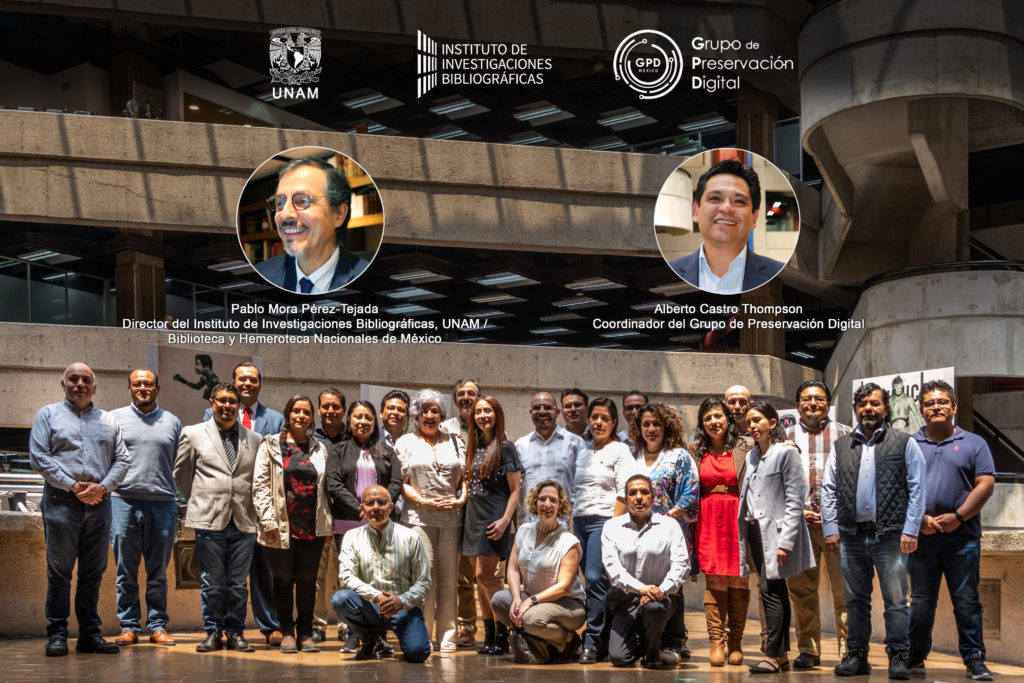
Group photo of Grupo de Preservación Digital

Formed in 2017 in Mexico, the Grupo de Preservación Digital (GPD)  is a multidisciplinary and inter-institutional group that seeks to promote research and training in digital preservation. The group works to address the urgent need for collaboration in research and open discussion integrating diverse perspectives to produce guidelines, good practices, and policies reflecting a broad understanding of substantive tasks in and around the preservation of digital heritage materials. The group has enjoyed continued growth through the participation of not only its members, but many institutions and individuals interested in digital preservation. The GPD divides its work into three basic areas: Digital legal deposit, Research, and Technology- all of which reach the entire Spanish-speaking region. GPD hosts educational events, manages a Knowledge Base offering free access to, articles, books, and video recordings of presentations, created by the GPD, as well as a list of links to other resources.

For their work in continued advocacy for sustainable preservation of digital heritage materials, for their leadership in advancing practices and policies, and for their offering educational opportunities to the digital preservation community, we are glad to present this year’s Organization Award to the Grupo de Preservación Digital.

Congratulations to the Grupo de Preservación Digital team!

Projects

Projects are recognized for activities whose goals or outcomes represent an inventive, meaningful addition to the understanding or processes required for successful, sustainable digital preservation stewardship. This year’s awardee in the Projects category is The Reliable, Robust, and Resilient Digital Infrastructure for Nuclear Decommissioning project. 
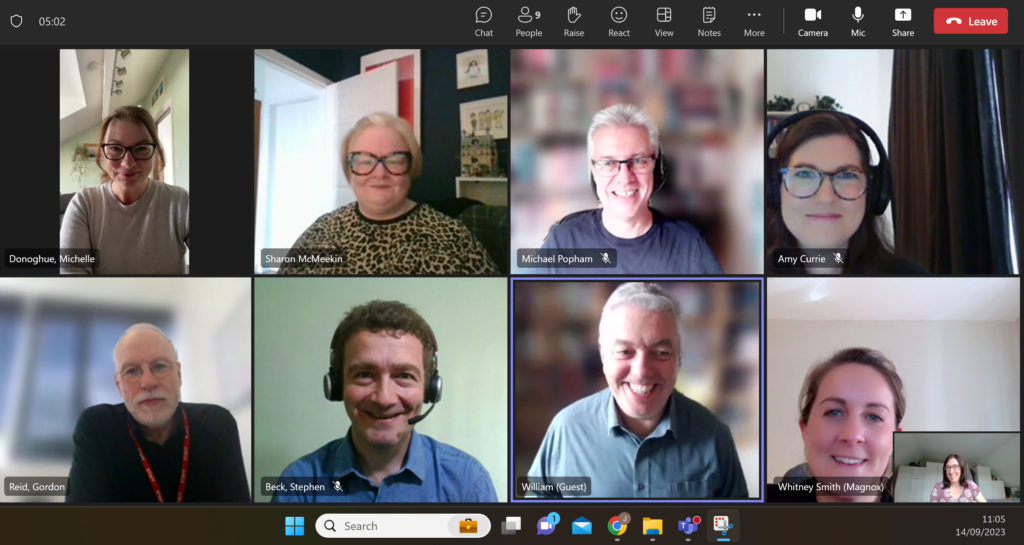
Zoom screenshot of the members of the Reliable, Robust, and Resilient Digital Infrastructure for Nuclear Decommissioning project team

The project represents a four-year partnership between the UK Nuclear Decommissioning Authority (NDA) and the Digital Preservation Coalition (DPC). The NDA is charged with the complicated task of decommissioning and cleaning the seventeen principal nuclear energy plants in the UK. The work involved the preservation of data with an extended life cycle and significant security requirements. During the initial phase of the project, the team worked to understand legacy systems and data and adapt current systems to ensure long-term viability. In the course of this critical work, the project team not only considered the unique needs of the NDA, but also sought to make connections to the wider digital preservation community. Several resources for digital preservation program assessment and technology watch guides were created and shared in conjunction with the project. 

Project team members include Simon Tucker (NDA), Martin Robb (NDA (retired),  Michelle Donoghue (NDA), Bob Radford (Magnox), Whitney Smith (Magnox), Gordon Reid (Nucleus), Stephen Beck (Sellafield Ltd),  Martin Denvir (Sellafield Ltd),  Clare Gallagher, (Nucleus), Jenny Mitcham (DPC), Paul Wheatley (DPC), Michael Popham (DPC). 

Congratulations to the NDA project team!

Sustainability

The Sustainability Awards were created to recognize those activities whose goals or outcomes make a significant contribution to operational trustworthiness, monitoring, maintenance, or intervention necessary for sustainable digital preservation stewardship.

This year’s awardees in the Sustainability category are Dr. David S.H. Rosenthal & Victoria Reich.

Headshots of Dr. David S.R. Rosenthal & Victoria Reich.

2023 marks a significant date for the LOCKSS Program: It is the twenty-fifth anniversary of the friendly hikes in Joseph Grant State Park and Big Basin where Victoria Reich and Dr. David S.H.  Rosenthal first conceived of LOCKSS, “lots of copies keep stuff safe,” as a guiding principle for long-term access and preservation to digital library resources. It is also the twentieth anniversary of the transition of the LOCKSS project from beta testing in 2002 to full production release. In the words of the duo’s nominator, “Even if you don’t know David Rosenthal and Vicky Reich by name, you’ve almost certainly heard their rallying cry for digital preservation: Lots Of Copies Keep Stuff Safe. This ethos has informed digital preservation best practices since its introduction, and has shaped the design and implementation of the LOCKSS open-source software.” 

David Rosenthal and Vicky Reich’s brainchild—and the enduring preservation networks that it has made possible—was at the leading edge of a global wave of digital preservation initiatives in the early 21st century. The effectiveness and reliability of LOCKSS software has been validated through rigorous third-party evaluation, including ongoing certification of the CLOCKSS archive as a trustworthy digital repository under the TRAC standard since 2014. The LOCKSS project has provided enduring proof of the concept that large-scale digital preservation work can be accomplished cost-effectively and with community benefits (not vendor profits) as the primary driver. 

Rosenthal and Reich’s work on LOCKSS stands as a benchmark against which other approaches to digital preservation and persistent access to digital resources are measured. 

Congratulations to all!

Excellence Awards Working Group

The 2023 NDSA Excellence Awards Working Group was led by co-chairs Kari May (University of Pittsburgh Libraries) and Matt McEniry (Texas Tech University Libraries), with members Julie Allen (Open Preservation Foundation), Chris Banuelos (Rice University Libraries), Sarah Middleton (Digital Preservation Coalition Representative), Dorothea Salo (University of Wisconsin-Madison), Jessica Venlet (University of North Carolina at Chapel Hill Libraries). Aliya Reich at CLIR provided administrative support for the entire awards process.  In addition to information about the Excellence Awards group, the group’s website provides information on past winners.  

Results of the 2022 NDSA Web Archiving Survey Report Now Available

The Web Archiving Survey Working Group is excited to announce the publication of the results of the 2022 Web Archiving Survey.  The 2022 survey builds upon surveys previously conducted in 2017, 2016, 2013, and 2011 — and though previous surveys were focused on the United States, the 2022 survey was open to international audiences as well. The 26-question survey was completed by 190 respondents over a 10-day period. This report details the outcomes of the web archiving survey that was distributed to various local, national, and international professional organizations and topical groups in October 2022. Topics discussed included archiving policies, tools and services, and access and discovery.

Some major takeaways from the report include:

  • Most respondents indicated that “staff capacity” was the biggest barrier to web archiving. Few organizations dedicate more than one, full-time employee to web archiving and very rarely is someone’s entire position dedicated to web archiving.
  • Since the first Web Archiving Survey in 2011, the landscape of web archiving has dramatically changed, and the 2022 survey results show an increase in web archiving practices by grassroots organizations, volunteer groups, and non-academic communities who seek to document their lived experiences.
  • An overwhelming majority of respondents indicated concerns about their ability to collect social media—in particular, Twitter, Instagram, Facebook, and Reddit. Content housed within social networks has always been difficult to capture for a myriad of reasons and recent changes to numerous social platforms have made this task harder.

Thank you to all NDSA members and others who participated in the survey. We appreciate your time and effort spent in providing the information to us.

Thank you to the members of the Web Archiving Survey Working Group who worked over the last year and half to make the report possible.

A Spotlight on Dedication, Creativity, and Effectiveness: Jes Neal on the NDSA Excellence Awards

Jessica C. Neal (she/they) is an archivist, records manager, and memory worker. She is currently the Records Management ProjectJes Neal standing in front of a wall that says Black Cultural Archives Manager at the Massachusetts Institute of Technology, and an archival consultant with Vanguard Archives Consulting. Jes’s work centers archives, preservation, data management, and developing ethical frameworks to better steward digital collections and projects that specifically focus on Black-led and -created social movements, oral histories, art, and literary history and culture.

We caught up with Jes recently, and she offered her perspective on the NDSA Excellence Awards.


In what way are you connected to the National Digital Stewardship Alliance

I’ve been involved as a member of the NDSA since 2017 and have been fortunate enough to s

erve on the leadership branch of NDSA, the Coordinating Committee, since 2020. Passionate about the long-term preservation and stewardship of digital information, NDSA has been a great space to build my professional network, expand my digital preservation skillset, and give and receive support from colleagues at various stages of their digital heritage preservation efforts. In our current rapidly evolving digital landsca

pe, the need to preserve digital heritage is critical. As we navigate the challenges of format obsolescence, data integrity, and ever-growing volumes of digital content, recognizing and celebrating outstanding efforts in digital preservation becomes an essential endeavor.

From your perspective, what do the NDSA Excellence Awards represent?

The NDSA Excellence Awards were established in 2012 to highlight and commend all forms of creative and meaningful contributions by individual professionals, future stewards, educators, organizations, projects, and sustainability activities to the field of digital preservation. At its core, The Excellence Awards were established to recognize and encourage exemplary achievement in the field of digital preservation stewardship at a level of national or international importance. However, The Excellence Awards also provide a spotlight on the dedication, creativity, and effectiveness in tackling the multifaceted challenges of digital preservation.


What do you currently see as some of the biggest challenges in digital preservation?

Digital preservation is not just about preserving archival records, datasets, digital images, websites, and emails; it’s about protecting our history, culture, and knowledge for future generations. In a climate of constantly evolving technologies, it is important that digital artifacts remain accessible and usable by wide and varied audiences. To that end, for as long as there have been digital artifacts, there have been archivists and records managers to implement preservation strategies.  

What efforts/advances/ideas of the last few years have you been impressed with or admired in the field of data stewardship and/or digital preservation? 

One aspect of ongoing digital preservation efforts that I’ve followed closely, admired, and participated in over the years is the evolving conversations, imaginings, and application of metadata as more than a record in cultural heritage institutions, especially those that collect and make accessible African American collections. Community involvement and applications of archival description afford marginalized groups to regain autonomy and ownership of their narratives, heritage, and history, while also amplifying historical injustices, social justice, and systemic racism which is essential to the preservation of cultural heritage.  

How do you feel the Excellence Awards encourage practitioners of digital stewardship/preservation?

Whether focusing on metadata and archival description, technological advances in systems and software, storage, creating resources, discovery and innovation of emergent digital preservation tools, collaborative road mapping of local and best practices, or developing digital preservation programs and policies, the work and ideas of practitioners is critically needed to ensure that the efforts of today are sustainable for tomorrow. Storage, sustainability, and the environmental impact of digital preservation are ever present challenges. It is only through collective sense making, creativity, and innovation that we together remedy these issues. 

One way to acknowledge and celebrate the achievement of information professionals and organizations is through recognition.  The NDSA Excellence Awards—in addition to DPCs Digital Preservation Awards—continues to be a means of inspiration, encouragement, and validation for our exemplary digital stewards, who remain committed to advancing digital preservation and stewardship.  


You can keep up with Jes on Twitter @JestheArchivist or Instagram @vanguardarchives!

Skip to content