NDSA Announces Winners of 2019 Innovation Awards

NDSA Announces Winners of 2019 Innovation Awards

For release October 16, 2019

The NDSA established its Innovation Awards in 2011 to recognize and encourage innovation in the field of digital stewardship, https://ndsa.org/awards/. Since then, it has honored 34 exemplary individuals, institutions, projects, educators, and future stewards for their efforts in ensuring the ongoing viability and accessibility of valuable digital heritage.

Today, NDSA adds 5 new awardees to that honor roll during the opening plenary ceremony of Critical Junctures, the NDSA’s 2019 Digital Preservation Conference, https://ndsa.org/meetings/.


Individual Innovation Award

The NDSA Individual Innovation Award honors individuals making significant, innovative contributions to the digital preservation community. Two worthy individuals are recognized this year.
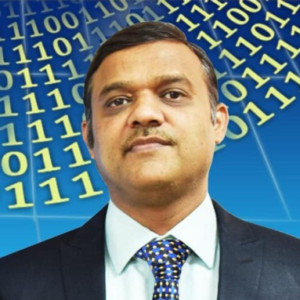
Dr. Dinesh Katre, Senior Director and Head of the Department of Human-Centred Design and Computing (HCDC) Group at the Centre for Development of Advanced Computing (C-DAC) in India, has established a distinguished record leading the development of innovative technological solutions for digital preservation, trustworthy digital repository certification, data repurposing and intelligent archiving. Over the last several years, he has worked to advocate for, develop, and deploy the Indian National Digital Preservation Programme, which provides a robust and comprehensive platform for the effective long-term preservation of the digital materials. As Chief Investigator of the Programme’s flagship project to establish a Center of Excellence for Digital Preservation, Dr. Katre led the process to develop a digital preservation standard for India, as well as domain-specific archival systems and automation tools for digital preservation. He also conceptualized, designed and led the development of DIGITĀLAYA, a software framework, which comprehensively implements the OAIS reference model. DIGITĀLAYA has been customized for preservation of electronic office records, audiovisual and document archives and e-governance records. Katre’s efforts culminated in the first repository in the world to achieve ISO 16363 certification. His achievements exemplify the growing international reach of concern and practice in the areas of digital stewardship and preservation.
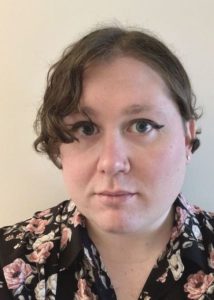
Tessa Walsh

Tessa Walsh is a digital archivist and preservation librarian with varied experience at Harvard, Tufts, the University of Wyoming, and currently, Concordia University. She is also a prolific software developer, and this capacity has created, and made freely available through her BitArchivist website and Github, an evolving suite of robust open source tools meeting many core needs of the stewardship community in appraising, processing, and reporting upon born-digital collections. Her projects include the Brunnhilde characterization tool; BulkReviewer, for identifying PII and other sensitive information; the METSFlask viewer for Archivematica METS files; SCOPE, an access interface for Archivematica dissemination information packages; and CCA Tools, for creating submission packages from a variety of folder and disk image sources.  Taken together, these tools support a very wide gamut of both technical and curatorial activities. The open availability, documentation, support, and community engagement for a growing ecosystem of mature preservation tools is critical to the successful and sustainable stewardship of the digital materials so critical to contemporary and future commerce, culture, science, entertainment, and education.  This work also provides an excellent example of how a lone individual can nevertheless make a substantial positive impact on the complex domain of stewardship practice through dedication, skill, enthusiasm, and community spirit.

Organization Innovation Award

The NDSA Organization Innovation Award honors organizations taking an innovative approach to providing support and guidance to the digital preservation community.  Today we recognize two organizations.
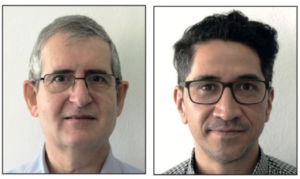
The Asociación Iberoamericana de Preservación Digital (APREDIG) is a nonprofit Ibero-American association founded at the end of 2017 in Barcelona, Spain, with the intention of promoting the importance of digital preservation in Spainish-speaking countries. Its activity has culminated in projects and activities to disseminate a Spanish translation of the original NDSA Levels of Preservation, opening-up significant new opportunities for expanding digital stewardship best practices, and subsequent outcomes, by practitioners in Spain and Latin America. Led by Dr. Miquel Termens and Dr. David Leija (Universitat de Barcelona), this group of volunteers, researchers, and disseminators of best practices for digital preservation have created an online self-assessment tool to help Institutions of Spain and Mexico understand recommendations, key concepts, and simple diagnosis of digital preservation practices using the NDSA Levels as a guideline. The critical importance of effective and sustainable solutions for preserving digital materials transcends institutional and national boundaries. APREDIG’s efforts are a vital example of the growing international reach of stewardship and preservation concerns and applications. Furthermore, they evidence the positive contribution to local and global understanding resulting from the expansion of the community of theory and practice to all interested and engaged participants.
  The idea for a Software Preservation Network (SPN) originated 2014,  Since then, it has developed into a vibrant grassroots organization of digital preservation practitioners invested in the future of software preservation. Through multiple federal grants and start-up seed funding, SPN has solidified alliances among international stakeholders—both individuals and organizations—with diverse perspectives, including libraries, archives, and museums. Two separate, but complementary, aspects of SPN’s work are particularly noteworthy. First, its innovative efforts to develop effective techniques and programs for the long-term stewardship of the intermediating software upon which preserved digital resources are inextricably dependent, exemplified by publication of the Code of Best Practices for Fair Use in Software Preservation, and the Emulation-as-a-Service Infrastructure (EaaSI) project researching scalable emulation. Second, Jessica and Zack place critical emphasis on issues of community engagement and organizational sustainability. This work provides an extremely useful case study to the stewardship community of the importance of thoughtful and iterative self-reflection and refinement of organizational strategies, goals, processes, and initiatives to ensure the continued relevance, value, and persistence of programmatic efforts. SPN offers a model for digital stewardship that combines steadfast vision with flexibility and an emphasis on the evolving needs of the organization’s constituents.  The award was accepted on behalf of the entire SPN organization and its members by Jessica Meyerson (Educopia Institute) and Zach Vowell (California Polytechnic State University).

Project Innovation Award

The NDSA Project Innovation Award honors projects whose goals or outcomes represent an inventive, meaningful addition to the understanding or processes required for successful, sustainable digital preservation stewardship.
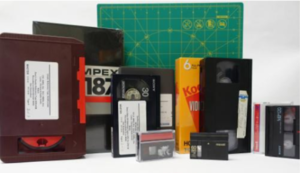
  Since its inception in 2016, the Great Migration Home Movie Project (GMHMP) at the Smithsonian Institution’s National Museum of African American History and Culture (NMAAHC) has digitized hundreds of hours of African American home movies and thousands of photographs for families who have visited the Museum in Washington and for those who live across the country, in Baltimore, Denver, and Chicago. In its current iteration, families visiting the Museum are invited to drop off their home movies and films, videotapes, and audiotapes when they arrive for the day, and then pick up their original and digital copies (preserved by a team of professionals) at the end of the day — with the added invitation to donate digital copies to the Museum, enriching its growing collection of vernacular home movies. As explained by Walter Forsberg, founder of the NMAAHC’s Media Conservation and Digitization department, the Great Migration Home Movie Project lowers the “technological barriers-to-entry of audiovisual digitization and directly and proactively addresses the historic obfuscation and exclusion of people of color from traditional archives.” It is thanks to the work of the Great Migration Home Movie Project that not only can these memories be gifted back to families and their future descendants, but, also, that “history is being re-written in a very real and immediate way.”  The award was accepted on behalf of the entire GMHMP project team by Candace Ming.

The NDSA Innovation Awards Working Group was led by co-chairs Stephen Abrams (Harvard University) and Krista Oldham (Clemson University), with members Samantha Abrams (Ivy Plus Libraries Confederation), Lauren Goodley (Texas State University), Grete Graf (Yale University), and Kari May (University of Pittsburgh). Aliya Reich at CLIR provided administrative support for the entire awards process.

Please join the Working Group in congratulating the 2019 Innovation Award winners!
Full Programs NOW LIVE for DLF Forum, Learn@DLF, and NDSA’s Digital Preservation!

We are thrilled to announce the release of the full program for our 2019 DLF Forum, Learn@DLF, and Digital Preservation 2019: Critical Junctures, taking place October 13-17 in Tampa, Florida. This year’s program is remarkable, and you won’t want to miss it. 

Browse the programs!

We are especially grateful to our volunteer Reviewers and Program Committee, without whom this fabulous program would not have come together. And, thank you to all who submitted proposals. This year’s field was especially competitive, and it shows in the strong program we’re sharing today.

Registration remains open for all events, but hurry, tickets for the DLF Forum are going quickly! We expect to go on the waitlist in the coming month, so secure your spot now. (Presenting at the Forum? You’re in! But please register now, since we’re holding spots for you.)

What are the DLF Forum, Learn@DLF, and Digital Preservation?

  • The DLF Forum (#DLFforum, October 14-16), our signature event, welcomes digital library practitioners and others from member institutions and the broader community, for whom it serves as a meeting place, marketplace, and congress. The event is a chance for attendees to present work, meet with other DLF working group members, and share experiences, practices and information. Learn more here: https://forum2019.diglib.org/about
  • Learn@DLF (#learnatdlf, October 13) is our dedicated pre-conference workshop day for digging into tools, techniques, workflows, and concepts. Through engaging, hands-on sessions, attendees will gain experience with new tools and resources, exchange ideas, and develop and share expertise with fellow community members. Learn more here: https://forum2019.diglib.org/learnatdlf/ 
  • Digital Preservation (#digipres19, October 16-17), the major annual meeting of the National Digital Stewardship Alliance, will help to chart future directions for both the NDSA and digital stewardship, and is a crucial venue for intellectual exchange, community-building, development of best practices, and national-level agenda-setting in the field. Learn more about this year’s event, whose theme is ‘Critical Junctures,’ here: http://ndsa.org/meetings/ 

As you can see, we have an exciting week planned. Don’t delay – register now to secure your spot. 

Registration NOW OPEN for DLF Forum, Learn@DLF, and NDSA’s Digital Preservation!

The time has come! We are delighted to announce the opening of registration for the 2019 DLF Forum, Learn@DLF, and Digital Preservation 2019: Critical Junctures, taking place October 13-17 in Tampa, Florida. Be among the first to secure the early bird rate and start planning for yet another memorable week with DLF.


Register today! (button) https://forum2019.diglib.org/registration/


  • The DLF Forum (#DLFforum, October 14-16), our signature event, welcomes digital library practitioners and others from member institutions and the broader community, for whom it serves as a meeting place, marketplace, and congress. The event is a chance for attendees to , present work, meet with other DLF working group members, and share experiences, practices and information. Learn more here: https://forum2019.diglib.org/about


  • Learn@DLF (#learnatdlf, October 13) is our dedicated pre-conference workshop day for digging into tools, techniques, workflows, and concepts. Through engaging, hands-on sessions, attendees will gain experience with new tools and resources, exchange ideas, and develop and share expertise with fellow community members. Learn more here: https://forum2019.diglib.org/learnatdlf/


The full program for the DLF Forum and DigiPres will be released in the coming weeks, but we are delighted to share the Learn@DLF schedule today. Check it out, and consider attending our fabulous pre-conference workshop day, now in its second year.


Need some assistance getting to the DLF Forum? Our Fellowship Application is open for just a few more days. Check out all of the different opportunities we are offering this year and submit your application by our approaching deadline Monday, June 10.


It’s never too early. Register now to join us!


DLF Forum, Learn@DLF, and NDSA’s Digital Preservation 2019 CFPs are here!

It’s hard to believe, but CFP season is here!


Have a great idea for a session to share at one of our events in Tampa? You’re in luck! We have just issued Calls for Proposals for our conferences happening this October: the DLF Forum (#DLFforum, October 14-16), our Learn@DLF pre-conference  (#learnatdlf, October 13), and NDSA’s Digital Preservation 2019: Critical Junctures (#digipres19, October 16-17).


For all events, we welcome submissions from members and nonmembers alike. Students, practitioners, and others from any related field are invited to submit for one conference or all three (though, different proposals for each, please).


The DLF Forum and Learn@DLF CFP is here: https://forum2019.diglib.org/call-for-proposals


NDSA’s Digital Preservation 2019: Critical Junctures CFP is here: https://ndsa.org/meetings/


Session options range from 60-second Minute Madness sessions at DigiPres to half-day workshops at Learn@DLF, with many options in between.


The deadline for all three opportunities is Sunday, April 28, at 11:59pm Eastern Time.


If you have any questions, please write us at forum@diglib.org, and be sure to subscribe to our Forum newsletter to stay up on all Forum-related news. We’re looking forward to seeing you in Tampa!

NDSA Levels of Preservation Reboot Project Implementation Subgroup Survey

As many of you will remember, a very smart group of people–including Megan Phillips, Jefferson Bailey, Andrea Goethals, and Trevor Owens–helped the NDSA launched its Levels of Preservation guidelines in 2013. Since then, they’ve become a fixture in the digital preservation community, influencing practice and helping people make the case for robust infrastructure.

The original intent of the “Levels” was to create a set of recommendations for either preservation practitioners who were just starting out, or for those looking to deepen their preservation strategies.

Organized into five functional areas, the Levels helped frame many of our efforts as we moved forward with the work of digital preservation. Currently, those five functional areas are:

  • Storage and geographic location;
  • File fixity and data integrity;
  • Information security;
  • Metadata; and,
  • File formats

If you’re like me, you’ve likely used the Levels in one form or another to inform your work over the years. But with continuous changes in technology and practices, and–perhaps most importantly–after years of active use by the global digital preservation community, the NDSA would like to revisit the Levels to ensure they are still meeting the needs of digital preservation practitioners across a wide diversity of jurisdictions and organizational settings.

And that’s where you come in! The NDSA is undertaking a global survey to get a sense of how the Levels are currently being used (or not!) and how they might best be improved.

We hope you might take the time to complete the following survey and let us know what you think of the Levels, especially what you like most about them, and where they might need a rethink. And please note, the survey isn’t just for those people who are already using the NDSA Levels. If you don’t intend to use them or have decided they don’t meet your needs we are also interested in hearing from you.

Survey link: https://goo.gl/forms/nqFFZEhYpd7PiAHv2  

The survey will be open until Friday, February 22nd, and should take you between 10 and 15 minutes to complete. Your responses will be held in confidence.

For more information about the project, please see https://ndsa.org/working-groups/levels-of-preservation/.

If you have any questions about this survey or the project, please don’t hesitate to contact me as Chair of the Levels Reboot Project Implementation Subgroup, and we look forward to hearing from you!

Corey Davis

corey@coppul.ca

Digital Preservation Coordinator

Council of Prairie and Pacific University Libraries (COPPUL)

Announcing Incoming NDSA Coordinating Committee Members

We are pleased to announce and welcome four new members to the National Digital Stewardship Alliance Coordinating Committee, Stephen Abrams, Salwa Ismail, Linda Tadic, and Paige Walker!

Stephen Abrams is head of Harvard University’s newly-established digital preservation program. Stephen is particularly interested in promoting the national agenda’s recommendations regarding the need for a robust evidence base to ground and guide practice, which aligns with the research program of his doctoral investigation into the theoretical and pragmatic considerations underlying assessment of digital preservation efficacy.

Salwa Ismail is the Department Head for Library Information Technology at Georgetown University Library where digital and data preservation are part of her portfolio. Active in the Academic Preservation Trust (APTrust) preservation community and a strong advocate for scalability and sustainability of digital preservation solutions, she has over 14 years of expertise in directing the design and development of technology strategies and systems.

Linda Tadic is founder and CEO of Digital Bedrock, a managed digital preservation service provider. It serves any type of organization and even individuals. The impetus for founding the company was to help any size or type entity receive detailed digital preservation services at low cost. Clients currently include educational institutions, museums, producers, studios, nonprofit archives, distributors, and law firms.

Paige Walker is the Digital Collections & Preservation Librarian at Boston College. She is an active member of the NDSA Content Interest Group and the NDSA Infrastructure Interest Group. Paige has a BA from UC Berkeley, an MSLIS from Simmons College, and is working on an MS in cybersecurity from Boston College.

Members of the NDSA Coordinating Committee serve staggered terms. We thank our outgoing Coordinating Committee members, Robin Ruggaber, Micah Altman, Mary Molinaro, and Gabriela Redwine, for their service and many contributions. We are also grateful to the very talented, qualified individuals who participated in this election.

To sustain a vibrant, robust community of practice, we rely on and deeply value the contributions of all members, including those who took part in voting.

Best wishes to all as we welcome Stephen, Salwa, Linda, and Paige to their new roles in coming year!

Announcing publication of NDSA’s 2017 Web Archiving Survey Report

The National Digital Stewardship Alliance is pleased to announce the release of the 2017 Web Archiving Survey Report.

From October 2 to November 20, 2017, a working group of volunteers representing five NDSA member institutions and interest groups conducted a survey of organizations in the United States actively involved in, or planning to start, programs to archive content from the Web. This effort builds upon and extends a broader effort begun in three earlier surveys, which the working group has conducted since 2011.

The goal of these surveys is to better understand the landscape of Web archiving activities in the United States by investigating the organizations involved; the history and scope of their Web archiving programs; the types of Web content being preserved; the tools and services being used; access and discovery services being offered; and overall policies related to Web archiving programs.

A few major takeaways from the report include:

  • Public libraries participating in the survey increased to 13% (15 of 119) of respondents from less than 3% of respondents in each of the previous surveys.
  • A growing comfort for archiving without permission or notification. Seventy percent (71 of 101) of institutions in 2017 did not seek permission or attempt to notify the content owner. Also, 91% (106 of 117) of respondents reported never receiving a takedown or stop crawling request.
  • A notable 51% (23 of 45) of organizations reported using Webrecorder, which was publicly launched in 2016 as a browser-based tool to allow for the capture of content difficult to capture via traditional link-based crawling.
  • Archive-It continued to be the preferred external service for harvesting Web content, with 94% (97 of 103) of respondents using this service. While the vast majority of respondents are utilizing Archive-It, few (20 of 108) organizations reported downloading their WARCs for local preservation or access, continuing a trend denoted in previous surveys.

Diversification of the field, maturation of programs, and technological developments presented areas of progress for the profession, while access to archived content and institutional support for program expansion remained relatively unchanged from prior survey years.

NDSA Web Archiving Survey Working Group


Interested in activities like this, or in joining with other organizations committed to the long-term preservation of digital information? Get involved with NDSA yourself at: http://ndsa.org/get-involved/

Marina Georgieva on the liaison between digital collections and digital preservation

Marina Georgieva presented a poster at Digital Preservation 2018. Please read on for a closer look at her work, one of the many great offerings from this year’s event. For more posters, please visit https://osf.io/view/ndsa2018/.

Marina holds Master’s Degree in Library Science with Information Technology concentration from the University of Wisconsin – Milwaukee. She’s currently Visiting Digital Collections Librarian at the University of Nevada – Las Vegas. Her passion is large-scale digitization with cutting edge technologies. Her research interests include project management in large-scale digitization and approaches for achieving higher digitization efficiency such as staffing and training, development of workflow, procedures and guidelines. Marina is also involved in metadata and authority work as well as metadata remediation projects.


The digital librarian: the liaison between digital collections and digital preservation

Overview

At UNLV Libraries, the role of the Digital Collections Librarian goes beyond the traditional routine tasks of digitization, metadata management, project management, workflow development and team management. Digital Collections Librarians serve as links between digitization and digital preservation and do everything in between to draft sustainable digital preservation workflows alongside their colleagues in the Special Collections Technical Services Department. Technical Services Librarians are responsible for the preservation of born-digital archival materials, whereas the Digital Collections Librarians’ roles entail being information architects directly engaged in the process of preparing master files of in-house and outsourced reformatted materials for digital preservation.

In recent years, the UNLV Libraries Digital Collections Department has completed numerous large-scale digitization projects that yielded hundreds of thousands new archival digital objects that require long-term preservation. Currently all these archival files are stored on a server, referred to as ‘The Digital Vault’.

One of the invisible, often overlooked, yet very important roles of the Digital Librarian is to verify that all images from completed digitization projects are properly organized in meaningful easy-to-navigate directories and that all files are in the appropriate file format. It is common practice for folder directories (created and organized during the actual process of digitization) to remain intact and be moved to the Digital Vault for long-term storage in their original order. There they get merged in the collection-appropriate existing folders or, if necessary, a new folder is created.

Additionally, UNLV Digital Collections has thousands of images from legacy collections stored in the Digital Vault. All of these digital objects live on the Digital Collections website, but some of the archival master folders have redundant data; others are saved in inappropriate file formats, and still others have non-normalized file naming. In the recent years, there has been an effort to clean up and restructure these legacy folders in order to make the archival files easily discoverable and to optimize the storage space before the content of the Digital Vault gets migrated to a new more robust system (UNLV Special Collections and Archives is currently building an instance of Islandora CLAW that will back up files in Amazon Glacier).

The role

The role of the UNLV Libraries Digital Librarian that relates directly to the digital preservation is outlined in the poster presented at 2018 NDSA DigiPres Forum (click here for access). Here we will just briefly touch upon few of the major responsibilities:

File naming conventions

For current digitization projects, file naming has been normalized and it happens in a structured and logical way depending on the type of collection being digitized. During the process of preparing collections for digitization, the librarian analyzes the content, makes decisions regarding the grouping of the digital objects and assigns collection-level and item-level digital identifiers. To achieve consistency and logical arrangement, the digital librarian maintains and updates spreadsheets with assigned and available digital identifiers.

For example, if the collection consists of archival photographic materials, the assigned digital collection alias will be ‘PHO’ with the sequential numeric identifiers. These identifiers will logically follow the structure and numbering of all other previously digitized photo collections.

As mentioned earlier, most of the newly digitized collections remain in the original directory structure that was developed during the scanning process. The digital librarian ensures that the file naming on directory level and on file level is accurate and the data set is ready to be moved to the Digital Vault.

It is important to mention that often digital librarians need to deal with and manage more identifiers beyond those that identify archival structure (collection, folder) and those that identify the intellectual unit (item) so that they can accurately reflect the structure of materials. So they also need to create a third type which may involve multiple image files that comprise a single digital object; for example, back and front of a printed item or multiple items on a page in a scrapbook.

Legacy collections bring more challenge and sometimes need some clean up as their file naming may be inconsistent. Depending on the project, the digital librarian may decide to keep the file structure intact or to rearrange the folders in more normalized way that follows the current preservation practices.

Decisions on archival file formats

UNLV Libraries Digital Collections have chosen TIFF file format for long-term preservation of archival master files. TIFF is the preferred format for in-house digitized reflective materials and transparencies.

The file format for digitized periodicals may vary depending on the project. In-house digitized periodicals and newspaper clippings are preserved in TIFF just as photographs and films, while periodicals digitized as part of the National Digital Newspaper Program are stored in the original Library of Congress approved data sets. These data sets include newspaper pages in JP2, PDF and TIFF formats along with the accompanying metadata encoded in XML METS/Alto schema.

Legacy collections may contain files in JPG format. This usually applies to collections accessioned as already digitized materials. The reason why they usually they remain in this format is that UNLV Libraries Special Collections do not have holdings of the original materials and therefore, it is impossible to re-digitize the items in the proper archival format.

Building directories in the Digital Vault

Current digitization and digital preservation efforts follow well-established practices regarding how files are nested in directories so that they have logical structure and are easy to navigate.

For example, the archival master files of a digitized photographic collection get migrated to the general folder that holds all archival files of all photo collections. This directory contains a blend of additional sub-folders that represent compound objects and files that represent the single objects. It is nested in a higher level Photo Collections folder.

To illustrate the scenario above, please examine the following example.

[…] Digital Vault\PHO Photo Collections

> PHO Archival Images

> pho003089

– pho003089_001.tif

– pho003089_002.tif

– pho003089_003.tif

– pho003089_004.tif

> pho003090

– pho003090_001.tif

– pho003090_002.tif

– pho003090_003.tif

– pho003090_004.tif

– pho003090_005.tif

> pho003091

– pho003091_001.tif

– pho003091_002.tif

[…]

– pho003092.tif

– pho003093.tif

– pho003094.tif

[…]

Legacy collections usually get reorganized, especially if the folder structure is not logical or there are redundant files and folders.

Outsourced periodicals are kept in the original directory structure as created by the vendor. Data sets arrive separately and each of them is considered a batch and is stored separately in a parent-level folder hosting only outsourced periodicals.

[…] Digital Vault\NDNP Local Backup

> Batch Aurora

– Original data set as received by vendor

> Batch Beatty

– Original data set as received by vendor

> Batch Caliente

– Original data set as received by vendor

[…]

Communication with the IT Department

The Digital Vault is a directory with limited access – librarians get “view only” mode and they need to communicate all needs for data migration, remediation requests and new decisions regarding folder structure to the IT department who maintains the Digital Vault.

The role of the digital librarian in this communication is critical, because of the limited access to the server. Usually this communication is informal writing – simply emailing the requests or updates along with instructions what needs to be accomplished. Recently, for some larger and more complicated clean-up projects, the UNLV digital librarians adopted Google Sheets. The advantages of Google Sheets is that more than one person can access and edit the document simultaneously to communicate changes and project updates.

The archival files prepared for migration are stored in a temporary location and once the move is complete, the digital librarian checks if all files and directories were moved successfully, and if there are any corrupted files or other discrepancies that need attention. Upon verification, the files in the temporary location are deleted permanently.

In remediation scenarios when legacy stuff needs to be cleaned up (deleted, moved elsewhere or restructured) usually the communication includes initial written instructions followed up by one-on-one meeting. The one-on-one meeting talks through all the necessary changes and serves as a final overview of the project as the nature of these actions is irreversible.

Conclusion

The day-to-day job of digital librarians has a slightly different focus than digital preservation, and yet digital librarians play a valuable role in building structure, organizing, and cleaning up data. Digital librarians are very user-focused – not just on internal end-users of the archival masters, but on library users who may need delivery of master images via a library system (online) or directly (via image reproduction). Their outstanding organizational skills and attention to detail not only make the data easily discoverable and ready for migration, but also optimize the storage space and lay the groundwork for a smooth migration to a new, more robust system. In institutions just starting to make baby steps in digital preservation, the digital librarian plays a key role of advancing a step closer to a robust and efficient long-term digital preservation strategy.

Marina’s poster & video presentation: 

https://drive.google.com/file/d/1fOHjb0g_2lawsymEihQJXa81TWS_MREY/view?usp=sharing


Want to know more about the Digital Preservation 2019? Bookmark ndsa.org/meetings, where the 2019 page will soon live.

2018 NDSA Coordinating Committee Candidates

National Digital Stewardship AllianceThis winter, the National Digital Stewardship Alliance turns its attention to leadership renewal. We gratefully thank our outgoing Coordinating Committee members, Micah Altman and Robin Ruggaber, for their leadership, service, and many contributions.

Members of the NDSA Coordinating Committee serve staggered three year terms.

Following a public call for nominations, we are presenting to members a slate of 4 candidates running for the Coordinating Committee. Between now and December 17, NDSA members will have the opportunity to affirm and endorse two candidates by vote. (One vote per member organization, with information sent via email to institutional contacts.)

Here are bios and statements from the candidates, presented in alphabetical order:

Stephen Abrams

After serving 10 years as associate director of the University of California Curation Center at the California Digital Library, Stephen Abrams has recently returned to the Harvard Library as head of its newly-established digital preservation program. Stephen is particularly interested in promoting the national agenda’s recommendations regarding the need for a robust evidence base to ground and guide practice, which aligns with the research program of his doctoral investigation into the theoretical and pragmatic considerations underlying assessment of digital preservation efficacy. Properly seen, digital stewardship extends beyond the domain of appropriate data management; more fundamentally, it is about facilitating meaningful digitally-mediated human communication across time and concomitant cultural distance. The challenges are substantial, and the outcomes are of the highest importance: simply put, without proactive, successful, and sustainable stewardship of our national digital heritage, no future understanding of a past time in the digital age will be possible.

Salwa Ismail

Salwa Ismail is the Department Head for Library Information Technology at Georgetown University Library where digital and data preservation are part of her portfolio. In 2016-2017, her institution was selected as an NDSR host institution through the project that she had submitted recognizing the need for a diverse workforce that is trained in issues of digital preservation from the ground up. Active in the Academic Preservation Trust (APTrust) preservation community and a strong advocate for scalability and sustainability of digital preservation solutions, she has over 14 years of expertise in directing the design and development of technology strategies and systems. As our community grapples with the issues of preservation ranging from software to web archiving and more, where scalable and not boutique solutions are necessary, Salwa with her background and expertise is interested in working with the community to coordinate strategies, which will allow the NDSA Coordinating Committee to be a more focal part of the preservation ecosystem that provides expertise and opportunity across our diverse community to work together in creating common solutions in digital stewardship for the complex challenges facing the community and the opportunity to protect availability and access to scholarly and cultural knowledge.

Linda Tadic

Linda is founder and CEO of Digital Bedrock, a managed digital preservation service provider. It serves any type of organization and even individuals. The impetus for founding the company was to help any size or type entity receive detailed digital preservation services at low cost. Clients currently include educational institutions, museums, producers, studios, nonprofit archives, distributors, and law firms. Linda’s over 30-year career began in the analog era. Her focus has been on audiovisual media preservation and cataloging/metadata. Her past positions in academic, nonprofit, and for-profit organizations, and involvement with metadata standards across disciplines, gives her a unique perspective on how cross-community digital preservation projects can be developed and implemented. She would encourage NDSA to develop cooperative projects across communities.

Paige Walker

Paige is the Digital Collections & Preservation Librarian at Boston College. She is an active member of the NDSA Content Interest Group and the NDSA Infrastructure Interest Group. Paige has a BA from UC Berkeley, an MSLIS from Simmons College, and is working on an MS in cybersecurity from Boston College. She’s interested in information and network security as they pertain to digital preservation. Paige is also a co-leader of the DLF Technologies of Surveillance Instruction & Outreach subgroup and serves on the MetaArchive Steering Committee.


NDSA Coordinating Committee Nominations & Election

[Nov 15 update: the nominations deadline has been extended to Nov 25!]

Dear NDSA Community,

As members of the National Digital Stewardship Alliance we join together to form a consortium of over 236 partnering organizations, including universities, professional associations, businesses, government agencies, and nonprofit organizations, all engaged in the long-term preservation of digital information. Committed to preserving access to our national digital heritage, we each offer our diverse skills, perspectives, experiences, cultures and orientations to achieve what we could not do alone.

NDSA’s Coordinating Committee (CC) provides strategic leadership to the organization in coordination with working group co-chairs. NDSA is a diverse community with a critical mission, and we seek candidates to join the CC that bring a variety of skills, perspectives, experiences, cultures and orientations to bear on leadership initiatives. Working on the CC is an opportunity to contribute your leadership for the community as a whole while collaborating with a wonderful group of dynamic and motivated professionals.

The CC is dedicated to ensuring a strategic direction for NDSA, to the advancement of NDSA activities to achieve community goals, and to further communication among digital preservation professionals and NDSA member organizations. The CC is responsible for reviewing and approving NDSA membership applications and publications; updating eligibility standards for membership in the alliance, and other bylaws; producing the National Agenda for Digital Stewardship, engaging with stakeholders in the community; and working to enroll new members committed to our core mission. NDSA has an annual membership meeting co-located with the Digital Library Federation Forum each fall. Elected CC members serve a three year term, participate in a monthly call, and meet face to face at the annual membership meeting (Digipres).

If you are interested in joining the CC or want to nominate another member, please send the name, e-mail address, brief (nominee-approved) bio/candidate statement, and NDSA-affiliated institution of the nominee to ndsa@diglib.org by Nov 14, 2018 [update: the nominations deadline has been extended to Nov 25!].  We particularly encourage and welcome nominations of people from underrepresented groups and sectors.

We hope you will give this opportunity serious consideration and we value your continued contributions and leadership in our community.

Very Best,

Robin Ruggaber &  Bethany Nowviskie

On behalf of the NDSA Coordinating Committee

Skip to content