This winter, the National Digital Stewardship Alliance turns its attention to leadership renewal. We gratefully thank our outgoing Coordinating Committee member, Jim Corridan, for his service and many contributions. And we are pleased to welcome a new co-chair for our Infrastructure Working Group, Nathan Tallman — you can learn more about NDSA leadership on the NDSA page.
Members of the NDSA Coordinating Committee serve staggered three year terms.
Following a public call for nominations, we are presenting to members a slate of nine candidates running for the Coordinating Committee. Between now and December 20th, NDSA members will have the opportunity to affirm and endorse two candidates by vote. (One vote per member organization, with information sent via email to institutional contacts.)
Here are bios and statements from the candidates, presented in alphabetical order:
Karen Cariani
Karen Cariani is Senior Director of the WGBH Media Library and Archives (MLA) and WGBH Project Director for the American Archive of Public Broadcasting (AAPB). The MLA provides licensing services and access to the WGBH collection in addition to circulation, accessioning, and preservation activities. The AAPB, a collaboration with the Library of Congress, aims to preserve and make accessible significant and historical content created by public media. Karen has been project director for numerous on-line digital projects providing preservation and access to media archive, in addition to the development of a digital media preservation system utilizing the Hydra/Samvera community open source technology in partnership with Indiana University. She is active in the archive community and professional organizations and passionate about the use of archives and library digital collections for learning and education.
Candidate Statement: The NDSA is a unique community dedicated to digital preservation. This community has created amazing resources to help manage and educate people about digital preservation. The annual NDSA Digital Preservation convening provides an opportunity for people to share work related to digital preservation, and the NDSA working groups provide a platform to tackle digital preservation challenges as a community. We have common needs and concerns as stewards of digital collections. Working together we can solve some of the challenges. Raising public awareness of these challenges is critical to gaining support. I would be honored to serve on the NDSA coordinating council to help set strategy and direction for the community.
Corey Davis
One of the themes that repeatedly emerged for me at the recent NDSA meetings in Pittsburgh was the need for the preservation community to work more closely with international partners, not only to mitigate against the significant risks associated with increasing political and environmental uncertainties in the U.S. and beyond, but also to build the networks and relationships that are prerequisite for doing such important work. It’s imperative that the NDSA and its members continue to strengthen their international partnerships. I bring substantive connections to the preservation community in Canada, where there are significant collaborative opportunities, and I also provide a uniquely Canadian perspective in a time when such diversity of outlook is becoming ever-more necessary.
I’m currently the Digital Preservation Coordinator for the Council of Prairie and Pacific University Libraries (COPPUL), which represents 22 university libraries in Western Canada. I’m also a founding member of the Canadian Association of Research Libraries’ Digital Preservation Working Group and the Portage Preservation Expert Group (PEG). Portage is a national RDM initiative, and PEG provides Portage with advice on RDM infrastructure developments supporting the long-term stewardship of research data in Canada. I’m also Coordinator of the Canadian Web Archiving Coalition (CWAC), which has over 30 members from across the GLAM sector in Canada, and I’m a member of the Canadian Research Knowledge Network’s Trusted Digital Repository Task Group. CRKN represents over 75 Canadian research libraries and undertakes large scale content acquisition and licensing. The TDRTG is developing a framework for establishing a national TDR to ensure long-term access to CRKN-licensed resources in Canada.
Kate Dohe
Kate Dohe has been the Digital Programs and Initiatives Manager at the University of Maryland Libraries since 2016. In that capacity, she leads day to day operations to ensure that workflows and systems are in place to support and facilitate the creation, acquisition, discovery, and preservation of digital assets in support of the mission of the Libraries. Her department manages all digital repositories, digital preservation activities, research data services, and electronic publishing for the Libraries. Prior to joining UMD, she was the Digital Services Librarian at Georgetown University, and the digital librarian for an academic textbook publisher in California. Over the course of her career, she has created and managed digital repositories on multiple platforms with an eye to scalable, transparent, and sustainable operations in support of the research mission of the institution. One of her signature initiatives is her outreach efforts with campus student publishers, to advocate for open publishing models, digital preservation, business process management, and developing a self-supporting peer community. She earned her MLISc. from the University of Hawai’i, and also holds a BSEd. in Speech and Theater from Missouri State University. Her research interests are in digital library pedagogy, sustainable digital preservation, library publishing initiatives, student publishing, and communication frameworks for collaborative initiatives within academic libraries.
Candidate Statement: I would honored to serve on the NDSA coordinating committee and advance the national conversation about sustainable digital stewardship. I am committed to equipping digital preservation practitioners with the tools, resources, and support framework to advocate for sustainable digital preservation as a core operation of cultural heritage institutions. Whether those tools are communication toolkits and frameworks for advocacy, or decision-making tools that support cost-benefit analysis and fiscal modeling, I firmly believe that collaboration across a diverse practitioner community is essential to addressing the critical mission of preserving our cultural assets and scholarly products.
Jay Haque
I am at the New York Public Library and work in Information Technology as Director of DevOps and Enterprise Computing. I have led our digital repository storage system design and subsequent purchases over the past 15 years. I’m also leading our RFI/P process for our next generation solution. It would be great to be a member of this committee to not only provide my insights but also help other organizations navigate the vast crowded storage marketplace.
Martha Alvarado Parker
Originally from Monterrey, Mexico, I graduated with the MLIS degree May 2011, University of North Carolina at Greensboro where I also received the prestigious UNCG’s Academic and Cultural Enrichment (ACE) Scholarship, a Laura Bush 21st Century Librarian Program funded by a grant from the Institute of Institute of Museum and Library Services and the UNCG-LIS department.
Six years into my librarianship career, I am now heading the University of Arkansas at Fayetteville’s Digital Services Unit. However, getting to this point has not been easy. I worked with the UAF as the Librarian-In-Residence, LIR, from 2012-2015. I have held the digital librarian position for the past two and a half years. As the digital services librarian, I contribute regularly to metadata creation, digitization, and preservation of our digital collections.
After the MLIS, I have earned the two certifications currently offered by the Society of American Archivists: the SAA’s Digital Archives Specialist (DAS), April, 2016, and SAA’s Arrangement and Description Certificate (A&D), October 2017. I am currently the co-chair for the CUACRL Digital Initiatives Committee and the Chair for the SAA’s Metadata and Digital Objects Section (MDOS).
I am definitely committed to preserving and providing access to our national digital heritage. Collaborating at the NDSA’s Coordinating Committee will afford me the privilege to interact with talented professionals and to learn the latest preservation trends. I thank you in advance for reviewing my credentials.
Nicole Scalessa
Nicole H. Scalessa is IT Manager and Digital Humanities Coordinator at The Library Company of Philadelphia where she has been employed since July 1997. She represents LCP on multiple committees for the NDSA, is a Philadelphia Area Consortium of Special Collections Libraries board member, and is a Digital Public Library of America community representative. In addition she is a member of DVAG, MARAC, the Philadelphia Digital Managers Working Group, PhillyDH Meetup, the Philadelphia Digital Archivists Group, and the Philly Regional Islandora User Group.
In her role as IT Manager she maintains organization effectiveness, efficiency, and security of all information technologies including, but not limited to, the local area network, backup and storage infrastructure onsite and in the cloud, digital asset repository, online resources, office technologies, and event audio/visual hardware. She is responsible for designing and implementing strategic plans for technology and institutional policy. Nicole is a Department Head and supervises the Digital Collections Manager.
As the Digital Humanities (DH) Coordinator, Nicole is responsible for the planning, implementation, and maintenance of Digital Humanities projects in consultation with fellows, curators, the Digital Collections Manager, Digital Outreach Librarian(s), and Director as well as the hiring and supervision of DH interns. Additionally, Nicole fulfills marketing design needs in both print and digital formats for the institution while providing reports tracking online resource usage and campaign success.
Nicole has a BA in History, certification in Graphic Design for Print and the Web, and will earn her MBA in IT Management in June 2018.
Sibyl Schaefer
Sibyl Schaefer is the Chronopolis Program Manager and Digital Preservation Analyst for Research Data Curation at the University of California, San Diego. She currently serves as the co-chair of the NDSA Infrastructure Interest Group and is an active member on the Fixity Working Group and National Agenda Working Group. In addition to working with national digital preservation efforts like the Digital Preservation Network and the NDSA, she helps define long-term digital preservation solutions for the UCSD campus. She previously served as the Head of Digital Programs for the Rockefeller Archive Center and as the Metadata Librarian for the University of Vermont’s Center for Digital Initiatives. She has been recognized an Emerging Leader by the American Library Association and has participated in the Archival Leadership Institute. Schaefer holds an MLIS with a specialization in Archival Studies from the University of California, Los Angeles.
Matt Veatch
Matt Veatch is the State Archivist at the Kansas Historical Society (KSHS) in Topeka, KS, a position he has held since 2006. Collecting, preserving, and providing public access to permanently valuable Kansas government records has been his focus at the KSHS for over 25 years. Since the mid-1990’s, Veatch has been engaged in digitization, electronic records management, and digital preservation initiatives. He helped establish an electronic records management program for Kansas state government that includes active KSHS participation in IT project planning. Veatch led the Kansas Memory project, which created a scalable online delivery platform for digital collections and established digitization as a part of routine operations. He also directed a multi-year effort to plan, fund, develop, and implement the Kansas Enterprise Electronic Preservation (KEEP) system, a trusted digital repository for Kansas government records. Currently, Veatch is overseeing KEEP’s transition to Preservica Cloud Edition. Veatch served as a member of the Council of State Archivists (CoSA) Board of Directors (2012-15); CoSA President (2013-14); co-chair of CoSA’s State Electronic Records Initiative (SERI) Steering Committee (2012-15); CoSA representative to the Coalition to Advance Learning in Archives, Libraries, and Museums (2015-17); and facilitator for three, week-long, SERI-sponsored Electronic Records Institutes (2013-14) conducted for state archives staff as part of an IMLS grant project. Veatch believes the NDSA provides essential digital curation guidance, thought leadership, and collaboration opportunities that cross disciplinary boundaries. He would bring a unique and valuable government archives perspective to the NDSA Coordinating Committee.
James Watson
I graduated from the University of Maryland Baltimore County with a Bachelor’s degree in History and have been employed at the Maryland State Archives since 2005 as an Appraisal and Outreach Archivist. My duties range from assisting agencies at all levels of government in Maryland in developing records retention schedules, transferring records to the Archives, managing digitization projects, developing agency policies and procedures in terms of record ingest and description, along with other varying tasks. Some of my larger scale projects that I have worked on since I began at the Maryland Archives includes, co-developing an automated electronic records processing program for our state assessment records, creating a user guide for our state-wide plats website, developing an aerial photography metadata standard for records transfers and overseeing the conservation and scanning of over 100 oversized maps that documented the early mining history of Maryland. I have recently joined the Tools and Resources subcommittee for SERI, where I hope to use my experience to add value to the work being done to assist intuitions in providing better access to their collections.
I am eager to help the committee in expanding the membership and working within in the community. Over the years I’ve had opportunities to work with various members in the archiving community and have found it to be very rewarding. I would love to further expand those connections and help others who are new to the community to meet and work with their colleagues as well.

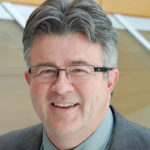 As the Digital Curator of Journalism and founder of the Journalism Digital News Archive (JDNA), George Edward McCain has been and is a leading voice and passionate advocate for saving born digital news. He has advanced awareness and understanding of the crisis we face through the loss of the “first rough draft of history” in digital formats. In collaboration and with support from colleagues and community members, he has led the “Dodging the Memory Hole” outreach agenda. Thus far, five “Memory Hole” forums have brought together journalists, editors, technologists, librarians, archivists, and others who seek solutions to preserving born-digital news content for future generations. By bringing together thought leaders in the news industry and information science, the forums have broadened the network of stakeholders working on this issue and helped these communities gain critical insight on the challenges and opportunities inherent in preserving content generated by a diverse array of news media, both commercial and non-profit.
 The Texas Digital Library (TDL) is a consortium of Texas higher education institutions that builds capacity for preserving, managing, and providing access to unique digital collections of enduring value.
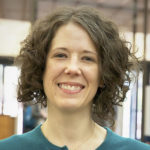 Accepting the award on behalf of TDL is Kristi Park. For nearly a decade, Kristi Park has led consortial Open Access and digital preservation initiatives at the state and national levels. The Executive Director of the Texas Digital Library (TDL) since 2015, Kristi oversees a portfolio of collaboratively built and managed services that enable sharing and preserving scholarship and research data. During her tenure, the Texas Digital Library has launched a statewide repository for sharing and managing research data, joined the Chronopolis digital preservation network, and grown its membership to 22 institutional members. Kristi joined the Texas Digital Library in 2009, serving in various marketing and communications roles before becoming executive director. Prior to TDL she worked in private industry as a researcher, writer, and editor for business and educational publishers. A native Texan with deep roots in the state, she earned her bachelor’s degree in English from Texas A&M University and a master’s degree in English from the University of Texas at Austin.

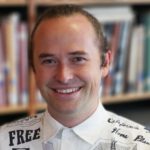

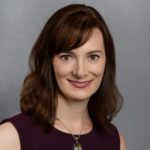 Heather Moulaison Sandy is Associate Professor at the iSchool at the University of Missouri and works primarily at the intersection of the organization of information and the online environment. She studies metadata in multiple contexts, including those that support long-term preservation of digital information, as well as its access and use; she is co-author on a book on digital preservation, now in its second edition. Moulaison Sandy currently teaches classes in Digital Libraries, Metadata, Organization of Information, and Scholarly Communication. Moulaison Sandy holds a PhD in Information Science from Rutgers and an MSLIS and MA in French, both from the University of Illinois at Urbana-Champaign.
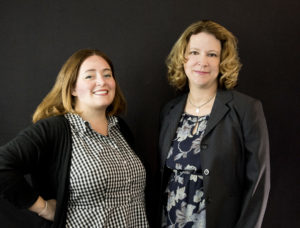 Raven Bishop is recognized for her work as Instructional Technologist on Washington College’s Augmented Archives project. This collaborative work has helped leverage emerging technologies to increase access to and engagement with primary source materials in Washington College’s Archives & Special Collections, as well as exploring ways to solve the sustainability problems institutions face in using end-user platforms to create AR content. A co-founder of the project, Raven served as resident Augmented Reality (AR) expert and visual arts educator, guiding the pedagogical considerations of the project, serving as the principal developer of the Pocket Museum app prototype, and overseeing the creation of the resource website. We would also like to make a special acknowledgement to Raven’s colleague and collaborator, Heather Calloway, for her work as Archivist and Special Collections Librarian and co-founder of the Augmented Archives project.
 Nominations are now being accepted for the 2018 Innovation Awards for the National Digital Stewardship Alliance (NDSA)! The NDSA established the Innovation Awards in 2012 to recognize and encourage innovation in the field of digital stewardship.
 NDSA Member Profiles is a new collaborative series from the Interest Groups of the NDSA. The series is inspired by past NDSA traditions such as